

Search blog posts by category

BLOGGING

BUSINESS

SQUARESPACE

DESIGN

SOCIAL MEDIA
BRANDING
Are you looking for a specific post or topic?
Search blog posts by month
May 2019

These past couple weeks I’ve been working with one of my first official freelance design clients, making small updates to the original brand and website I created for her 5 years ago.
As I’ve revisited fonts and tweaked colors, I’ve found myself subconsciously using designer tricks that I’ve learned both in design school and by experience.
I haven’t been shy in sharing these design secrets. In fact, you’ll find many of them scattered throughout past Elle & Company blog posts.
But I’ve never compiled them all in one place.
Whether you’ve designed your own brand, hired a designer to create the elements of your brand for you, or you’re a self-taught designer trying to improve your design skills, implementing these insider tricks will help you create a more cohesive, professional brand.
April 2019

Squarespace officially rolled out their new email campaign feature on Wednesday.
Up until then, users have had to use a third-party platform (like Mailchimp or ConvertKit) and sync it up to their website either by a form block or a piece of code.
But not anymore!
Squarespace now offers beautifully designed email campaigns that are easy to create, edit, and automate. It’s just one more way that the website builder is helping people create a beautiful online presence.
This new feature will be beneficial for a lot of Squarespace users. But is it right for you?
Before you ditch your current email marketing platform, consider these pros and cons.
March 2019

We just wrapped up the 2019 Brand Challenge last week, and over 1,300 business owners took part to create a one-of-a-kind brand from start to finish!
Fonts, colors, logos, photos, icons - we left no stone unturned.
But creating a brand is really just the beginning. From here on out, your days will be spent implementing it.
Whether you took part in the challenge or not, every business owner who can’t delegate their design work is faced with the important task of choosing an app to help them create their graphics.
The two most popular options at the moment? Canva and Adobe Illustrator.
Both apps are helpful, but they aren’t created equal. So in today’s post, I’m highlighting the biggest differences between the two so you can figure out which program is the best fit for your design needs.
Did you miss out on the Brand Challenge? It’s never too late to jump in and take part! Visit this page to sign up and get started.
February 2019

Congratulations! You’ve officially made it through Elle & Company’s Brand Challenge.
But before you start implementing your new brand on your website and collateral items, take some time to compile all of your hard work and create a beautiful reference for your brand by creating a brand style guide.
This post is part of Elle & Company’s 4-week Brand Challenge. Click here to see more details, sign up, and access the free workbook.

You can do a killer job on all of the steps we’ve covered over the past 3 weeks.
But if your photos are amateur or inconsistent with the rest of your brand, your brand will fall short. Every. Single. Time.
This post is part of Elle & Company’s 4-week Brand Challenge. Click here to see more details, sign up, and access the free workbook.

Just like icons, patterns are another fun way to add interest to your brand and make it more memorable.
When you create a custom pattern that’s unique to your brand alone, you have the opportunity to stand out from competitors, communicate the message of your brand, and add some flair to your stationery, packaging, designs, and website.
This post is part of Elle & Company’s 4-week Brand Challenge. Click here to see more details, sign up, and access the free workbook.

Differentiation is all in the details.
While borders and backgrounds may seem insignificant and small compared to logos and color palettes, they can have a large impact on the consistency and professionalism of your brand.
You already determined your graphic style last week, so considering your borders and backgrounds should be a fairly easy task.
This post is part of Elle & Company’s 4-week Brand Challenge. Click here to see more details, sign up, and access the free workbook.

Your logo is taken care of, your fonts and colors are good to go.
Next up: graphics.
Something as simple as an icon or a border can make your brand distinct and memorable. Much of branding is considering and accounting for the small details.
But before you create fun brand assets like icons, patterns, and borders, you need to consider the overall style of your graphics.
This post is part of Elle & Company’s 4-week Brand Challenge. Click here to see more details, sign up, and access the free workbook.

Your colors are all set! Now it’s time to dive into fonts.
But finding, choosing, and pairing fonts for your brand isn’t as simple as grabbing Comic Sans and Baskerville from the list of included fonts on your computer and calling it a day.
Actually, please don’t use Comic Sans as a brand font. Ever.
Today’s action step and blog post will walk you through what to consider and how to go about choosing fonts for your one-of-a-kind brand.
This post is part of Elle & Company’s 4-week Brand Challenge. Click here to see more details, sign up, and access the free workbook.

Remember those black and white primary logo and alternative logos you refined/created last week?
It’s finally time to add some color to them.
(And now that you’ve already outlined your color system, this step should be easy!)
This post is part of Elle & Company’s 4-week Brand Challenge. Click here to see more details, sign up, and access the free workbook.

Now that you’ve determined your color palette, it’s time to create your color system.
I know what you’re thinking, “What in the world is a color system?”
Let me explain.
Your whole brand should be viewed as a system.
It’s sort of like an equation; you plug in the values to the framework and you get the right answer.
This post is part of Elle & Company’s 4-week Brand Challenge. Click here to see more details, sign up, and access the free workbook.

Color is a great way to distinguish your brand and create recognition.
In fact, color increases brand recognition by up to 80%.
Think about Home Depot, Target, and T-Mobile. Did their brand colors (orange, red, and pink) automatically pop into your mind? Of course they did!
The same should be true for your brand.
This post is part of Elle & Company’s 4-week Brand Challenge. Click here to see more details, sign up, and access the free workbook.

Whenever I’m designing a logo, I’m constantly thinking about how each element (like fonts, colors, and illustrations) can be pulled apart and used elsewhere in the brand to create consistency.
Especially for logo variations.
Chances are, the logo you just created/refined in Day 9 either fits well in a horizontal format or a perfect circle; but not both.
And that’s where today’s action step comes in.
This post is part of Elle & Company’s 4-week Brand Challenge. Click here to see more details, sign up, and access the free workbook.

While a logo isn’t a brand, it is one of the most memorable and recognizable components of a brand.
But where do you even begin to create a logo? What do you need to keep in mind? And if you already have a logo, how do you know if it’s up to par?
Today’s action step and how-to will help you create your logo from scratch if you don’t have one, or give you some important things to consider to see if your current logo needs revising.
This post is part of Elle & Company’s 4-week Brand Challenge. Click here to see more details, sign up, and access the free workbook.

Now that you’ve rounded up some visual inspiration, it’s time to clean it up a bit and compile your images onto an inspiration board.
An inspiration board is simply a graphic compiled of photos, colors, and patterns that provide visual direction for a design project (in this case, your brand).
You’ll come back to this board in the coming weeks for visual reference.
As you build out your brand, you’ll be able to weigh all of the visuals (like your logo, color palette, patterns, fonts, icons, etc.) against this board to ensure that every component stays consistent.
This post is part of Elle & Company’s 4-week Brand Challenge. Click here to see more details, sign up, and access the free workbook.

Now that you’ve considered some non-visual aspects of your brand, it’s time to take all of the work you’ve done up to this point and create some visuals.
But here’s the thing: It can be difficult to create visuals for a brand solely off keywords and a mission statement.
What does “vibrant, authentic, refreshing, and bold” actually look like?
Well, it can look like a lot of things. And that’s why it’s helpful to have a visual starting point.
This post is part of Elle & Company’s 4-week Brand Challenge. Click here to see more details, sign up, and access the free workbook.

I know, I know. I promised to help you come up with a visual direction for your brand this week.
But before we get into inspiration boards and logo designs, remember that your brand isn’t simply a logo and a color palette; it’s an experience.
There are two key components to a brand: tangibles and intangibles.
We often think about the tangible components, like logos, color palettes, and fonts.
But intangible components, like the words you use in your social media captions and the names of your products, can have a big impact on how your brand is perceived.
This post is part of Elle & Company’s 4-week Brand Challenge. Click here to see more details, sign up, and access the free workbook.

So much of branding has to do with communication.
In fact, while I often tell people that I majored in graphic design in college, my real degree was in “Visual Communication Design.”
Because the visuals in every design are always communicating something to people.
That’s why it’s important to make sure that the design of your brand is saying the right things to potential clients and customers.
And that’s why we’ve been spending so much time on this “groundwork” stage of the branding process. Through your future goals, mission statement, client profile, and the 5 adjectives you’ll come up with to summarize your brand in today’s action step, you’re determining what needs to be communicated.
This post is part of Elle & Company’s 4-week Brand Challenge. Click here to see more details, sign up, and access the free workbook.

We’re on Day 4 of the Brand Challenge, and you might be surprised that we still haven’t jumped into any of the major visuals like fonts, colors, and logos.
I promise we’ll get to those soon!
But branding (and design, in general) is about much more than making things look good.
The purpose of branding is to catch the attention of potential clients and customers and build trust with them so that they’ll purchase your products and book your services.
In order to do that, you have to know:
Whether your current brand is effective
Where your business is headed
The mission of your business
And what type of clients you want to be working with
You’ve conducted a brand evaluation, set business goals, and written your mission statement in Days 1-3 of this challenge.
And today, you’re going to zero in on the type of clients and customers you want to be working with.
This post is part of Elle & Company’s 4-week Brand Challenge. Click here to see more details, sign up, and access the free workbook.

You wouldn’t drive across the country from California to New York without a map. And you shouldn’t operate your business without a mission statement.
A mission statement gives you a framework for evaluating opportunities and deciding whether they fit your core business model and strategy.
It can help you define your business and establish your brand, and it can help you (and your employees, contractors, etc.) focus their efforts and suggest ideas that fit with what you’re trying to do.
But what does your mission statement have to do with your branding?
This post is part of Elle & Company’s 4-week Brand Challenge. Click here to see more details, sign up, and access the free workbook.

Big decisions require future planning.
You wouldn’t major in political science if you eventually want to become an art professor.
You wouldn’t sell your van and buy a 2-door sedan if you’re expecting your fourth child.
You have to consider where you want to be in order to put the steps in place to get there.
The same is true for your brand.
This post is part of Elle & Company’s 4-week Brand Challenge. Click here to see more details, sign up, and access the free workbook.

My husband and I just finished renovating an old 1930’s bungalow in our small South Carolina town.
I remember the first time I laid eyes on it. It was dirty and dingy with dark paint, busted windows, and a caved-in kitchen floor. I hardly wanted to set foot in it, let alone live in it.
But beyond the grime, there were remnants of what the house looked like in its glory days. Large trim, built-in bookshelves, original hardwood floors, french doors. I knew that with a little creativity and a lot of elbow grease, we could restore the house to its former beauty.
We put an offer on the house early last year (the same day we brought our son home from the hospital) and excitedly started dreaming up plans for the renovation.
But before we were able to dive into the demo, we had to take an inventory of all the work that needed to be done.
The same is true when you “renovate” and revamp the design of your brand.
Before you can dive into the obvious details like fonts and colors, you have to evaluate what is and isn’t working with your current brand.
January 2019

Last year I took on a grand total of zero design clients.
I had no idea what my work schedule would look like once my son was born in April, so I cleared my schedule until I could wrap my mind around client work again.
Thankfully I still had other income sources through courses, coaching clients, and the Elle & Company Library.
Now that I’ve found my footing, I’m itching to dive back into design work and help creative business owners with their brands and websites in 2019!
And while my 2-week process isn’t feasible during this season, I do have a streamlined 8-week process that I’m excited to implement this year.

“A goal without a plan is just a wish.” ― Antoine de Saint-Exupéry
I always start out the year with high hopes and great aspirations (as evidenced by my last few blog posts and emails).
I love planning and goal setting, but it’s often the easiest part of the process. It’s fun scheming up ideas and making plans; it’s much harder to actually take action and bring them to fruition.
So in today’s post, I’m following up on my goals and plans from last year and giving you a transparent look at how they panned out.

The New Year marks a clean slate. It’s prime time for planning and goal setting, and while you may plan and set goals with good intentions, you won’t be able to carry them out if you aren’t productive. So in this first Ellechat podcast episode of 2019, I’m sharing 7 of my best productivity tips to help you start this year off on the right foot and actually make progress toward your business goals.

It’s that time of year!
Tomorrow marks the start of 2019 and I don’t know about you, but I’m ready for the fresh start and clean slate that January 1st brings.
I’ve tried my hand at many different goal-setting planners, journals, and apps for both business and personal use in the past, like the Best Self Journal, Cultivate What Matters PowerSheets, and the 5 Second Journal. And all of them worked well for the season I used them in.
But this year I’m paring down and taking a slightly different approach to setting goals, mapping out my time, and keeping up with my schedule.
December 2018

I know there’s nothing magical about January 1st.
But every time December rolls around, I can’t help but look forward to the fresh start that a new year brings. Especially this year.
2018 was a year of many firsts for us with having our first baby and buying/renovating our first house, and I underestimated how long it would take to get into a regular rhythm for Elle & Company.
Now that my son is 8 months old and we’re all moved into our house, I finally feel like we’re reaching a new normal. The new year couldn’t be coming at a better time.
But before I dive into some exciting new ideas and projects, there are 7 things I’m doing to tie up loose ends, cap off the year, and start 2019 with a clean slate.
November 2018

Hi! My name is Marisa and I am one of Lauren’s assistants. I graduated with my degree in Public Relations and Marketing in 2015. I currently work full time as a Communications/Marketing Specialist in higher education (at my alma mater) and work for Elle & Company as the Content Marketing Manager part time.
Like you, I used to avidly read the Elle & Company blog.
I first stumbled across Elle & Company in the Fall of 2015 when I was researching SEO for Squarespace.
I came across The Truth About Squarespace SEO blog post and instantly become obsessed with reading all of Lauren’s blog posts and soaking in her colorful graphic design style all over her website.
As I continued to devour blog posts, I came across 20 Business Tasks You Could Be Delegating and I thought to myself, “Hey! I could do/have done all of this stuff.”
In a moment of bravery, I reached out to Lauren, pitched myself, and asked her if she needed an assistant. At the time, she had just hired her first assistant, Jenny, and wasn’t looking to hire someone else so quickly.
So I continued to read her blog posts and newsletters, I subscribed to the Library, and I tuned into Ellechats when I could.
About a year went by and Lauren had just launched her Freelance Academy course for the first time and I wondered if she could use any extra help. So I emailed her again, thinking it would be a long shot.
But to my surprise she emailed me back within an hour with the craziest story! She had been meaning to reach out to me for weeks to see if I might still be interested in the assistant position - she even had the email sitting in her drafts folder but had been too busy to push send.
Before I started freelancing for Elle & Company, I was so curious as to how Lauren ran things behind the scenes and always wished she would share more “intimate business details”. Now that I’m on the other side, I constantly see requests from readers for this very thing. So today I’m taking you “behind the scenes” to talk to you about Elle & Company from my perspective.

There are a lot of great tools and apps out there to help you manage an online business. So many, in fact, that it can be hard to know which ones to use!
And that’s probably why I receive so many questions related to the tools and resources I use and recommend for starting and scaling an online business.
I’m a big fan of sharing tools that work and don’t work for me. But nonetheless, I’ve curated a list of my most highly recommend tools and resources for an online business so you can view them all in one place.
In all transparency, I do receive compensation for mentioning some of these resources and any commission I earn comes at no additional cost to you. But I never recommend tools that I don’t use, love, and believe to be extremely beneficial for starting and scaling an online business.
October 2018

With all the Squarespace blog posts I’ve written in the past, I can’t believe I’ve never written a blog post rounding up all the Squarespace resources out there.
When I first had the idea to write this post to finish out my Squarespace series I imagined this list would be bursting at the seams with resources.
But when I started doing my research for this post I found it difficult to find quality and consistently updated Squarespace resources.
Here are the 8 resources I found!

You did it!
Your Squarespace site is finally live and up for the world to see.
If you’re anything like me, you’re probably feeling a huge sense of relief, but also a bit of panic over what you may have left undone before launching. So here’s 10 things to do and check after your Squarespace site is live.

In addition to being a beautiful website builder and an easy-to-use blogging platform, your Squarespace website can also serve as an online shop. The Squarespace commerce plans (Business, Commerce Basic, and Commerce Advanced) offer a set of features for selling products and managing orders online.
If you’ve spent any real time on my blog, you’ll know I’m a huge advocate of blogging (and I have 30+ blog posts about blogging to prove it).
People are always shocked to learn the reason Elle & Company grew exponentially in my first year of business was because of my blogging efforts.
As I tried to attract new design clients, I committed to sharing high-quality content on this blog every weekday for the first year and a half of my business. I learned a lot during that year and a half, including how important your blogging platform is to your overall blogging efforts.
I made the switch to Squarespace from WordPress and Blogger because I needed a backend that was user-friendly. I’ve never looked back or regretted my decision, and I highly suggest Squarespace to each of my clients.
Many of my blog posts about blogging revolve around blogging on the Squarespace platform, so it’s no surprise that I often get asked questions about blogging on Squarespace specifically. Today I’m going to walk through how to blog like a pro on Squarespace and some of the questions I get asked about blogging on this platform most often.

Squarespace SEO (Search Engine Optimization) seems to be one of the most polarizing Squarespace topics out there.
Most can agree Squarespace is an easy-to-use content management system with beautiful templates. But for some reason, Squarespace can’t shake the perception that it has poor SEO capabilities, despite the fact that the platform has been around for well over a decade and builds known SEO practices into every Squarespace site.
But let’s get one thing straight before we get into this post, if you want ultimate control over the optimization of your site, Squarespace may not be for you.
But, as a creative small business owner, I doubt you’re chomping at the bit to dig into intense SEO practices. I’m sure you’d rather have something that gets the job done well without having to dedicate much time to it. If that sounds more like it, then Squarespace’s SEO capabilities are all you need.
September 2018

Have you ever been scrolling through Buzzfeed or Facebook and got sucked into taking a quiz about “Which Friends Character Are You?” or “What City Should You Actually Live In?”
Quizzes can be addicting because when taken, with a grain of salt, quizzes can give you insights about yourself. And we love learning more about ourselves and our preferences.
So it’s no wonder that businesses are now creating quizzes similar to those found on Buzzfeed and Facebook as a means for generating leads, driving traffic, and segmenting your audience.
I recently jumped on the quiz as a content upgrade bandwagon and created my “Which Squarespace template is right for you?” quiz. I used Interact to create it and in this post, I’m taking you behind my screen to show you how I did it.

There’s been a shift happening in the creative industry. Maybe you’ve noticed.
Less and less people are interested in courses and online workshops.
It might be because they’re overdone, or it might be because people believe they can find the information for free through blogs and other resources. But whatever the case, courses are dying down. So where does that leave us?
Software as a service (SaaS) is the new wave of passive income, and many people have already gotten on board. Including Sai Hossain, the CEO & Founder of Crowdcast.
In this week’s Ellechat episode, Sai is joining me to share how he came up with Crowdcast, how he brought this platform to life, and where his business is headed in the future.

Now that you’ve started your Squarespace trial and set up your Squarespace website, it’s time to start customizing the site to your needs.
But before you dive into the design, you’ll need to build a foundation for your new site by setting up your navigation menu, adding pages, and filling out those pages using blocks.
This post will walk you through how simple it is to build a foundation for your website using Squarespace.
August 2018

Instagram is a great marketing tool for online businesses.
Not only is it helpful for attracting and connecting with potential customers, but it allows you to promote your brand in an organic, non-salesy way.
But Instagram can also be a huge time suck. And unlike other platforms, it’s all-too-easy to post haphazardly and be less intentional with the content you’re sharing.
So in today’s Ellechat Podcast episode, I’m sharing 3 ways that you can both save time AND expand your reach on Instagram.

While pretty photos and curated feeds are helpful for catching the eye of potential customers, great content is the key to generating engagement and reaching a larger audience on Instagram.
But coming up with high-quality posts on a regular basis is no easy task.
So I rounded up 50 engaging ideas for your Instagram feed (along with examples) that will benefit your followers, drive traffic to your website, and keep people interested in your online business.

As a new mom, I’ve received a lot of questions about how I plan to run Elle & Company while staying home with my little one.
How has this transition been? What does my schedule look like? What am I doing for childcare?
So in today’s episode, I’m diving into the five key things I’ve learned about balancing motherhood and business since coming back from maternity leave last month.
I still have a lot to learn, but I hope this episode will resonate with those of you who are in the same boat (and those who are planning to be a stay-at-home mompreneur in the near future)!
July 2018

I love Squarespace for many reasons. It’s easy on the eyes, user friendly, affordable, compatible across all devices, and easy to edit. One of the other features Squarespace offers is a free 14 day trial.
Squarespace’s free 14 day trial allows you to try out the platform and get to know the features before subscribing. And they don't even require a credit card to start your trial!
But you may be wondering what features you should check out and what you should investigate before you take the plunge. So here’s 5 things to investigate during your 14 day Squarespace trial.

I wrote my first Squarespace blog post series back in 2015.
I covered everything from how to set up pages and navigation to how to use Squarespace blocks, Squarespace SEO and metrics, setting up a blog and shop, and customizing your Squarespace website.
And even though these posts are 3 years old, they continue to be some of the most popular on my site. You may have even stumbled across Elle & Company for the first time through one of them!
But Squarespace has continued to change and grow since then, so it’s time for an update.
Over the next several weeks I’ll be walking you through a brand new Squarespace series. I’ll expand on the how-to posts, include new updates, and share about topics I haven’t yet covered.
If you’re currently using Squarespace for your website or plan to get your Squarespace site up and running in the coming months, you won’t want to miss these posts!

I’m back!
After a restful 3 months of maternity leave with my baby boy, I’m slowly easing back into the swing of things with Elle & Company.
And as you may have noticed, things look a little different around here!
There are all kinds of website and content updates to share, and many of you have asked me what my plans are for running a business while staying home with a little one.
I’m excited to fill you in on all of the above!
March 2018

We’re a little less than 2 weeks from our baby boy’s due date!
And while I’ve shared about my pregnancy a little bit on social media and in my newsletter, I think this might be the first time I’ve mentioned it on the blog.
I’m thrilled to embark on this new chapter and plan to take 3 months off to soak it all in and adjust to life with a little one.
I have exciting plans for my return (like website updates and a new Squarespace series!), but I wanted to share how I’m preparing for some time away before I disappear for a few months.

Have you ever been scrolling through Instagram or Pinterest, come across some gorgeous business graphics (hello, Rifle Paper Company!), and thought to yourself: “I could never do that. I just don’t have the design eye”?
While most people may be able to spot good design and bad design, few know exactly what makes some graphics more visually appealing than others.
And for that reason, they don’t think they have a “design eye.”
But designing eye-catching graphics isn’t a guessing game!
There’s 7 simple design fundamentals that can instantly make your work look more professional (even if you didn’t go to design school), and I’m sharing about them in this blog post!
Regardless of your design experience, you’ll be able to take these 7 rules of thumb and implement them the next time you’re sitting in front of Illustrator or Canva, frustrated by the vision in your head not coming to life on the screen.
January 2018

What has over 5,700 fonts, 50+ design templates, and every tool you need to create one-of-a-kind graphics for your business?
This great giveaway!

I took a break from my business in December.
And I had a realization.
What I've been doing up until this point has gotten my business to where it is today. But it won't get my business to the next level.
So I decided that I wanted to do some things differently.
I’m sharing a sneak peek at what’s coming up for Elle & Company in 2018 and the big changes I’m making to my business.
These changes aren’t a step-by-step plan at what you should be doing. Instead, they’re a preview of what you can look forward to. I’m going to be sharing why I’m switching things up and making adjustments so that you can utilize those lessons in your own business.
This year will definitely look different, but I’m excited to share my plan with you.
December 2017

She’s mastermind behind the popular PowerSheets goal setting planner and the author of two books, Make It Happen and Cultivate.
She’s the business woman behind Cultivate What Matters, but she’s also a wife and a mom to three small kids.
She leads a growing team of talented women, she’s in the process of writing her third book, she just started homeschooling...and somehow she manages to keep it all together!
There’s something about business owners who not only balance #allthethings well, but who are intentional and purposeful in what they do and why they do it.
So as I was thinking about prospective Ellechat guests this fall, Lara Casey was easily one of the first people who came to mind.

It’s a Wednesday evening and you’re scrolling through Pinterest looking for inspiration, when all of the sudden a pretty blog post graphic catches your eye.
The title of the post is catchy and addresses a topic you’re interested in, so you click through to read it. You consume the entire thing, soaking up the content, and find yourself reading more and more posts on that blog.
After an hour or so, you bookmark that site in order to remember it and return back to it later.
Isn’t that the experience every blogger hopes for with new readers?
But while everyone can spot a great blog post, not everyone can identify (let alone implement) the characteristics that make a blog post great.
So what is it that makes some blog posts more engaging and fun to read than others? Is there some sort of secret formula for writing great blog posts, regardless of what industry you’re in?
Yes, there is! And I’m spilling the beans about it in this post.
November 2017

Last week I shared about my seemingly crazy experiment of deleting 7,000 subscribers from my list.
Long story short, it’s good to clean out your list every so often to make sure your emails are landing in the inboxes of people who want to receive them.
But once your list is “clean,” it’s time to take the proper measures to make sure your list is effective.
Email segmentation can be the primary difference between a list that converts and one that results in low open rates and a lack of engagement.
It isn’t enough to simply build your list; you have to be smart about how you organize it and use it.
Thankfully, ConvertKit makes segmentation a breeze.

For most service-based businesses, a portfolio provides proof that you’re the right person for the job.
Whether you’re a graphic designer who’s showcasing brands and websites, a photographer who’s showcasing weddings and engagements, or a coach who helps entrepreneurs take their businesses to the next level, you need a portfolio to showcase your past work and build trust with potential clients.
But how do you create one?
You might have clicked on this post thinking I was going to talk about photos and layout. And while those are important to the overall look of your portfolio, I’m not going to cover that in this post.
Not only is that a no-brainer, but every other portfolio post puts the primary amount of attention on photos and many of you reading this offer non-visual services like coaching and consulting.
I wrote this post with the hope that you would begin to think differently about your portfolio.
So instead, I’m sharing 5 ways to strategically build your portfolio that everyone else isn’t talking about… yet.

I know the title of this Ellechat sounds crazy. We all try so hard to grow our lists; why would I ever delete over 30% of my subscribers?!
No it wasn’t by accident. It was a strategic move that’s actually helped my list and increased my engagement. And I have the stats to prove it.
I’m shared those stats, along with the reasoning behind this seemingly crazy move, in this week’s Ellechat.

As creative entrepreneurs, we understand the importance of visuals on making a great first impression on potential clients and customers.
So naturally, we tend to put a lot of emphasis on curating our social media feeds and making sure all of our photos look styled, branded, and professional.
But social media is changing.
It isn’t enough to have a beautiful feed anymore. Your potential clients and customers (and apps like Instagram and Facebook, themselves) are becoming less interested in pretty photos and more interested in one specific thing.
What is it and how can you implement it? Keep reading.

Online content libraries are a great way to bring in recurring passive income each month.
Subscribers join your library for a monthly fee, have ongoing access to all of the resources, and you receive a steady monthly payout - all without doing too much extra work, other than adding a couple new items each month.
Online libraries are also a fantastic incentive for people to subscribe to your list if you’re hoping to give the content away for free.
But as with any new digital offering, it can be a headache trying to figure out how to set up a new content library from scratch.
I remember all too well. Three years ago I setup my own online subscription library (creatively named The Library), and here’s exactly how I did it.

Pricing, branding, finding clients, bookkeeping, marketing - there are many hurdles to starting a business. But one of the biggest hurdles can often be ourselves.
Are perfectionism, procrastination, and comparison holding you back from launching and building your creative business?
If so, I’m sharing how I’ve learned to deal with all of the above in the last 4 years since starting Elle & Company in this Ellechat.

“I just don’t have an eye for that sort of stuff.”
“I am the last person you would want to design a logo.”
“I wish I could do that, but I’m not very creative.”
Whenever someone finds out I’m a graphic designer, I usually hear something similar to the responses above.
And while I agree that some people are more clued into design than others, I’ll be the first to tell you that you don’t have to have a design degree to implement great design.
Whether you’re a self-taught designer who’s just getting their feet wet with client work or you’re a business owner who’s faced with the task of designing graphics for their brand and website, you can absolutely create beautiful designs… You just have to be willing to learn and practice!
And with the help of these 9 resources and actions, you’ll improve your design skills in no time.

The key to freelance freedom lies in the ability to book clients in advance.
By having a waiting list of clients who are chomping at the bit to work with you, you’re able to knock over a bunch of hurdles that are standing between you and your biggest goals.
- Want to make more money so you can quit your day job and pursue your passion full-time? Book clients in advance.
- Want to bring in a stable income and have better job security as a service-based business? Book clients in advance.
- Want to pursue your business on your own terms instead of working 12+ hour days? Book clients in advance.
But how do you get to the point where you can start a client waiting list? And how do you manage it after you started it?
I’m sharing what I’ve learned from creating and managing a waiting list of over 250+ prospective design clients in this post.
October 2017

What comes to mind when you hear the word “webinar"?
Due to either tuning into a webinar or trying to host one yourself, you probably think of an hour-long live video stream of helpful information....that eventually ends in a sales pitch.
We’ve been conditioned to believe that the only way to use a webinar for our business is to sell. (And I don’t know about you, but that’s annoying from an attendee perspective and overwhelming from a host perspective!)
But webinars don’t have to be used solely for promotion. They don’t have to be hosted once in a blue moon. And they definitely don’t have to be salesy.
A non-salesy weekly webinar series can not only benefit but transform your business.

Running an online business has numerous benefits (less overhead, more flexibility, the ability to work from home, the potential for passive income).
But it comes with its own share of struggles. The biggest one, I’ve found, being a lack of community and interaction with other people.
We’re unable to see the faces of those who are reading our posts, tuning into our webinars, and following along on social media. It’s more challenging to get to know people when you aren’t seeing them and interacting in person.
But all hope isn’t lost!
The internet actually allows us more opportunities to build and foster community around our businesses; we just have to know where to look for them.

Designing a logo is much more difficult than it appears on the surface.
As with anything that looks easy, there are many tricks of the trade involved to make a logo look visually pleasing and appeal to the right audience.
You may have discovered this already, whether you’ve tried your hand at designing your own logo or you’ve designed logos for other business owners.
But over time, as you learn more about design and gain more experience, you start to pick up some tricks of the trade and learn to avoid some common logo mistakes.
Here are 7 that I come across fairly often (along with some easy ways to fix them!).

So you launched your website.
You spent a bunch of time perfecting the design, layout, photos, and copy, and you even have your blog up and running.
You check your analytics to see how many people are flooding into your site day after day, but the numbers are few. Where is everyone?
It’s easy to get discouraged. Especially when a higher number of visitors has the potential to open doors down the road, whether it’s a sponsorship opportunity, collaboration, job offer, book deal, or a new client.
But over the years, I've discovered 12 proven ways to drive traffic to your website today, and I'm sharing them all in this post.

There are so many plates that you have to keep spinning when you run a business, from keeping track of client projects to marketing and promotion to administrative tasks and everything in between.
It’s impossible to keep up with all of these tasks from memory.
And as much as I love traditional paper planners, it’s difficult to keep up with them all in there, too, especially if you have a team.
That’s where a project management system like Asana can be life changing; it acts as a homebase for all of the tasks involved in running your business.
But just like any app, it takes some time to learn how to use Asana effectively.
So today I’m inviting you behind the screen to show you exactly how to set up Asana from scratch.
One of the hardest decisions when running a business is determining which apps, tools, and services are worth worth spending money on.
Especially when you’re just starting out on a tight budget.
Is there a cheaper option?
Am I really going to use this?
Is this a reasonable price?
I’ve seen a lot of questions about business expenses and apps worth spending money on in the Elle & Company Community, and after almost four years of entrepreneurship, I thought it would be helpful to give you a sneak peek at what I spend money on each month for my business.
I’ve done a lot of paring down over the past year to the essentials, and I believe these expenses are worth every penny!

In the throes of designing, launching, and growing your business, it can be hard to find clear-cut direction.
Blog posts and webinars are helpful, but it takes work on your part to apply the content and personalize it to your business.
Courses dive deeper into content, but you’re often one of many students taking part.
Mastermind groups and Facebook groups are great for gaining feedback, but others in the group don’t have the time to sit down with you and come up with a customized plan for your business (let alone hold you accountable to all the steps).
But business coaching is the best of all worlds.

There’s plenty of talk out there about marketing your products and services, but a lot of expert launch strategies involve intense email sequences (that often overwhelm your list), pay-per-click Facebook ads, lots of bonuses, product bundles, and so on.
And while they may be helpful for some, these strategies can quickly get complicated and overwhelming for most creative business owners, especially those who are a one-man team.
Launches don’t have to be complicated, salesy, or manipulative.
If you’re preparing to launch a new offering - whether it’s a service or a product - you’ll walk away from this Ellechat with a new perspective on launches and gain some tangible steps for successfully promoting your new idea to your audience.

So often in business (and really, in life) we look to the experience and expertise of others.
We want to learn from those who’ve gone before us in order to avoid their mistakes and chase after the things that worked for them.
Especially in times of doubt.
I rounded up 50 quotes from successful business owners and shared them on the blog a couple years ago, and I’ve referred back to them regularly.
So I thought it was about time to round up some more.
If you need a little extra motivation and encouragement, these quotes from successful business people who’ve gone before us should do the trick.

I put a lot of emphasis on branding your business. After all, I am a brand designer.
I’ve written several posts on branding, I created a course on the topic a couple years ago, and I started a 1-month Brand Challenge earlier this year.
But what I haven’t covered quite yet is creating a “sub-brand” for your offerings. That is, until now.
Because while each product, service, or course should take on the overall aesthetic of your business’s brand, each one should have it’s own distinct style so it’s easily recognizable.
Striking that balance can be a little bit tricky, but it can also be a lot of fun.
So in today’s post, I’m guiding you step-by-step through how to brand your course, product, or service.

Creative entrepreneurs play many roles and wear many hats.
So it’s inevitable that at some point, you might consider lessening your load and delegating tasks by bringing on the help of an assistant.
Whether hiring an assistant is in your near or distant future, you probably have a lot of questions.
- When is the best time to bring on an assistant?
- How do I find the right person?
- How much do I pay them?
- What are some best practices for training them?
- How do I maintain a good working relationship?
To be honest, this is a topic I'm still exploring, but I have a lot to share from my experiences of hiring 2 part-time assistants in the past 2 years.
September 2017

Online courses are gaining in popularity nowadays, and for good reason.
They’re great for sharing actionable information with your audience, they can be fantastic sources of passive income, and when done right, they’re able to position you as an expert in your industry.
For these reasons, new platforms for hosting online courses are popping up all over the place, like Memberspace, Teachery, Thinkific, Teachable, and more.
But with so many to choose from and so many different reviews and preferences from online business owners, it can be difficult to decide which platform will work best for your business.
I recently made the switch to Teachable after trying a few other online course platforms in the past, and I wanted to share my honest experience with it.
Why did I make the switch? Would I recommend it? What would I change about it? Keep reading to find out.

For new service-based entrepreneurs, one of the greatest challenges is finding, attracting, and booking clients. You may not have a large portfolio, a large audience, or client testimonials. You may not have much experience or expertise. And chances are, you’re probably in a very saturated, competitive industry.
I remember being in that position. And in less than a year and a half, I was able to grow my client waiting list to well over 250 prospective clients.
If that sounds crazy to you, than this will be even more shocking: I didn’t do anything out of the ordinary to build my waiting list. All the steps I implemented can be executed by you, too.

Your client project is officially coming to an end.
You’ve finalized revisions, your client is pleased with the final outcome, and you’re ready to stick in a fork in it because it’s done!
Not so fast, my friend.
Before you wipe your hands of the project, there are still some offboarding tasks to complete to make sure you end things on a good note.
Everyone’s offboarding process looks a little bit different, but today I’m giving you an inside look at mine.
My hope is that you’re able to glean a thing or two from my system that makes your offboarding process a little easier on both you and your client!

Design school taught me the principles of design, typography, and how to use Adobe Creative Suite - all of which I use on a day to day basis as a graphic designer.
But in the grand scheme of things, design is only a fraction of what I do as a business owner.
Even if you aren’t a graphic designer, you can probably relate to the feelings of overwhelm and self-doubt when you entered into the world of entrepreneurship and learned that many of the tasks you do each day don’t have anything to do with your field of expertise.
If so, you can probably relate to these 6 things design school didn’t teach me about starting a business.

If you have ever started a business, whether full time or on the side, you know the feeling of not having enough hours in the day to get everything done.
As a business owner, your time is limited. You’re wearing several different hats and juggling many roles, each of which requires precious time out of your day. And chances are, you probably don’t have many hours to spare.
I know when I was pursuing Elle & Company on the side, and working a regular 9-5 job, the way that I used those hours, whether it was at night, or on the weekends, was extremely important and I didn't (and couldn't) waste any of it.
So, if I could find any work arounds, any ways to save time, I would take 'em.
So I’ve rounded up my 24 favorite time-saving hacks - one for each hour of the day - in hopes of helping you create a little more room in your busy schedule.

I don't know about you, but when Instagram stories launched several months ago, I was both excited and overwhelmed.
I was excited at the idea of a new way to connect with my followers.
But overwhelmed by the though of having to create more content on top of regular Instagram posts, Facebook, Twitter, blog posts, and all the other content that I create week after week for Elle & Company.
So I kind of sat on it and put it off until I could put my own unique spin on it, until I could figure out how I could really use Instagram stories to benefit my business, and how I could use Instagram stories realistically. I didn't want to start off with a bang, with all these bright ideas and then not have the time to actually follow through with them all.
I sat on it for a while and then started coming up with a list of clever content ideas.
So today I'm going to share 15 clever content ideas to use Instgaram stories to promote your business.
Whew! It's been a whirlwind of a summer. Between vacations, unexpected events, and moving, I’m happy to put summer behind me and welcome fall.
But the weather isn’t the only thing changing around here.
After a brief hiatus, Ellechat is back and better than ever!
You’ve heard rumblings about it all summer and it’s finally happening. Ellechat relaunched last Thursday and we brought a podcast version along with it!
August 2017

“By failing to prepare, you are preparing to fail.” - Benjamin Franklin
When you think about the client process, images of drafts, revisions, and the finished product may come to mind.
And while those are crucial components, there are a lot of steps that need to happen before the client process begins in order for things to run smoothly.
I’ve found that the onboarding process sets the stage for the rest of the client project. How you handle inquiries, meetings, contracts, and invoices can make or break the entire process; it sets a precedent.
So today I’m inviting you inside of my client onboarding process that’s been tweaked over these last three years.
My hope is that while you may not follow it to a T, you might walk away with a step or two that helps make your client process run smoother.

There’s always more going on behind the scenes than meets the eye.
And while I’m pretty transparent when it comes to sharing my business systems and strategies, there are several things that have gone unshared on this blog.
It isn’t that I’ve been purposely keeping them from you; they just don’t often come up in conversation.
So I thought it would be fun to switch things up in today’s post and share 10 things you probably didn’t know about Elle & Company.
Whether you’ve been following along with this space for years or you’ve just stumbled upon it in the last week, you might find some of these surprising!

Have you ever been designing for a client when a sticky situation pops up?
Maybe they continue to ask for more revisions than you originally planned for.
Or they don’t provide enough information for the pages of their website.
Or they don’t have photos that compliment your designs.
How do you handle these situations?
Over the past 3 years, I’ve run into numerous unique challenges while working with clients, and I often figured them out through a series of trial and error.
But to spare you the trouble of having to figure things out all on your own, I’ve rounded up 14 tricky questions from my Freelance Academy course Q+A’s and I’m sharing the answers with you in today’s post.

Call me crazy, but I’ve always looked forward to the “back to school” season at the end of August.
While it usually means that summer’s coming to a close, it also means there’s a fresh new season on the horizon. A “second New Year,” of sorts.
Because I don’t know about you, but summer is usually a lot crazier than I expect it to be.
A couple vacations, a couple bouts of car trouble, and a big move has kicked me out of my normal work week routine, and I’m longing for routine and consistency.
Surely I’m not the only one!
In an effort to get back on track, I rounded up my favorite tips and strategies for scheduling your workday, staying on task, and setting better boundaries to maintain a realistic work/life balance.
If you’re hoping for a fresh start to your business this fall, this post is for you.

Whether you’ve been in business for 2 years or 2 minutes, you know that being an entrepreneur requires a slew of skills.
You have to be a salesperson, a marketer, an accountant, a project manager, a designer, a social media expert, a researcher, and a copywriter - all while being an expert in your particular field.
And you’re probably willingly (yet hesitantly) diving into all of those roles because you have a product, service, or idea that you enjoy and believe in.
But in order to get clients and customers to pay attention to you and purchase your great product or service, you have to be able to communicate about it. You have to write about it in a way that’s genuine and persuasive.
Emails, blog posts, headlines, bios, sales pages, social media updates - being an entrepreneur means you’re constantly having to write new copy for your brand and your business.
But here’s the thing: Most of us aren’t trained copywriters.
We haven’t had a copywriting pro sit down with us one-on-one and teach us how to write in a way that’s concise, compelling, and personable.
And if you’re anything like me, you might also have some serious resistance to promoting yourself and selling your products.
But copywriting doesn’t have to be quite so painstaking and overwhelming.
These 10 simple copywriting tricks will help you clearly communicate about your business in a way that resonates with people and encourages them to take action.
July 2017

Starting a “side-hustle” has grown in popularity over the past few years, and it’s easy to understand why.
Maintaining a full-time job while pursuing a passion project on the side offers the best of both worlds: a steady paycheck and benefits along with the opportunity to make a little extra money doing something you love.
And while there’s a lot to gain when starting a side-hustle, there’s also a lot of sacrifice.
Here at Elle & Company, we know a thing or two about balancing a full-time job and a “side hustle.”
I worked a few different 9-5 jobs while I worked to get my business up and running, and both of my assistants currently work full-time jobs while helping me with Elle & Company part-time.
All three of us understand the time and energy that goes into balancing a full-time job and a part-time passion project.
So we rounded up some practical ways that we’ve been able to keep our heads above water and maintain our sanity in the process.

People are always shocked to learn the reason Elle & Company grew exponentially in my first year of business.
It wasn’t through Instagram (although social media is a fantastic marketing tool).
It wasn’t through networking with the right people (although word of mouth and recommendations from trusted sources is helpful).
And it definitely wasn’t through some sort of big break (although that would have definitely been nice).
It was through blogging.

So you want to start a business.
You have a ton of motivation and excitement at first, but all of a sudden reality sets in.
There are so many tasks involved, the majority of which you’ve never tackled before. You’re way out of your comfort zone, overwhelmed by all the things that need to get done.
Where do you even begin?
When you’re first starting out, it can be difficult to see the forest through the trees.
When I first started Elle & Company, I found myself piecing together all that I thought needed to get done (forgetting a bunch of steps along the way).
I longed for a step-by-step list of what to conquer and when.
Now, three and a half years into running my online business, I’ve had time to reflect on what worked and what I could’ve done differently to save time (and stress).
So I’m paying it forward. I’ve created a step-by-step list of what to focus on when you’re trying to get your business off the ground.
If I were to go back and start Elle & Company from scratch, here’s what my game plan would look like.
June 2017

This isn’t a normal Elle & Company blog post.
In a normal Elle & Company blog post, I share strategies and write about topics after I’ve already had time to experiment and figure out what works.
But after reading your replies to my annual survey a month or two ago, I saw that you want to see things as they’re happening. You requested more behind-the-scenes.
Your wish is my command.
I have to admit, though - this is a little out of my comfort zone. Because if something doesn’t work out the way I hope it will, my failure will be public knowledge. All of you will know about it.
But that’s a more honest look at running a business, isn’t it? Trial and error, falling down once, and getting up twice.
So here’s the inside scoop about what my team and I are focusing on this quarter, along with why and how we plan to accomplish it.
May 2017

"I fall behind on my blog posts all the time, I'd love to learn how to streamline blogging and keep on top of it!"
"How to write more content. I hate writing and I'm not good at it, so I avoid it even though I KNOW content is what will help me succeed."
"More on the practicalities of blogging. Choosing images for posts."
I recently conducted my annual reader survey. These were some of the responses I received to the question “What would you like to learn more about from Elle & Company?”
I was surprised to learn that many of you want to learn about my blogging process and how I am able to consistently blog. Many of you recognize the importance of blogging, but identified it as a struggle (which I totally empathize with).
Blogging isn’t quite so difficult if you have a clear-cut process. So today I’m sharing a behind-the-scenes look at my blogging process.

“I have written 11 books but each time I think 'Uh-oh, they're going to find out now’… I've run a game on everybody, and they're going to find me out."
You might be surprised to learn, like I was, that Maya Angelou - a woman who was nominated for a Pulitzer Prize, won five Grammys, and received a ton of other awards during her lifetime - struggled with “imposter syndrome.”
Her fear of not being good enough caused her to question her abilities and fear that others would learn that she wasn’t as great or as capable as they originally thought.
I wonder if you feel the same way with your business.
You feel the pressure to keep up appearances. You doubt your abilities. You compare yourself to others who seem to do things better.
And you fear that even though things seem to be going well at the moment, people will eventually find out that you aren’t quite so great as you appear to be on Instagram.
The struggle with imposter syndrome can be crippling. I know from personal experience.
But over the past few years, I’ve discovered 6 truths that have helped me gain more confidence in my work. I hope you find them helpful, too.

Beautiful templates are one of the many benefits of using Squarespace for your website.
I like to joke around with clients and peers that it’s hard to create an ugly site with Squarespace for that very reason.
But with so many great templates to choose from, it can be overwhelming to determine which one will work best for your website. Or you may even find it difficult to choose just one.
Over the past 3 ½ years, I’ve spent countless hours researching and testing out different Squarespace templates for my design clients, and I’ve discovered some favorites along the way.
I’ve rounded up 8 of my go-to Squarespace templates to help you in your search and hopefully make this stage of the website-building process a little less stressful.

Confession: I used to be extremely critical of burnout.
I would come across posts on the topic when I first started Elle & Company and thought the writers were being a tad bit overdramatic.
If you’re doing what you love, can you really ever become burnt out?
It was at a time in my business where I had a ton of motivation. I had a clear goal that I was working toward - creating a full-time business off of my love of design - and I was willing to work 10+ hours a day to get there.
The momentum continued to increase as I saw some success in my business. Clients started to come rolling in, my blog was growing exponentially, and I started to offer more products and services.
I hit my stride…
...and then recently, I hit a wall. The early mornings, late nights, and no vacations finally caught up with me.
That was a month or two ago. Since then I’ve realized that burnout is a real thing.
And after some reflection and time off, I’ve discovered 3 simple things that can help you conquer burnout and bring some spark back to your business.

Content creation is at the heart of Elle & Company.
Between blog posts, weekly newsletters, Ellechats, social media posts, and Library additions, I spend a lot of time pumping out new content each week.
But here’s the thing about new content: it has a shelf life.
Newsletters get buried in inboxes. Blog posts get buried in archives. Social media posts quickly fade away from the feeds of your followers. Webinars end.
The content you create (along with the time and energy you put into them) quickly gets buried under your newer content.
But don’t be fooled; you didn’t labor in vain!
Enter, the art of repurposing content.

Last week I asked Elle & Company readers and subscribers to take part in my annual survey, thinking I might get a couple hundred people to leave feedback.
I was shocked to see that over 800 of you took the time to participate!
Thank you so much for taking the time to tell me about yourself and leave feedback on why you follow along. I read each and every response and took your words to heart.
But it didn't seem right to keep the feedback to myself. So I rounded up the data to share with you!

How would your life be different if you were able to generate more sales?
Would you be able to quit your day job?
Spend more time with your kids?
Take that vacation that's been taking up space on your bucket list?
The key to making sales is trust, and building trust with your potential customers starts with making a killer first impression through visuals.
Your promotional photos, graphics, and videos should not only look amazing; they need to be intentionally designed using strategies that are proven to increase sales.
If the potential to build trust with your audience, create a killer first impression, and make more sales isn’t enough to convince you to step up your business’s visuals, the following stats might.

“How did you get your business off the ground?”
It’s a question I get asked pretty regularly by creatives who are in the beginning stages of starting their business.
They want to know how I grew my audience, how I was able to book clients, and how I made the leap to full-time.
I have to smile as I attempt to answer it, because the irony of it all is that I never set out to start a business.
As a matter of fact, I swore up and down that I would never, ever own a business, because I grew up seeing firsthand all the things a business required.
(For those of you who’ve heard this story, you haven’t heard the whole story. Keep reading.)
April 2017

The funny thing about writing and sharing content is that it’s often one-sided.
You’re able to hear from me and get to know me through newsletters, blog posts, webinars, and social media, but it isn’t very often that I get to hear from you and get to know you better!
But I want to get to know you.
And I want my content to be helpful for you.
So I’m switching things up today.
Passion gets you started, but strategy keeps you going.
Successful entrepreneurs know that in order to pursue what they love, they have to be smart and strategic about how they operate their business.
And a business cannot operate without money.
Money can be an uncomfortable topic, but it’s a necessary part of entrepreneurship.
While I love my job and consider myself blessed to work with clients and write new content all day long, Elle & Company is a business, not a hobby.
In order to keep things running and bring in a steady income, I’ve had to be strategic and intentional about how I generate a profit from this business (especially to start pursuing it full-time).
And the best, most reasonable way I’ve been able to do that has been through creating multiple streams of income.

As a creative, it’s easy to get hung up on the aesthetics of a website and sacrifice form over function without even realizing it.
I’m in the middle of making updates to the Elle & Company site and I’ll admit - it’s easy to get caught up on visuals like icons and photos.
But if you truly want visitors to take action on your website (by signing up for your mailing list, purchasing a product, or booking your services), you have to focus on more than just aesthetics.
You have to focus on how you organize your content in a way that’s easy and intuitive for your visitors.
That’s easier said than done though, isn’t it?
Especially if you’ve had no experience setting up a website before.
If you’re struggling to organize the content on your website, I have a step-by-step method to help you sort it out and create a better user experience.

The mission of Elle & Company is to help creatives transform their passion into a successful, profitable business.
Want to know what differentiates someone’s passion from a business? Action and strategy.
Passion is rarely the issue in trying to get a business off the ground. Instead, us right-brained creatives can sometimes forget the importance of strategy in our businesses.
And that’s why I created this 6-step business plan: Elle & Company’s Business Playbook.

In order for people to buy from you, they have to trust you.
And one of the best ways to build trust among potential customers is through blogging.
Blogging allows you to share your expertise, highlight testimonials and success stories, give insight into your process, answer commonly asked questions, and more.
But one of the biggest blogging hangups for business owners - especially those who run product-based businesses - is figuring out what to write about and coming up with high-quality blog post ideas.
Can you relate?
If so, I’ve got you covered.

Great systems are key to running and maintaining a successful business.
When you’re able to follow the same process time and time again - whether it’s scheduling social media posts, replying to inquiries, or setting up client homework - you can conquer tasks quickly and free up your time.
Something as simple as a Google Doc template can help you prepare ahead of time and work more efficiently.
So to help you streamline your systems and keep your process running smoothly, I have 12 template ideas and examples to share with you.

Your website is your business’s online home base.
It’s where all the magic happens; it’s where sales are made, services are booked, and trust is built through blog posts and portfolio views.
So it’s really important that your website makes a positive first impression through design and functionality.
There are a lot of opinions out there about what your website should look like and how it should function.
But what are the facts?

Pinterest has been one of the most helpful free marketing tools for driving traffic to the Elle & Company website.
In fact, 20% of my overall blog traffic and 78% of my overall social media traffic to my blog comes directly from Pinterest.
Not only is Pinterest visual (which is especially helpful for creative business owners), but pins have a longer lifespan than other social media posts like tweets and Facebook shares. An image that was pinned months ago will continue to show up in other people’s feeds for months and drive traffic to your website.
But as with any social media platform, it takes time to keep up with Pinterest. And I don’t know about you, but I don’t have time in my busy work week to devote hours and hours to pinning.
This is problematic because we know a few things about Pinterest:
- Pinterest works in your favor when you pin a lot
- Pinterest likes it when you post other people’s content, not just your own
- You’ll see more consistent traffic if you pin over a period of time instead of all at once with weeks in between
Enter Board Booster.
March 2017

The hardest part of starting a business isn’t figuring out finances.
It isn’t coming up with offerings, finding your niche, or pricing your services.
Because all those items will easily fall into place… as long as you have a loyal, engaged audience.
But how do you grow an audience full of prospective clients and customers who are excited about your business?
It’s the million dollar question (almost literally).

So you’re convinced that Squarespace is the platform for you.
It’s simple user interface, beautiful templates, and all-in-one platform won you over, and you’re ready to make the switch.
But where do you start? How do you move all your of your current content over, transfer your domain, and easily make the switch to Squarespace?
Here are 6 simple steps for making the transition as easy as possible.

People are always shocked when I tell them the primary reason my business grew quickly.
It wasn’t pouring all of my time and effort into curating a visually pleasing Instagram feed.
It wasn’t going to conferences and networking with the big shots.
And it definitely wasn’t through some big break.
“How else did you grow your business?” they ask me.
Few people want to believe that apart from blogging, my business would’ve failed soon after it started.
And they definitely don’t want to give it a go and make it work for their own businesses.
Maybe it’s because they don’t know how to use their blog.
Maybe they just don’t want to spend the time writing and growing their blog.
But I think the real problem lies with not being aware of the countless benefits that blogging can have for a business.

The key to every professional, easily recognizable brand is consistency.
When brands use the same colors, logos, fonts, patterns, and imagery over and over again, potential clients and customers begin to associate those visuals with their business.
Consider Chipotle.
You don’t have to see their logo to recognize their foil-wrapped burritos or white paper cups with brown hand lettering.
Because they’re consistent, you associate these visuals with their brand.
The same should be true for your business. And the best way you can brand create consistency is through your collateral items.
February 2017

Consistency is key to creating a streamlined, professional brand. But it’s difficult to create consistency if you don’t have a homebase for all of your brand standards (like your logo variations, color values, fonts, graphic style, etc.)
That’s where a brand style guide comes in.

What makes a great logo?
It’s not enough that a logo looks visually pleasing or stands out among the competition; it’s most important that it appeals to potential clients and customers.
But if you’re starting from scratch, it can be difficult to know where to start.
There’s definitely creativity and a basic design knowledge involved in creating a one-of-a-kind logo, but there’s also a system behind it all.

Creating a brand can be a little overwhelming at the outset.
With so many details to pull together - colors, fonts, patterns - it can be difficult to know where to start.
That’s where an inspiration boards comes in.
It takes an average of 5-7 brand impressions before someone will remember your brand.
Which means that people have to come into contact with your brand through website views, social media posts, or third-party mentions an average of 5-7 times before they can recall your business from memory.
I don’t know about you, but I would rather someone remember my brand during the first or second point of contact. 5-7 seems like a lot.
But in today’s day in age - where all brands seem to run together and look the same - it seems to be getting even harder to stand out from the crowd and create a brand that potential clients and customers will remember.
There’s so much competition.
So how do you stand out? How do you catch people’s attention and increase the likelihood that they will remember your brand?
The answer lies in consistent, one-of-a-kind visuals.
Tiffany blue.
You know you have a strong brand when something as simple as a color becomes an actual trademark for your business.
If someone is carrying that signature blue box with a white ribbon, you know they’ve made a purchase from Tiffany’s. You don’t even have to see the logo to recognize the brand.
Logos definitely help create brand recognition and add a visual face to your business, but seemingly insignificant details like colors and fonts can have just as big of an impact.
And in Week 3 of this month’s Brand Challenge, we’re diving into those details headfirst.
One of the biggest benefits of branding your business is the opportunity to set it apart and differentiate it from all the other businesses in your industry.
But nowadays, too many brands look the same.
And it’s for one of two reasons:
1 | There are so many businesses out there that it’s hard to come up with anything new
2 | Business owners don’t know how to come up with a distinct aesthetic for their brand
I don’t buy the first reason. We’re creative business owners; new ideas should be a fun challenge for us.
I blame the boring brands on reason #2: People just don’t know how to make their brand stand out.

Most people don’t struggle to come up with their brand keywords or identify their ideal client. Or at least that isn’t their greatest branding struggle.
The biggest challenge in creating a brand comes at this stage of the process, when you’ve written your mission statement, identified your ideal client/customer, made a list of brand keywords... and now all that’s left to do is to take all of that information and create some visuals that reflect it.
No big deal, right?
Psh. That’s an overwhelmingly big deal. And if you’ve never branded a business before, you’re probably at a loss for where to start.
That’s where Week 2 of this month’s Brand Challenge comes in.
Squarespace is a great website option for business owners who want a lovely, professional website that’s mobile friendly and easy to update.
I chose Squarespace for the Elle & Company website and I highly recommend it to all of my design clients because of the beautiful templates, intuitive user experience, and compatibility.
But with all of those great benefits come limitations on customization.
Unlike Wordpress where the possibilities are endless, Squarespace isn’t as flexible; you have to work within the parameters of their templates and features.
This might be a problem for you if you’re seeking a website that has all of the bells and whistles, but it isn’t an issue for those of you who are seeking to create a simple, intuitive site.
With these 6 tips (and a little creativity), you can customize your Squarespace site to fit your brand and make it memorable.
January 2017
What is it that makes the Starbucks brand so distinct?
It isn’t their logo, although the siren mark is definitely different from any other coffee chain out there.
It isn’t their fonts, because Helvetica is hands-down the most popular brand font among large brands.
And it definitely isn’t their products; you can find a caramel mocha and even a pumpkin spice latte just about anywhere these days.
The thing that makes a great brand like Starbucks so distinct is that they’ve considered the entire experience a customer has with them and they’ve branded every single interaction.
"When you brand yourself properly, the competition becomes irrelevant." Dan Schawbel
Too many people approach their brand as simply a logo and a color palette.
They overlook the bigger picture and the humongous impact their brand can have on differentiating themselves and standing out from the crowd.
But a brand is much more than just a logo; it’s the entire experience people have when they interact with your business.
It’s the tone of your marketing content, the icons you use on your website, the names of your products.
Did you cringe a little when you read the title of this blog post?
I hear you. Taxes aren’t my favorite business topic, either.
Not only are they unfamiliar territory, but they can have some negative consequences if you don’t know what you’re doing. So naturally, most of us tend to shy away from tax prep until the very last minute and stress out getting everything in order before April 15th.
But I’m here to tell you: It doesn’t have to be so difficult! Knowledge is power, and knowing how to prepare can help you break this stressful cycle.
Content creation is at the heart of Elle & Company.
Between blog posts, weekly newsletters, Ellechats, and Library additions, I spend a large majority of my work week not only creating content, but keeping up with the tasks that come along with it (like editing, scheduling, and promoting).
In the past, I’ve used several different methods to organize my content and keep up with these tasks. I’ve tried mapping it out in Google Calendar. I’ve set up Trello boards. I’ve created Asana tasks.
But I couldn’t seem to find an all-in-one system that allowed me to visually organize my upcoming content and keep up with all the tasks involved.
That is, until a month or two ago when Asana upped their game and began offering boards that look and function almost exactly like Trello boards.
Trying to keep up with my inbox has always felt like running a race with no finish-line in sight.
I receive emails throughout my day that I’m not always able to act on, the emails pile up in my inbox, and then my inbox starts to stress me out so I put off the task of tackling it until later.
When I do finally get around to answering all the emails, I have some momentary relief…
...until the email replies start flooding in. And then the cycle starts all over again.
I’ve tried some email tricks here and there and even shared them on my blog and in my newsletter from time to time, but I never came up with a system that truly worked.
Until this past month.
One of my 2017 goals was to stop whining about my inbox and come up with a system that allows me to stay on top of emails and stop stressing about them.
With the help of a great productivity book and some organization, I’ve been able to keep my inbox at zero for the past three weeks and I feel completely confident that I can keep it up.
This new email system has been revolutionary for my workdays and has given me so much peace of mind.
So in typical Elle & Company fashion, I’m sharing it with you to help you conquer your inbox once and for all.
Do you know exactly how many hours you’re spending on business tasks throughout your workweek?
Guesswork doesn’t count. Do you have the actual data?
For the first two and a half years of my business, I didn’t. I made a habit of loosely managing my time and jumping around from task to task.
But if you had asked me, I would have told you that I was spending the right amount of time on each area of my business. I truly thought I had a good handle on my time...
...until I conducted a time audit last fall.
Using Toggl, I tracked the amount of time I was spending on emails, blog posts, client work, etc. and man, were my guesses way off.
It was eye-opening to see how much time I was spending on emails and menial tasks instead of making headway on client work and other big projects.
No wonder I wasn’t making quicker progress toward my goals! I was spending too much time on the wrong things.
Time tracking with Toggl has allowed me to take an objective look at my work week and spend more time on my most important business tasks.
This topic keeps coming up in conversation and I mentioned Toggl several times in last week’s Ellechat.
So I’m taking you behind my screen in this blog post to highlight the benefits of time tracking and show you exactly how to use Toggl for your business.
I started my business as a side-gig.
I was unhappy with my regular 9 to 5 design job and every time I thought of working for myself, grand images of working from home, no commute, working with my ideal clients, and no grouchy boss quickly came to mind.
Each day I would sit in my cubicle, dreaming about the freedom that came from having my own business.
But once I actually made the leap to full-time entrepreneurship, that new freedom came with it’s fair share of new challenges.
The biggest one? Managing my time.

You know those inconvenient tasks that always seem to creep up on you?
Maybe it’s an email reply you always find yourself sending or a URL you often visit but can never remember.
In instances like these, it’s beneficial to keep that information in a helpful place, create a template or bookmark it so you can easily refer back to it later and save yourself a headache.
That’s why I wrote this blog post.
It seems I’m constantly trying to track down image sizes for social media, both for Elle & Company graphics and client design projects.
And surely you’ve found yourself hunting down image sizes for your social media accounts, too.
So I decided to make it easier on all of us by rounding up ideal image sizes for blog posts and social media and creating an infographic.
Feel free to bookmark this post or pin it to Pinterest for future reference!
The New Year is upon us, which means that our motivation to get organized and reach our goals is at its peak.
And while I wrote a new blog post on my favorite planning and goal setting resources last week, I left off one of the key tools I use daily to keep my business organized: Google Drive.
My Drive houses client homework, design drafts and revisions, final project files, blog post drafts, master copies, Ellechat outlines - I truly couldn’t run Elle & Company without it.
Not only is Google Drive great for keeping all of my important files and documents in one place, but it has a huge amount of free storage that can be accessed from any device and it syncs up with Gmail.
But because I use it for just about everything, my Drive could very easily get out of hand if I didn’t have a system in place. I’m all about some organization and color-coded folders!
Some of you have reached out to me about how I set up my Google Drive, so I’m taking you behind my screen to show you how I keep all of my files organized.
December 2016

This time of year always excites me.
Client projects have finally wrapped up, my annual to-do list is coming to an end and a fresh new year is on the horizon.
I do my best to block off a few days during this week to reflect on the last 12 months and prepare for the year to come, both personally and for my business.
I love getting things in order, setting goals and having some direction as I approach January 1st.
I have a feeling many of you do, too.
So today I’m sharing my favorite planning and goal setting resources. My list isn’t super in-depth or groundbreaking, but I hope you find at least one of these resources helpful as you get your business in order for 2017.

“Business is about people, and your reputation is built on how you treat people.” – Bruce Rauner
Like most creative entrepreneurs, I had absolutely no idea what I was doing when I launched my business 3 years ago.
I didn’t know how to find clients. I didn’t know what to share about on my blog. I didn’t know any strategies for marketing my business on social media.
Did I need a mailing list? What website platform should I use? How much should I charge for my services? Do I need to set up an LLC? How much should I be setting aside for taxes?
I figured out most of those questions through a process of trial and error.
But there was one word that always laid at the foundation of every decision I made for Elle & Company, and I attribute it to whatever amount of “success” I’ve had over these past few years in business.
It’s a word that’s often overlooked by many business owners, maybe because it seems so simple.
Or those who don’t overlook it often toss it aside and focus on other business strategies and tactics, because it requires patience and endurance.
There’s no instant gratification when you pursue this word.
But I can tell you from experience that it’s worth pursuing and building your business around.
In 2013, Morgan Nield started an Etsy shop on a whim selling newborn hats, baby headbands and crib sheets. Three years later, she’s close to 20,000 sales and has made over $400,000.
How in the world did she do it?
Morgan joined me in the last Ellechat webinar of 2016 to share her story along with some practical steps for taking sporadic sales and turning them into a sustainable, consistent income (the kind you can quit your day job with!).
At the end of each design project, I meet with my clients over Skype for a 1-hour Squarespace tutorial.
I share my screen and walk them through the ins and outs of using and updating their new website, and I record the session so my clients can refer back to it later.
Somehow I always find myself sharing quick Squarespace tips and shortcuts throughout the session, so I thought it was about time I round them up and share them with you, too!
Here are 11 shortcuts and tricks I’ve discovered over the past few years of using Squarespace.
November 2016

Contracts are non-negotiable elements of any business, whether you’re a graphic designer or a personal trainer.
But legal matters are scary. Many of business owners - both seasoned and brand new - are intimidated by creating client contracts because they’re unsure of what to include, how to word things, and whether they’re going about it correctly.
Christina Scalera is an attorney for creatives and a pro at explaining legal matters simply, and she joined me for last week’s Ellechat webinar to share how contracts can improve your client experience.

Imagine this.
It’s 8pm on a Sunday evening. Tomorrow is Monday, which means the craziness of juggling clients, projects and business tasks is about to crank back up. And the thought just occurred to you that you haven’t yet scheduled posts for each of your social media platforms for the coming week.
So you pull out your laptop and spend the last 2 hours of your Sunday brainstorming about what the heck you’re going to post on social media.
You browse through old blog posts and choose a few at random to feature for the upcoming week. You spend forever digging through your Bloglovin’ and Twitter feeds to find articles to highlight from other industry peers. You save images to your desktop until you can no longer see your screensaver and you have a field day shortening links with bit.ly.
Finally, 10:30pm rolls around and your Buffer queue is filled for the week…until next Sunday, that is.
What if I told you the rat race of social media scheduling could finally end? What if you never had to schedule social media again?
I’ve started using a tool that takes those questions out of the hypothetical and makes them a reality.

A couple of months ago I launched my signature course, Freelance Academy.
And while I’ve launched a number of courses, services, and digital products in the past, Freelance Academy was different. A signature course, at a higher price point, with a brand new launch strategy.
The launch was new and unfamiliar territory, but my perspective on launches remained the same
I don’t believe that you have to be salesy, pushy or manipulative in order to have a successful launch.

Apparently everyone is getting rich nowadays, and getting rich quick.
And we only know this because people are more than willing to share their numbers. You’ve probably seen the posts.
Income reports are everywhere.
I first noticed them a couple years ago when I came across Pat Flynn from Smart Passive Income. Since then, income reports seem to have spread like wildfire.
This fact isn’t shocking; there’s a nosy person in all of us that loves to see numbers. We secretly enjoy getting an inside look into someone’s bank account.
But there’s something about it that doesn’t seem quite right.
A couple months ago I received an email from a newsletter subscriber, asking for my take on income reports.
There are 3 reasons I’ve chosen to abstain from sharing my income on the internet: reporting income is a not-so unique marketing technique, it can lead to major legal problems and it has the potential to erode trust.

There are a couple designer secrets that aren’t often shared when it comes to choosing brand fonts.
The first: Steer clear of using your logo font throughout the rest of your brand (unless it’s a secondary font that you’ve used for your tagline). This makes the logo distinct and keeps it from getting lost among other text on your website and collateral items.
The second: Give each brand font a “job.” Choose one font for your headers, one font for your body text, and maybe one other accent font (maybe). This streamlines your brand by creating consistency.
But even after learning these secrets, you might still have some questions about brand fonts.
How do you go about finding, choosing and pairing fonts that will accurately represent your business and appeal to the right customers?
I’ve got you covered.

Suzie reached out to you in a panic on Monday.
She needed her new website up and running yesterday, and she’s hoping you’ll take her project on right away.
Being the nice person that you are, you agree. You set up a general timeframe and hit the ground running.
But it isn’t long before Suzie starts running the show. She’s unhappy with the concepts you’ve shared with her and although you agreed to a few revisions at the outset of the project, you’ve made exceptions to keep her happy.
Not only is this situation frustrating, but it’s put you behind on your other client projects. Stress creeps in. Both you and Suzie are irritated with the process, and you can’t wait for the project to end.
If this situation becomes a trend in your service-based business, you won’t last long.
But here’s the good news: This awful situation could’ve been prevented.
The most common question I receive about my 2-week design process is, by far, “How do you ensure that clients stick to your project schedule?”
The simple answer? Setting boundaries and managing expectations.
But here’s a more detailed explanation of what that looks like from start to finish in my client process.

Let me let you in on a little branding secret.
You can spend tons of time designing a beautiful logo.
You can choose the best color palette, fonts and patterns.
You can even pull out all the stops creating an eye-catching website.
But if your photos are amateur and inconsistent, every collateral item and page of your website will fall short.
The same is true for your blog posts, promotional items and social media accounts.
Great photos not only elevate a brand, but they make it appear professional and build recognition with your audience.
October 2016

What’s multifaceted, time-sensitive and continually adds tasks to your never-ending to-do list?
A creative small business.
Everywhere you turn there’s a project to finish, an email to reply to, a blog post to write. You have to wear multiple hats while keeping a million plates spinning. It’s like a circus act.
But you know that already.
You also know that if you don’t have a system for keeping up with all those tasks and hats and plates, things can quickly get out of hand.
Projects fall behind. Deadlines get missed. Stress and panic sets in. And before you know it you’re a hot mess, questioning why you started a business in the first place.
That’s why I’m all about creating workflows.
Blame it on my type-A personality, but I can’t function if I don’t have a system in place for tasks like design projects, blog posts, Ellechats and coaching calls.
Doing something the same way every time has helped me set expectations, work more efficiently and ultimately stay on top of all the neverending business tasks.
I’m a big fan of using Trello to outline my workflows and create timelines (I included an example in this post and hosted an Ellechat webinar on it here), but Trello isn’t the best platform for keeping up with multiple workflows at once.
That’s where Asana comes in.
It’s like, “Which came first, the chicken or the egg?”
Well, sort of.
When you’re running a creative business, your offerings usually fall under 2 broad categories: services and products.
Both have their advantages and disadvantages. And both can be profitable.
But which one should you offer first?
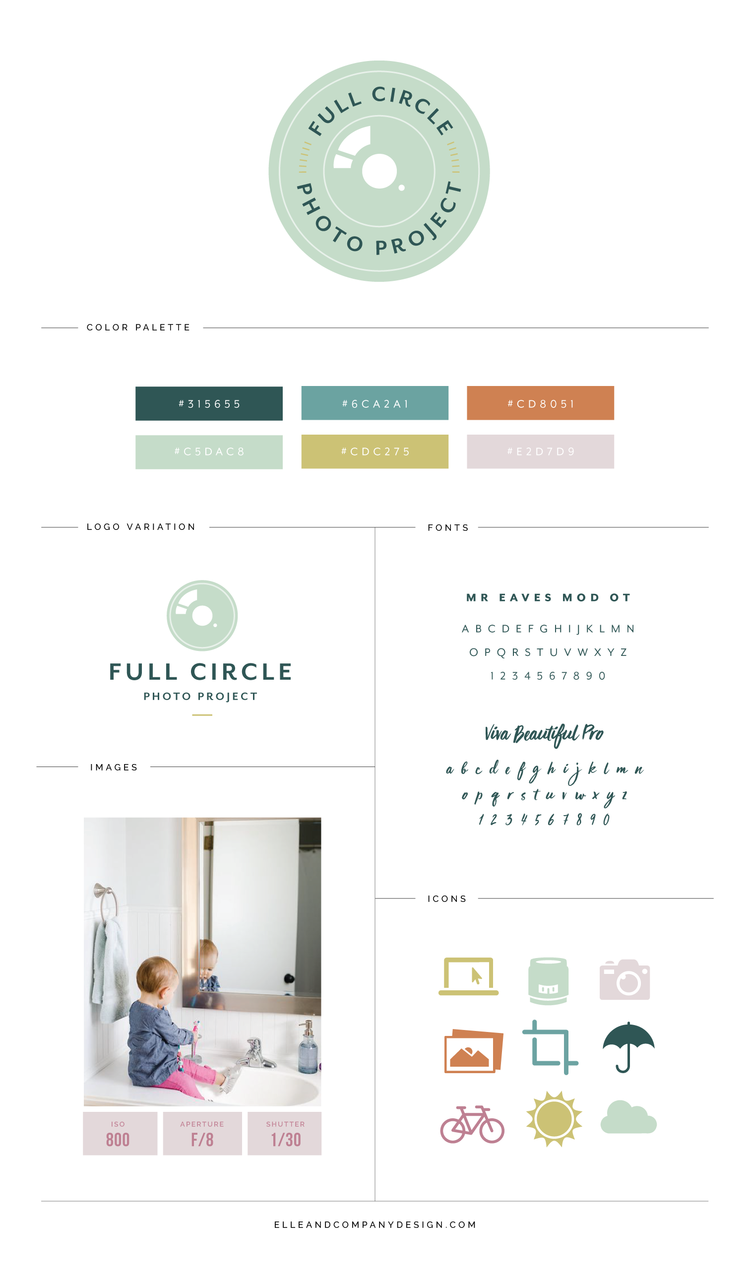
If I had to choose one thing I love most about designing brands and websites, I don’t know if I would be able to do it.
But I do know that somewhere near the top of the list of favorites would be differentiating each individual brand.
It’s a fun creative challenge to make each client’s brand completely distinct and unique.
And it helps when the mission behind the brand is unique and special all on its own.
What’s free, easy, and can make you money in your sleep?
Affiliate marketing.
I know, it sounds kind of complicated and possibly even a little boring.
For some of you, it might conjure up images of salesy Instagram posts or sponsored blog articles.
For others, affiliate marketing may have lost its luster because you don’t know how to utilize your links.
And for the rest of you, you’re probably wondering what in the world affiliate marketing is in the first place.
I can’t count the number of times I’ve stared blankly at my computer screen, racking my brain for an appropriate answer to a client inquiry, nice blog comment or past-due invoice.
The right words have this way of getting stuck in my brain, and they don’t often transfer correctly onto the keyboard.
In the off chance that they do come, I analyze them 53 times before finally hitting “send.”
You, too?
Wouldn’t it be nice to have a library of scripts to pull from when those moments arise daily in your creative business?
Well, now you have one.
September 2016

Here’s a question for full-timers and side-hustlers alike:
How much money do you need to be bringing in from your business before you can go full-time?
Some of you might be thinking, “That’s a little up close and personal, Lauren...”
Some of you may think you've already done the math and can quickly give me a figure.
But I have a feeling that most of you are curious, because you’ve been trying to come up with an answer to this question for a while now.
I can totally relate.
It was so frustrating.
I just wanted to create a site for my upcoming course that (a) was easy to use, (b) looked like my brand, and (c) allowed students to login under their own account.
I tried sites like Teachable and Teachery. But they took people off of my site and I found myself coming up with creative workarounds to customize the look and function of my course on their sites.
Surely there had to be a better way.
And then I had an idea.
August 2016
People who want to know what their audience likes, send targeted emails, offer free downloads, and set up email courses are switching over to ConvertKit. Because unlike other email marketing platforms, ConvertKit was created specifically for online business owners.
But because it’s fairly new, many people are hesitant to make the switch.
Enter Megan Minns.
Megan is a ConvertKit guru and her site was a huge help for me as I made the switch to ConvertKit months ago. She has a knack for taking technical tasks and breaking them down simply, so I asked her to join me for an Ellechat webinar two weeks ago to discuss how to get started with ConvertKit.
We covered a lot of ground, from the benefits of using ConvertKit over other email marketing systems like MailChimp to a behind-the-screen demonstration of how to set up forms and automated email sequences.
“Do you need a large audience in order to land new clients?”
The short answer? No.
While an audience does make booking clients easier, it’s very possible to land clients when you’re just starting out and haven’t had the time to grow your mailing list, social media following, or blog readership.
There are a couple different ways to go about this (and I’m sharing 6 in this week’s Ellechat), but there’s one in particular that won’t cost you a dime and has the potential to land a new client this week.
All it takes is a little thoughtfulness and these 3 simple steps.
July 2016
So you started a mailing list.
You heard about the benefits, chose a platform, and you have a general idea of what you’re going to send out to your subscribers. You even placed your opt-ins in prominent places.
The trouble is…. no one is subscribing.
If this sounds all too familiar, I have one question for you: Why should someone sign up for your list?
Because the truth is that you could have the best newsletter content and the most prominent opt-ins and still have trouble gaining subscribers.
Website visitors often need a little more coaxing to sign up for your list. And that’s where content upgrades come in.
What are the most difficult parts of handling client work in your business?
Booking clients in advance? Figuring out what to charge for your time? Meeting deadlines? Balancing multiple projects? Maybe all of the above?
In last week’s Ellechat we discussed streamlining your client process. A streamlined process is crucial to getting great results and having an efficient workflow. The more you follow the same process, the more you’re going to produce great work with less stress and more efficiency.
I walked Ellechat attendees through the step-by-step method I used to not only streamline my process, but figure out my prices and schedule projects in my design queue.
Since starting Elle & Company two and a half years ago, I’ve become increasingly aware of the many blessings involved with running a creative business.
4 major blessings, in particular.
First, that I would be given some sort of creative gift in the first place. (Because, as helpful as it was to go to design school, creativity is innate to a certain extent.)
Second, that I would enjoy design and have a passion for creating brands and websites for other creative business owners.
Third, that I’m able to bring in an income from my lifelong love of design.
And fourth, that I’m able to help other creative business owners in the process.
If you have your own creative business (or hope to start one in the near future), you can probably relate to all of the above. In fact, these blessings probably sparked your interest in creative entrepreneurship and led you to take the leap.
1 | You have a creative gift
2 | You have a passion for it
3 | You want to make an income off of it
4 | And you want to use it to help other people
It’s easy to focus on the first 3 on the list because they’re self-focused: Mygifts, my passion, my income.
We take courses and spend time honing in on our craft. We read how-to posts and soak up strategies on how to gain more subscribers and customers to eventually make more money and increase our income.
But that fourth one? It seems to get easily get overlooked in the hustle and bustle of running an online business.
In an industry where it seems like more and more people are trying to share tips, build courses, and get ahead, I think there’s one thing that’s often lacking: a genuine interest in the success of others, without focusing on self gain.
Digital products are a fantastic passive income source for creative businesses.
Unlike service-based work, items like stock images, printables, and digital files can be created and sold over and over again. You can do the work once, sell your products on autopilot, and bring in more income without little extra effort.
More creatives are becoming aware of the benefits of digital products, and I thought it would be helpful to start a conversation on the topic. So two weeks ago I invited Kelsey Baldwin of Paper + Oats to join me for an Ellechat and discuss the ins and outs of creating and selling digital products.
If you use content marketing for your business, you’re probably aware that guest posting on other blogs is an effective way to gain influence and boost credibility much faster than simply posting on your blog.
Especially if the website you’re writing for is established and authoritative.
In fact, guest posting is a quick way to build your audience before you actually have an audience of your own, because you’re siphoning traffic from someone else’s site.
Danny Iny is one of many who’s experienced massive growth through guest posting. (And if you’re curious, you can read about his success here.)
Guest posting is a powerful way to gain influence.
And it seems simple enough. You just write a post, send it to a website, and get published… right?
June 2016

I made the decision to switch email marketing platforms from MailChimp to ConvertKit a little over 2 months ago, and I haven’t looked back.
I’m a fan of ConvertKit because it allows me to organize my list per subscriber with tags and segments, which has allowed me to understand my audience better. I also love how easy it is to set up automated emails and content upgrades using their platform. (I’ll have to do an in-depth post on all of my reasons for switching soon!)
But there’s one MailChimp feature that I do miss: Their easy integration with Squarespace.
Before I made the switch, I was able to set up a form on my Squarespace site, link it to one MailChimp lists, and I was good to go.
Unfortunately, this isn’t an option with ConvertKit… yet.
However, before any Squarespace users get bummed out about this, I have good news!
There are a couple simple solutions for syncing Squarespace and ConvertKit.
And if I can implement them without any trouble, I’m certain you can, too.

Kimra Luna has blue hair.
Rand Fishkin wears bright yellow sneakers to every speaking engagement and sports a huge mustache.
Pat Flynn jumped out of a Delorean onstage at a conference with a skateboard in hand.
All of these things are attention-grabbing and memorable; you can’t help but take notice of them and remember people by them. Oddities and unexpected features help people stand out.
And that’s especially important when you’re speaking at conferences or workshops.
I’ve had the opportunity of speaking at several over the past year and a half, but I’ve had trouble answering one question:
How do you stand out?
Because any speaker knows that while you want to share helpful information, you also want to be entertaining and engaging. You don’t want to sound like a boring college professor, but you also don’t want to be a circus act.
But if you know me personally (or have spent any length of time on this site), you probably noticed very quickly that I’m normal. Like, very normal.
I don’t have any crazy tattoos. I’m not super trendy. And I definitely don’t have blue hair.
The creative designer always wishes that I would push the envelope a little bit more, but the safe, type-A side of me always holds me back.
And that’s where the story of the fish pants comes in.
Color is one of the most noticeable, tangible components of a brand.
It plays a large role in how a brand is perceived, it helps with recognizability and memorability, and it has the potential to attract the right kind of customers, clients and blog readers.
But coming up with a color palette is often a challenge for many creative entrepreneurs when they’re developing their brand. They don’t know which colors to choose, how many colors they need to include, how to use the colors together, and how to make their color palette distinct from others in their industry.
Do these struggles sound familiar? If so, I have some great news for you.
Coming up with a distinct color palette doesn’t require any special skills.
All you need is a basic understanding of color psychology, a little creativity, and these 4 steps!
Everyone seems to be catching on to the awesome benefits of using webinars.
They’re engaging, personable, less scripted, and interactive. They’re a lot more entertaining than a blog post or an email, and they’ve been proven to have high conversion rates.
It’s fairly easy to come up with ideas for webinars and find resources on how to host them. But searching for a webinar platform? That’s like searching for a needle in a haystack.
Thankfully, I’ve found the needle. It’s called Crowdcast and it will change the way you run webinars.
At the beginning of this year, I finally decided to bite the bullet and put more time into building my mailing list (for all the reasons I explained in this post a couple weeks ago).
I knew I needed to place opt-ins in prominent places. I had heard content upgrades were a great way to encourage people to subscribe to my list. But I needed an outside expert to hold me accountable and craft a game plan specifically for my business.
So I brought on the help of business coach and list-building pro, Bryan Harris.
With his help, I’ve been able to grow my list from 4,500 subscribers to over 11,000 subscribers in a little over 3 months.
Those numbers make it seem like the process was involved and complicated. But the truth is that I only made 4 simple changes, and they took less than 4 hours to implement.
I’m certain that you can make these 4 changes and see success with them, too. Here’s how.
May 2016
Many people don’t know this, but I made the leap to full-time entrepreneurship right after my husband, Jake, started grad school.
He’s a full-time student and has 1 year left, and Elle & Company has been able support us for the past 2 and a half years. It’s been a wild ride and a huge blessing.
So for those of you who are fearful of quitting your day job and pursuing your creative business full-time, I understand. I’ve been there.
I also know that there’s no magic formula for taking your business full-time. But there are some practical ways to make the transition smoother.
You know Instagram is working for your creative business when:
- You’ve found a way to stand out in an oversaturated industry when everyone else seems to be doing the same thing.
- You’re attracting the right kind of followers who are not only interested your products and services, but they’re actually purchasing them.
- Your following is consistently growing.
- Your Instagram followers turn into clients and customers.
The good news is that you can do all of the above without being pushy or salesy.
In fact, Instagram is a fantastic way to unobtrusively market your business on Instagram without being salesy.

Confession: I used to be extremely skeptical about mailing lists.
While their praises were being sung by countless online marketers, I couldn’t get on board with the hype; focusing on my mailing list seemed like one more task to add to my already full plate.
Despite my skepticism, I decided to bite the bullet earlier this year and devote more time and effort into building and nurturing my list.
And while I still have a lot to learn, I’ve been able to grow my list from 4,500 subscribers to over 11,000 subscribers in 3 months.
Over the next several weeks, I’m going to be sharing a transparent look at my plan for building a list, creating content, and increasing engagement. I’ll also go into detail on why I decided to switch platforms from MailChimp to ConvertKit.
But before I get into all of that, it’s important to understand the exclusive benefits that mailing lists offer, as opposed to blogging and social media.
My hope is that, like me, you’ll realize the fantastic potential your mailing list offers for keeping up with and appealing to potential customers.
There’s a lot of noise out there.
Between blog posts, newsletters, social media, podcasts, and webinars, we’re inundated with content on a daily basis.
On one hand, this is a huge benefit for creatives in business. All of these outlets provide advice, insights, and how-to’s on areas of business you might not know much about. (And most of the time, you’re getting the content for free!)
But on the other hand, it’s easy to get overwhelmed by all the things you need to do to get ahead. Heck, it’s easy to get overwhelmed by all the things you need to do just to keep up.
Information overload coupled with an uncertainty of what you should be doing to create a successful business often leads to discouragement and burnout.
There have been many moments (even recently) when I’ve gotten caught up in the noise and haven’t been able to see the forest through the trees.
In those moments, I’ve learned to take a step back and start over at the beginning.
If you’re struggling with where to start or what to do next in your business, here’s my simple 4-step solution for getting back to the basics.
If you’re looking for a user-friendly, professional website builder for your website, look no further than Squarespace.
This all-in-one platform is intuitive, all-inclusive, and includes several beautiful, compatible templates. You can see all of my favorite Squarespace features in this post.
But while Squarespace sites are easy to set up and use on the backend, it takes a little creativity to customize the templates and make them your own.
Thankfully, there’s a feature built into each Squarespace site that allows you to make simple design changes: the Style Editor.
April 2016

Does the length of your blog posts really matter?
Well, it depends on who you ask. Bloggers, especially those in the content marketing realm, have differing views on the subject.
Some will tell you that length doesn’t matter as long as you’re providing valuable content. Others will tell you that your post has to be at least 3000+ words in length.
But if you’re asking me, I will tell you time and time again that when it comes to blog posts, length does matter.
And I have 5 reasons (and some insightful research) to prove it.
Icons are a great way to convey a message quickly and add character to a brand.
They reinforce ideas, they’re more attention-grabbing and engaging, and they can help you differentiate your business from others in your industry.
Between our recent site updates and the Ellechat on custom icons a month or two ago, icons have been a popular subject around here. But I’ve seen that most people have trouble coming up with icon ideas and creating them.
So I considered the terms that are used most often by creative entrepreneurs and created an icon set for you.
Earlier this year I crossed off a fairly large goal of mine and brought on a part-time assistant.
It’s been extremely helpful to have Jenny on board to take care of the business tasks that don’t require my “touch” (blog post setup, social media scheduling) and spend more time on the things that do (content creation, client work, coaching).
But it wasn’t until I started training Jenny that I began to take note of all the different tools, platforms, and software I use on a daily basis - MailChimp, Crowdcast, Squarespace, QuickBooks, Buffer, Trello, Asana, Adobe Illustrator, to name a few.
And as simple as many of those platforms are, there’s always a little bit of a learning curve involved with them. Each person also uses these online tools a little differently.
Jenny and I tried to schedule times to Skype so I could share my screen with her and walk her through how I use each of those programs, but our busy schedules often made it difficult.
And that’s when I came up with a simple, time-saving solution for onboarding both employees and clients...

Class critiques always went something like this for me:
I would stumble into class right on time, coffee in hand and bleary-eyed from a late night of making tweaks to a design project. I’d pin my draft to the critique board, look around at the concepts everyone else had come up with, and feel pretty good about what I created.
But then Kyle would stroll in 15 minutes late, fresh as a daisy. He would pull his concept out of his bag and nonchalantly pin it to the board as I held my breath and sank a little lower in my seat.
His concept and execution was perfect. He nailed it - yet again - and put us all to shame, receiving raving reviews from our professor while the rest of us got “constructive criticism.”
And I couldn’t help but take notice.
I wanted the positive affirmation from my professors. I wanted everyone else in my class to look at my work the same way they looked at Kyle’s. I wanted to stand apart and get noticed.
So I tried to mimic his style.

Blogging consistently is a challenge for most creative business owners.
It’s difficult to find the time to sit down and write content-rich posts, especially with countless projects and administrative tasks to take care of. But sometimes it’s even more difficult to come up with things to write about.
So a year and a half ago I came up with 50 no-fluff, content-rich blog post ideas and shared them on the blog.
That post has received the most shares, comments, and pageviews out of hundreds of Elle & Company articles.
I’ve continued to learn about blogging and content marketing in the 16 months since writing that post, so I thought it was about time for an update.
I’ve added and refined that list to bring you 50 more no-fluff, content-rich blog post ideas.
Go ahead and bookmark this post or pin it - you’ll want to come back to it later.
But I’m warning you... After looking over this list, you’ll never be able to use the, “I don’t have anything to write about,” excuse ever again!
March 2016
Whenever another designer reads or hears about my 2-week design process, one question inevitably pops up.
How do you get your clients to finish their homework or provide feedback in time?
It all boils down to communication.
Poor communication can ruin client timelines, client relationships, and the overall client experience. But great communication keeps your process running like a well-oiled machine and keeps everyone happy.
And this is true for any service-based business; not just graphic designers.
So today I’m not only going into more detail on how I get my clients to return their homework in time; I’m sharing 5 helpful tips for how you can improve your client communication on all fronts.
Instagram seems to be the social media platform of choice for creative business owners.
It’s visual, business accounts easily blend in with personal accounts, and - unlike Facebook - posts show up in chronological order.
Well, they used to show up in chronological order.
On March 15th, Instagram announced that posts would “soon be ordered to show the moments we believe you will care about the most.”
In other words, they’re following Facebook’s footsteps and displaying posts in your feed according to engagement. Posts will no longer appear in chronological order. Business owners aren’t guaranteed that their posts will appear in the feeds of their followers.
So it’s no surprise that this recent announcement has caused widespread panic in the creative community.
However, I saw this one coming. I predicted it would happen several months ago in this post.
While these recent changes might change the way we approach our Instagram marketing strategies, they shouldn’t be causing business owners to freak out.
Here’s why they don’t scare me (and certainly shouldn’t scare you).
When I started Elle & Company a little over 2 years ago, design needs started popping up everywhere. From my logo and website to business cards and blog post graphics, I constantly needed to create strong visuals.
But I was never in a bind because I knew how to use Adobe Illustrator.
Every time I had a design need I’d simply pull up the program, set up the dimensions, design a one-of-a-kind graphic, and in a matter of minutes I had exactly what I needed.
However, I quickly learned that designing graphics was a much bigger headache for the photographers, event planners, bloggers, and other creative entrepreneurs in the industry.
They didn’t know where to turn for custom graphics that matched the style of their brand. They couldn’t afford to hire a designer each time a design need came up.
Maybe you’re in the same boat. You may not know how to use Adobe Illustrator but you desperately need to learn how to use Adobe Illustrator.
And here’s why.
Developing a memorable brand is all in the details. Which is why something so seemingly simple, like a custom icon set, can have such a large impact on your brand and website.
So in last Thursday's free Ellechat webinar, I spent an hour walking live attendees through the ins and outs of creating a professional, cohesive set of icons for their business.
Every entrepreneur - especially those in creative industries - should have a simple understanding of basic design principles.
I know that’s a biased claim coming from a graphic designer but the longer I’m in business, the more I’ve seen firsthand how crucial design is to entrepreneurial success.
Great design helps you look professional and creates a positive first impression with prospective customers and clients. Great design helps you stand apart from others in your industry. And great design builds authority and trust.
The great news is that anyone can learn and apply the basics of great design. All it takes is a little creativity and the help of these 10 fantastic design resources.
For new service-based entrepreneurs, one of the greatest challenges is finding, attracting, and booking clients.
You may not have a large portfolio, a large audience, or client testimonials. You may not have much experience or expertise. And chances are, you’re probably in a very saturated, competitive industry.
I remember being in that position. And in less than a year and a half, I’ve been able to grow my client waiting list to well over 250 prospective clients.
If that sounds crazy to you, than this will be even more shocking: I didn’t do anything out of the ordinary to build my waiting list. All the steps I implemented can be executed by you, too.

Designing a logo is one of those tasks that’s seemingly simple at first glance.
But if you’ve attempted to design a logo, you know firsthand that the seemingly simple task is much more complicated; there’s more to it than meets the eye.
There are several different components to think about when you’re designing a logo. Fonts, colors, shapes, arrangement, illustrations, associations…
But there’s one component that has to be considered before all the rest: Form.
So which form(s) should your logo take? Take a look at these 5 different types to find out.
Creating a brand can be a little overwhelming at the outset. With so many details to pull together - colors, fonts, patterns - it can be difficult to know where to start.
That’s where an inspiration boards comes in.
An inspiration board is a collection of images and color blocks that provides a starting place for many designers at the outset of a project.
While many of them are gorgeous and well-curated, inspiration boards are more than just a pretty collection of photos.
By coming up with an inspiration board at the outset of a project, designers are able to give their clients a visual representation of what they have in mind for their brand before they get started on it, just to be sure they’re on the same page visually.
These boards help create consistency throughout the entire branding process and make it easier to arrive at an appropriate outcome.
I shared a post last year on how to create a clean and cohesive inspiration board, but today I’m walking you through how to utilize an inspiration board throughout the entire scope of the branding process.
Whether you’re working with clients on the design of their brand or you’re building your brand from scratch, this post will help you create consistency from start to finish.

When it comes to site traffic, some people might tell you that you don’t need to worry about the numbers.
That’s a lie.
If you’re running a business, you can’t disregard the numbers. Especially when it comes to your site traffic.
I’m tackling that lie (and a few other lies that come along with it) by telling you the truth about site traffic and why it has a large impact on the success of your business.

With the 2016 presidential election right around the corner, the candidates are using visuals to characterize themselves and appeal to the American people.
But how effective have their attempts been and what messages are their visuals actually portraying?
I'm picking their logos apart in today's post and casting my vote on the strongest, most accurate design.
February 2016
When it comes to building a website, there’s no denying the simplicity and user-friendliness of Squarespace.
For those of us who want a well-designed site without the hassle and learning-curve of using code and plugins, Squarespace is the perfect option.
But because it’s so easy and each template is gorgeous, it can be hard to determine which template would be the best fit for your website. Out of all the questions I receive about Squarespace on a regular basis, the majority of them revolve around choosing a template.
And that’s where this post comes in. I’m walking you through choosing the perfect Squarespace template for your creative business, step-by step.
Change is the nature of a creative business.
Just when you think you have something figured out - whether it’s blogging, your service package, or your marketing strategy - it changes on you and you’re forced to adapt and reevaluate.
You can either fight it and get frustrated or look at it as an exciting challenge. And if I’m honest, I do a little bit of both.
That’s what happened with the Elle & Company website.
I made some updates last summer, but as my business has grown and changed my goals for the site have changed.
I needed to find a way to make it easier to navigate. I wanted to include content upgrades and opt-ins to grow my mailing list. And instead of doing a facelift and making things look better for a season, I knew an overhaul was in order for the long-term.
Maybe you’re in the same boat. Or maybe you’re just curious about the changes to our site and the reasoning behind them.
Either way, this post is for you! Here’s a look at what’s changed and why.
Adobe Illustrator is my go-to software for anything and everything design-related. It's the one program I truly couldn't work without.
And while it's easy to assume that the program's primary focus is illustration based on the name, there is so much more to this design software.
With tools for type, color, photo cropping, image tracing, drawing, and much more, it has innumerable benefits for bloggers and business owners, alike.
To get your creative gears turning, here's a look at 40 ways Adobe Illustrator can take your blog and/or business to the next level.
First impressions are crucial, especially in business.
Potential customers and clients make judgments about your business within the first few seconds of coming into contact with it, whether it’s through your website, your social media accounts, or a simple blog post graphic.
And those initial thoughts - whether they’re spot on or far off from what you want them to be - are within your control. You have the opportunity to make a killer first impression through high-quality, branded visuals.
If your blog is a large part of your business or you’re hoping to drive more traffic back to your site through your blog, you have to have eye-catching blog graphics to not only generate a positive first impression, but to encourage readers to share your posts on sites like Pinterest and be seen by an even wider audience.
So how do you create eye-catching blog post graphics? And better yet, how can you set them apart so they’ll stand out from the rest and be recognized time and time again?
January 2016

“When I discovered YouTube, I didn’t work for 5 days.” - Michael Scott
Video platforms like YouTube (and more recently, Periscope) are easily the world’s greatest time-wasters. We’ve all been guilty of losing track of time on YouTube at least once, because videos are easily consumable, very addicting, and highly entertaining.
As a matter of fact, studies show that a whopping 78% of us watch videos online every week and 55% watch videos online every day.
Which is why Youtube is also the world’s greatest overnight-success-maker. If you’re on the production-side of a video and you’ve come up with a clever idea, you might just have a viral hit on your hands.
Video holds a lot of potential for interaction, engagement, and shares for creative businesses. And for that reason, it’s one of the best visual marketing tools you can use.
But it producing videos can be a little overwhelming, can’t it? Even with helpful video tools out there like Animoto, many of us struggle to come up with simple ideas for video content that would appeal to our audience.
And that’s where this post comes in. I’ve rounded up 40 easy, engaging video content ideas to help get your creative gears turning. My hope is that you’ll find a few ideas to implement and as a result, bring your business more exposure.
If you’re looking for a good way to kill at least an hour of your time, type in the word “infographic” in the Pinterest search bar.
Thousands of clever graphics will pop up on everything from “how to make a salad taste awesome” to a baby’s first year in a review. There’s even an infographic that answers the pressing question, “Is your dog sleeping a little too much?”
Then, after you’ve admired the genius creativity behind them, take a gander at how many repins and likes each of those infographics receives. Thousands upon thousands.
In fact, infographic volumes have increased by over 800% in 2 years. Publishers who use infographics grow in traffic an average of 12% more than those who don’t.
What is it about infographics that makes them so appealing? And better yet, how can you come up with some clever infographics for your business so it gains more exposure through likes and shares?
I have all the answers for you in this post.
No one liked Pinterest when it first launched.
The founder, Ben Sildermann, struggled to find investors who were on board with his vision when he approached them at the outset; no one thought his project would amount to much.
And while Ben may have been frustrated then, I have a feeling he’s laughing now.
Because that little project no one was interested in investing in? It’s gone from 5,000 users to a whopping 180 million users in just 5 years.
Pinterest has become an inspiration resource, a search engine, and a fantastic outlet for businesses to market their offerings. It’s filled with gorgeous, high-quality photos of everything under the sun. It’s a visual feast.
While the statistics of Pinterest’s growth are shocking and inspiring, they’re even more telling of just how powerful visuals are today and will continue to be in the future. They’re indicative of the direction things are moving when it comes to marketing your business and getting noticed by potential customers.
There are many different visuals you can use to promote your products and services - from infographics to animated videos and everything in between - but photos are one of the most effective.
And while we know that subconsciously, we don’t always take the time to consider why.
So now’s a great time to take a few simple minutes to consider these 3 big reasons you should be making every effort to capture high-quality photos to promote your offerings.
There’s one goal every business has in common: to make a profit.
After all, money keeps your business afloat, pays the bills, and allows you to take home a paycheck.
But when you’re planning and strategizing ways to achieve that goal, there’s one variable that isn’t always easy to determine: your audience.
Identifying and understanding your ideal audience may seem to be a guessing game at first...
Who would benefit from my product/service?
How do I reach them?
How do I position my product to spark interest and encourage them to buy?
...but it shouldn’t be. Actually, there are plenty of ways to take the guesswork out of getting to know your ideal customer and make more accurate, data-driven characterizations.
“You can put lipstick on a pig, but it’s still a pig.”
Call it a ridiculous saying, but there’s some truth to it. You can try to dress something up and go to great lengths to change its exterior, but it’s still going to be the same on the inside.
The same is true for your marketing efforts. You can (and should) try to dress up your campaign with great visuals, but you’ll come up short if you gloss over a fundamental step: coming up with a solid concept.
That’s why all of those 14 genius visual marketing campaigns I shared a few days ago were so genius; they all started with a fantastic concept that was appropriate and appealing to their audience.
If coming up with a great marketing concept seems a little overwhelming and you don’t know where to start, don’t fret. I have a simple process to share with you that will make this fundamental step much less intimidating (and much more effective!).
“What makes a viral campaign?”
It’s a burning question every entrepreneur should be asking, especially when it comes to the visuals they’re using to promote their products and services.
In an effort to answer that question and spark some ideas for your own visual marketing campaign, I’ve rounded up 14 genius, effective examples for your viewing pleasure.
There’s a common trend that’s popping up throughout many creative industries. I’ve been a part of it and perhaps you have been, too.
Many business owners have started to make the move from service-based offerings - like web design and photography - to e-courses and digital products. Look around on most business-based websites and you’ll see a myriad of great courses, online workshops, digital downloads, ebooks, themes, templates, and software.
Along with those digital products come a myriad of helpful resources for how to create them. But there’s one thing no one seems to be talking about...
December 2015
It’s 9:00pm on Tuesday night.
You’ve committed to posting 3 times a week on your blog and your next post is due tomorrow morning, but inevitably, you’ve waited until the last minute. You’re tired, uninspired, and frustrated. With no idea what to write about, you sit and stare blankly at your computer, hoping that some bought of creativity will magically appear and help you crank out 1200 words of helpful, engaging content in time.
Can you relate?
Is your headline the first thing you consider when you sit down to write a post?
Probably not, but creating a catchy blog post title is one of the most important aspects of each blog post. It's the gateway to your content; it convinces people to click or scroll right past your latest post'.
In fact, studies show that 8 out of 10 people will read your headline but only 2 out of 10 will read your entire post.
Here are a few pointers for drawing in potential readers and a couple "templates" to help you create a catchy headline for your upcoming posts.
November 2015
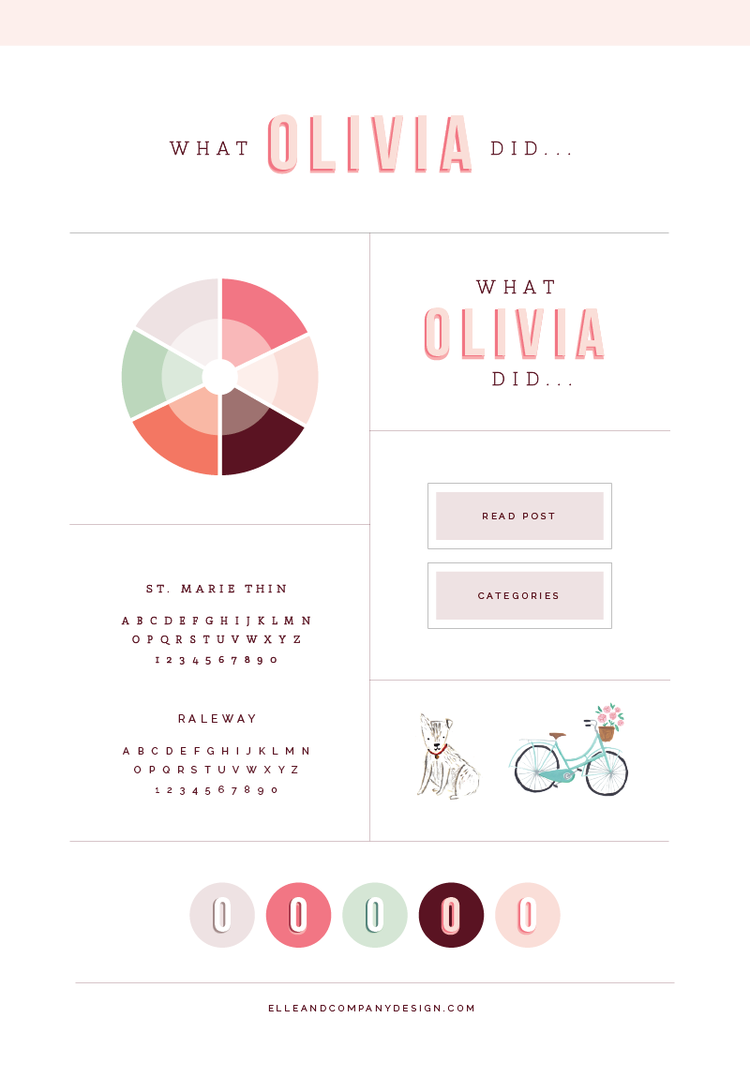
Much of the branding process takes place before my clients send me their initial design inquiries. The design direction isn’t developed in the inspiration stages when I pull images from their inspiration board or even when I look over their client homework; it’s developed far earlier.
Brands are developed at the start of a business through their interactions with their audience. They’re developed through every point of contact, whether it’s through an Instagram post, product offering, or the copy on their website.
My job as a designer is to identify the existing brand and display it visually.
Which is why designing for Olivia Purvis was an exciting opportunity.
“As entrepreneurs, time is our most valuable commodity. Money will come and go, but once you’ve invested your time into something, that time is gone forever. It stands to reason that if there are any actions we can take as business owners to free up more time in our daily routines, we should take them.” - Chris Ducker
Isn’t that the truth? The more time I put into Elle & Company and growing this business, the more I understand the value of time.
These past few months I put in 15-hour days, 6-7 days a week and I still wasn’t conquering every to-do on my list, so I knew I had two choices: to cut back or to delegate. I chose both.
It’s no secret that I love Squarespace. Not only is it easy to customize, easy to use, and easy on the eyes, but it makes the client process so simple for designers who use it to create client sites.
Because Squarespace is still relatively new and there aren’t as many designers using it as there are on Wordpress, I receive several emails each week regarding about the ins and outs of how I design client sites using the platform.
I get asked everything from how I handle billing to how I choose a template, so today I’m sharing an inside look at my Squarespace client design process from start to finish.
For those of you who are already designing sites in Squarespace, I hope you’re able to take something away that makes things simpler and more efficient on your end. And for those of you who are considering trying your hand at offering Squarespace site design in the future, I hope this post convinces you to take the leap and try it out.
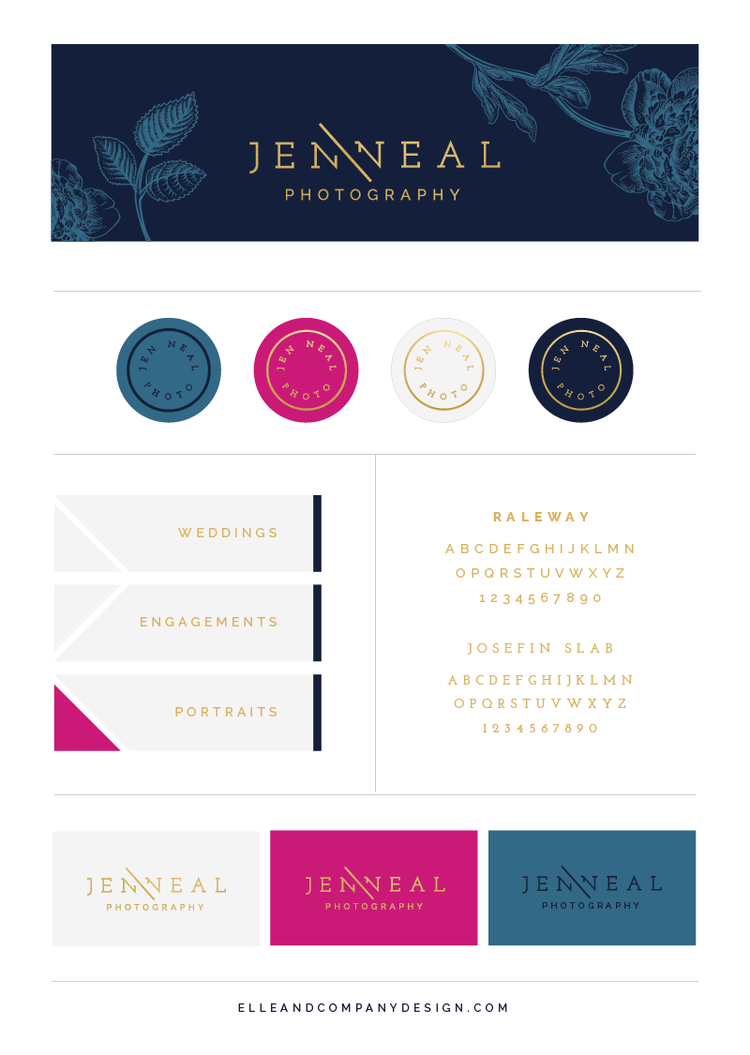
With every client branding project, I make it my mission to not only create a distinct visual identity for each business but to develop a system for how all of the design elements work together.
Not only does it make for a more polished, professional brand in the long-run, but it makes it much easier to implement a brand into my client's website and collateral items like business cards, social media images, product packaging, etc.
Jen Neal's new brand goes down as one of my favorite design projects because of the system we created with her vibrant colors, bold patterns, and classic typography. I'm excited to share the design process with you and offer a behind-the-scenes look at how I strategically incorporated each design element into her brand.
Blogging is a polarizing topic; it’s either one of those things business owners get really excited about or dread with a burning passion.
Those with negative opinions of blogging usually dread it for the following reasons:
- They don’t have the time
- They don’t feel confident in their writing abilities
- They don’t know what to blog about
- Or they underestimate the amount of beneficial content they can share
Do you fall into the dread category? If you do, I bet you can relate to one (or all) of the reasons above. And if you don’t, you might reach a place someday where your excitement about blogging begins to fizzle and the dread starts to creep in.
Explaining the benefits of blogging can be motivation in and of themselves to overlook those reasons and get started, but today I’d rather tackle the dread head-on and provide some practical, helpful ways you can make blogging work for you.
While I love helping all creative business owners, I get especially excited when I receive emails from other graphic designers and aspiring graphic designers about my process, how I got started in the industry, and my advice for finding clients.
I received one email last week from a design student asking me to share 10 insights on how to become a successful graphic designer. And as I was typing my response to her, I realized that many of you out there might be able to relate to many of these insights or glean something from them, too.
While these tips are geared toward designers, they can truly apply to any field. Here’s a look at 10 things I’ve learned from my 5+ years of freelance design experience.
October 2015
The benefits of using social media for business are obvious.
Social media platforms allow you to reach your target audience in the places where they hang out the most. They help you network with others in your industry (and stay up to date/keep an eye on what they’re up to). They give your audience the opportunity to follow along with you and it give you the opportunity to engage and communicate with them.
And, oh yeah, social media accounts are free.
But despite all of these excellent benefits, there’s one glaring issue with using social media for business.

Ever since I shared my 2-week design process on the Elle & Company blog a few months ago, I've received a ton of comments and emails about the ins and outs of how it works.
So we decided to switch things up a bit from our normal blog content with a video explaining the benefits of the 2-week process as well as some tips for how you might be able to implement it for your service-based business.
I remember all too well the days of working a 9-5 office job, sitting in my cubicle and dreaming of working from home. I longed for the days when I could run an online business from the privacy of my own apartment, ditch my long commute, work in stretchy-pants, and not have to pack a lunch.
The grass is always greener, isn’t it? While I’m extremely grateful that my work-from-home dreams came to fruition, I’m able to see a fuller, less-glorified picture of what running an online business looks like in actuality. There are numerous benefits, but there’s one aspect that’s been difficult for a people-person like myself - the lack of human interaction.
Sure, I receive tweets, blog comments, and Instagram feedback, but it isn’t quite the same as one-on-one, in-person conversation.
As a reader, you might experience this same problem from the other side as well. While I know reading this is awesome (am I right?), it’s not quite the same as sitting down to coffee with me and having a 2-sided conversation. In-person connections will always be a thousand times better than anything you can experience online.
And for an online business, this poses a problem. People want to support a business they can personally connect with.
Think about it: Why do people buy handmade clothes and jewelry from Etsy, drink craft beer, and shop local? They want to support a cause they can get behind instead of supporting a big, generic corporation. They want to put their money towards something they can relate with. Consumers are more interested in buying an experience than a product.
So how can you connect with your readers in a more personal way and provide an experience (while also adding a little more human interaction to your workweek)?
September 2015
As a business owner, your time is limited. You’re wearing several different hats and juggling many roles, each of which requires precious time out of your day. And chances are, you probably don’t have many hours to spare.
We’re all looking for ways to make the most efficient use of the 24 hours we’ve been given. So I’ve rounded up my favorite time-saving hacks - 1 for each hour of the day - in hope of helping you create a little more room in your busy schedule.

I’m all about organizing and creating systems to make business easier. So when we started getting everything ready for the launch of The Collaborative a couple months ago, I knew we needed to find a system for keeping up with submissions, due dates, to-do’s, etc.
We tried creating and sharing access to a Google calendar, but it didn’t help us keep up with contributors or cut back on the amount of emails that were necessary to communicate with everyone on board. Evernote was another option, but it wasn’t as simple or intuitive as we hoped it would be.
And then we heard about Trello, a collaboration tool specifically geared toward organizing projects. After doing a little bit of research to figure out how to utilize it best, we set up a free account and were amazed at how such a simple tool could have such a huge impact on the organization of our blog.
Those of you who blog regularly understand all of the moving parts and details involved with each post, especially if other people partner with you to create content. So today we’re sharing a behind-the-scenes look at how we use Trello to keep up with blog post ideas, create editorial calendars, and stay on top of all of our to-do’s for both the Elle & Company blog and The Collaborative.
When we announced our goal of striving to reach 100,000 unique monthly blog visitors last spring, we received some negative feedback from a couple of our readers.
“Your goal to 100,000 viewers seems a little 'out there.' Like you just want to be big and have a number attached to you. What’s wrong with having a small tribe? That's not a bad thing!”
And in all honesty, I used to have that same outlook on blogging and business when I first started Elle & Company. I shared the opinion that a small tribe of loyal readers was better than a large group of casual readers.
But I quickly realized that in order to create a successful, profitable business, I had to focus on bringing a larger number of people into my site and build trust with them to increase their loyalty.
There are all kinds of posts out there on the importance of utilizing a mailing list. And there are even more posts out there with tips and strategies for growing your mailing list.
But what happens once people opt-in to your newsletter? What kind of content will you be sharing with them in order to build trust and encourage them to buy from you or work with you down the road?
Here are a few ways to spice up your mailing list and raise subscribers’ excitement when they see an email from you sitting in their inbox.
There are several roles involved in running a business - boss, administrative assistant, social media strategist, marketing director, accountant, copywriter… the list goes on. Most days I find myself doing a strange, frantic dance, running around trying to keep every plate spinning.
If you, too, are in the throws of entrepreneurship, I’m sure you can relate. It’s tough juggling everything, wearing 20 hats, and keeping up with all the important details and deadlines.
That’s where this post comes in.
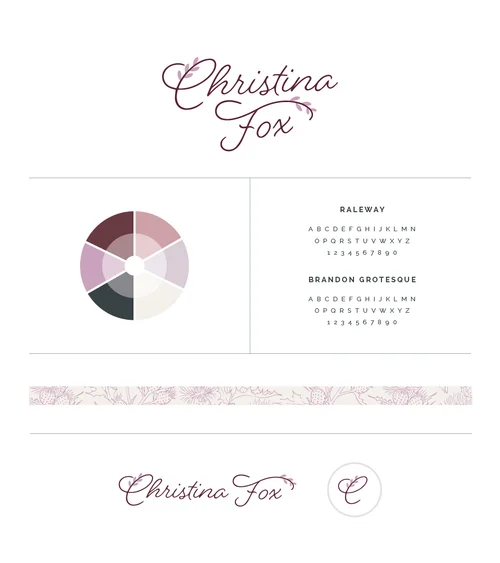
My 2-week design process has made things a little busy around here! I've booked over 20 projects for 2015 and it feels like this year has flown quicker than all the rest.
With little turnover time between clients, e-courses in full-swing, and the launch of the Collaborative in less than one week, I have a few fun brands that haven't made an appearance on the blog quite yet.
So if you enjoy Elle & Company client project reveal days, you're in for a treat. I have 3 new brands and websites to share with you today (along with a little snippet of the process behind each one)!

Remember that big, secret, exciting Elle & Company project I mentioned at the beginning of the summer? It’s time to let you in on a venture that’s been months in the making.
It’s no secret that I’m a big fan of Squarespace. It’s a fantastic option for business owners and bloggers who need a simple, beautiful platform for building a website. It’s mobile-friendly and user-friendly. There isn’t a huge learning curve for figuring out the back-end. And if you’d like to hear me go on more about all its benefits, you can read this post.
But because Squarespace templates are beautiful, simple, and easy to setup, many users have a hard time customizing their site and making it look one-of-a-kind.
That’s where today’s post comes in. I’ve compiled some of the most helpful tools I’ve discovered for switching up the look of a Squarespace site. Some of these might be new to you and some might already be built into your template, but I hope you’re able to walk away with a few new ideas for making your Squarespace site your own.
August 2015
Twitter chats seem to be a popular trend nowadays, especially among creative businesses and blogs. And for good reason; they’re a great way to build community, network with others in your industry, and gain some helpful tips and insights in the process.
But for those who are first-time chatters or new to the Twitter scene, these hashtags and conversations may seem a little foreign and often intimidating.
That’s where today’s post comes in. I’m going all-in to give you a simple overview of what a Twitter chat is, how it functions, and why it’s worth participating in.
For those of you who are familiar with Twitter chats and are considering hosting your own chat, keep scrolling - I share some tips for hosting a Twitter chat at the bottom of this post!
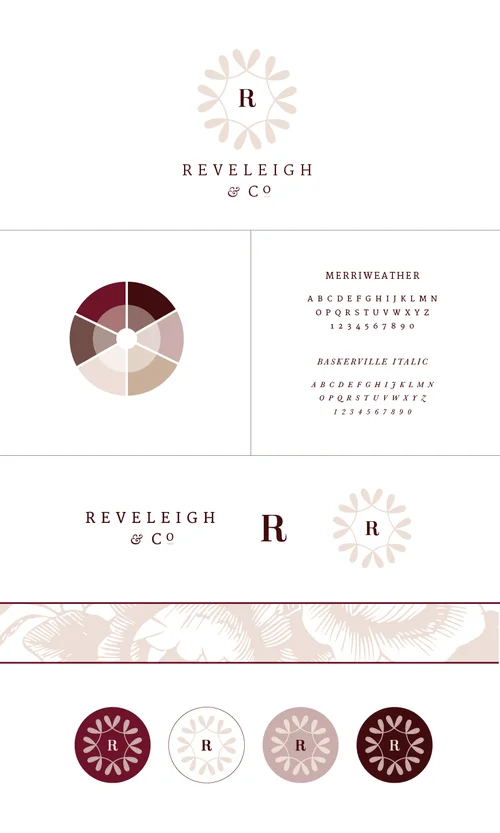
Back-to-back weeks of client launches? It's like Christmas around here!
My 2-week client process has been keeping me busy, and I'm excited to not only give you a look at the finished brand and website for one of my latest clients, Reveleigh & Co., but also share a behind-the-scenes look (and a video) at how I created it.

The scary, exciting thing about entrepreneurship is that business is always changing and evolving. When you're first getting things up and running, you might have a general idea of the services you want to offer and the clients you want to work with, but as you gain experience in your industry you begin to refine your offerings, your processes, and your brand.
It's always a treat to work with creative entrepreneurs who've spent a few years in business; they have a better idea of the clients they're trying to appeal to, the items they need to have designed, and the overall visual identity they're trying to achieve through their brand and website.
So when Amanda Jameson approached me for design work, I was thrilled. Her previous brand and website weren't cohesive with the quality and style of her work, so we spent 2 weeks partnering together to create something more fitting for her photography business.
The final product is one that I'm thrilled to reveal today (as well as a behind-the-scenes look at how it all came together)!
I emphasize high quality content often on the Elle & Company blog, and for good reason: it gives visitors a reason to return, increases shares and traffic to your website, builds trust with your audience, and in turn increases bookings and sales.
I also highlight the benefits of a streamlined client process, share posts on SEO (which, by the way, is the focus of this week’s Elle & Company newsletter), and stress the importance of an intentional social media strategy to funnel people back to your site.
But all of the above loses value if users can’t quickly and effectively find what they’re looking for on your website.
And that’s where today’s post on user experience design comes in.
There are many different directions you can specialize in as a graphic designer. In design school we got a taste of each one - packaging design, advertising, user experience design, web design - but I was always drawn to branding. I loved the idea of creating a cohesive visual representation of a business through fonts, colors, graphics, illustrations, and patterns. The organization and strategy behind it all was right up my alley.
But I never understood just how valuable brand design was until I started Elle & Company a year and a half ago. While blogging, marketing, advertising, and social media strategy have contributed to my business’s growth, much of it wouldn’t have been possible if it weren’t for a strong, recognizable brand.
There are innumerable benefits to dedicating time and resources into a streamlined brand. Today I’m touching on 8 of them with the hope that you’ll gain a better idea of the great impact a cohesive, well-designed brand can have on your business.
The more I work one-on-one with design clients, the more I understand the importance of communication, especially within a creative business. In order to clearly visually communicate the mission and purpose of a brand, I must first clearly understand the business behind it. And that happens through thorough communication on both ends of the client experience.
So I implement what I call “client homework” - a series of questionnaires and assignments that help me cover my bases and gain as much feedback from my clients as possible before the design process begins.
I highlighted the benefits of client homework and how I use it in this Elle & Company article a few months ago, and I’ve since had several requests for a look inside my questionnaires.
And while I’m usually very open about sharing the details of my 2-week design process and my custom project pages, I think this subject can be bridged in a way that’s more beneficial than giving you all my “answers,” so to speak.
Instead of sharing my own questionnaires, I want to guide you through creating your own client homework. And that’s where today’s post comes in.
If you were to take a snapshot of my business this time last year and hold it up to Elle & Company today, you wouldn’t think the two were related. In August 2014, my business was hardly profitable, my blog content was a compilation of anything and everything that interested me, and I was looking to other creatives in my field to determine my definition of success.
Thankfully, my business-minded husband, Jake, came on board and brought in strategy last summer, and his insight and wisdom transformed my business for the better. He helped me set bigger goals than I had ever considered for myself and came up with actionable steps to help me get there. And once we implemented those steps and strategies, my business began to grow exponentially with each new month.
I’ve heard from many of you who feel stuck on how to take your blog or business to the next level, so I’m here today with a look at the practical, actionable goal-setting strategies we used to grow Elle & Company.
This isn’t a lofty, flowery post to inspire; there are plenty of posts like that out there already. This is a post to encourage you to think bigger and become more strategic with your blog and business.
July 2015
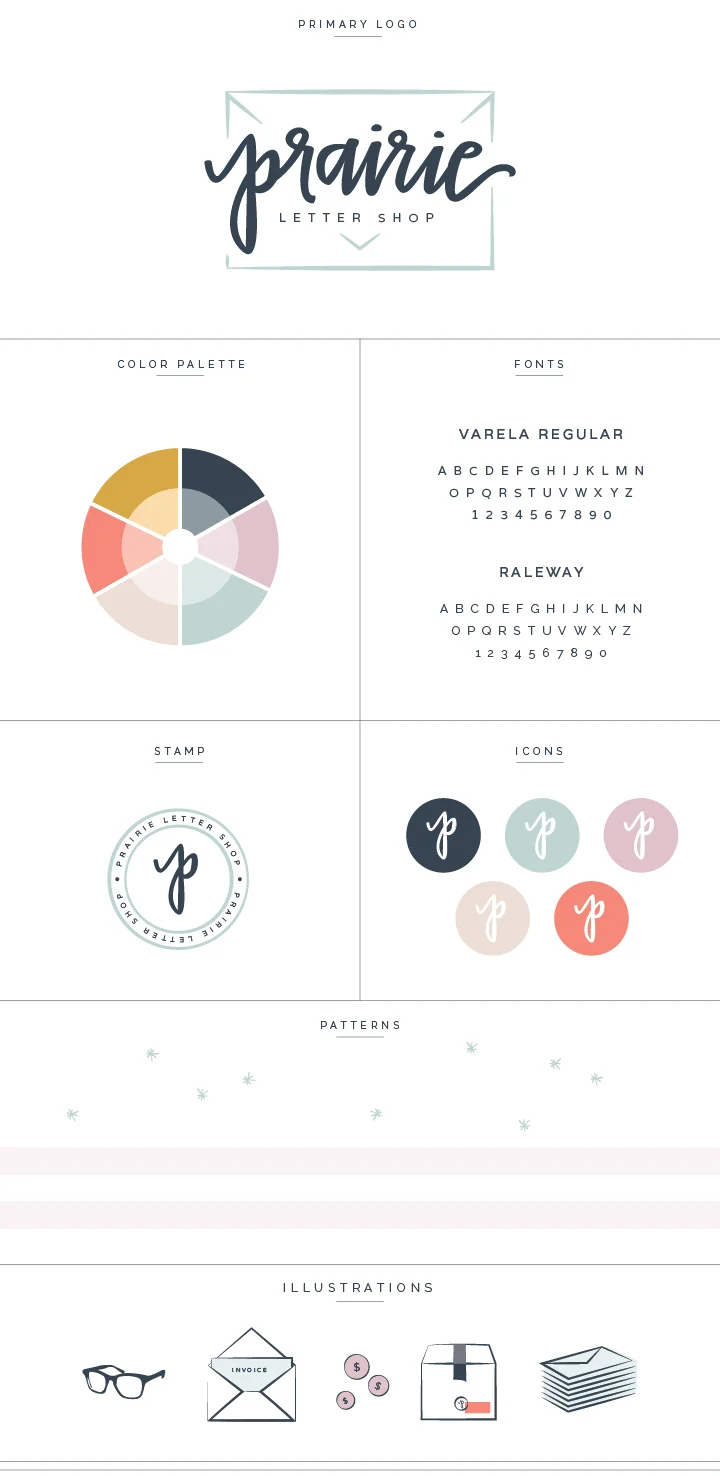
The night before a client launch day always feels like Christmas Eve around here. So much intention, time, and effort goes into a brand and website design on both my end and my client's end, and it's a good thing I only work within 2 week timeframes because the anticipation to reveal the final product gets me every time.
But while you can look through my design portfolio and get a glimpse at the final designs, you might miss out on my favorite part of the entire project: the process. Because while it might seem like design only involves creating pretty things, there's much more intention and effort that goes on behind the scenes.
So today I'm giving you a behind-the-scenes look at the creative problem solving that took place behind my latest design project for Alex Estes with Prairie Letter Shop. The hand lettering, bright color palette, and fun illustrations make this project one of my favorites to date, and I'm excited to walk you through the design process!
When I first started Elle & Company a year and a half ago, my design background gave me an edge in the areas of blogging and business. Because of my experience and training in design school, I was able to easily (and affordably) create my own logo, blog graphics, and website. I felt comfortable designing a cohesive visual identity for my new business.
But I quickly realized that this isn’t the norm. Many creative entrepreneurs, especially those who are just starting out, feel intimidated by design. They run into design needs often, but they don’t know how to create a strong, unified first impression for their audience. They’re often a tight budget, as well, and may not be able to hire an experienced designer.
So last winter I began to brainstorm ways that I could meet the design needs of bloggers and business owners. And that’s where the idea for these upcoming Elle & Company e-courses formed.
I’m excited to dive into the details of our upcoming e-courses and share some new dates with you today. I’ve built these courses with you in mind, to give you an advantage in the area of design and allow you to feel more comfortable and competent creating graphics for your blog and/or business.
E-courses are gaining popularity in the creative industry, and for good reason: they’re a scalable source of passive income. They may require more work at the outset, but they have the potential to bring in more money than service-based income sources in the long run.
If you missed my post on passive income a couple weeks ago, be sure to check it out here!
If you’ve been seeking to create another stream of income for your business or you’re hoping to take your business full-time, today’s post is for you.
I’m taking you behind the scenes of how I successfully launched my first e-course to bring in passive income. My hope is that these 6 simple steps allow you to work smarter, not harder, and take your business to the next level.
We all have the same amount of hours in a day. That’s why productivity tips are sought after and blog posts on the topic are often shared; with a limit on time, we all want to utilize and maximize the 24 hours we’ve been given.
Especially in business.
For the past year I’ve been working from home full-time, and although my schedule could always be improved and I will never have time management down to a T, I’ve learned a few tricks that have been helpful for me along the way. I also love getting a glimpse at the schedules of other creative entrepreneurs.
So today I’m sharing a sneak peek into my workday routine. Odds are that my workday schedule won’t be perfect for you, but I hope you might be able to glean a thing or two (and leave a comment with your best advice for making most of a workday).
It’s also important to note that this is an ideal workday. In a creative field, each day is different and things inevitably come up that throw off my daily routine. Some days you just have to roll with it and try to get back on track!
When I was posting each weekday on the Elle & Company blog, I was often asked how I continued to come up with blog post ideas.
My answer was always the same: I’ve found that the more I blog, the more I understand my audience and come across topics that would interest them; it actually gets easier over time.
I also know that business is never stagnant; there are always new lessons to learn. Industries evolve and there are always new changes and practices to come across. If you aren’t learning, your business probably isn’t growing.
While many of my posts are instructional and informational, they’re also indicative of where I am in my business and what I’m learning.
I write from experience and research so if you see an Elle & Company post on a certain topic, there’s a good chance that it’s been on the forefront of my mind at some point and important to my business.
The same is true for this post.
We’ve all heard the saying “work smarter, not harder.” I have been putting a lot of thought into how we bring in an income through Elle & Company, as well as how we can make the best use of our time.
Today we’re taking you deeper into what we’ve discovered and how we plan on making things easier for ourselves in terms of bringing in an income for our business.
While the goal of each Elle & Company article is to benefit you, I know that this one might be a game changer if you haven’t put much thought into passive income.
I’ve never met a blogger who wasn’t at least a little interested in their blog traffic, especially those who blog for business.
A higher number of visitors has the potential to open doors down the road, whether it’s a sponsorship opportunity, collaboration, job offer, book deal, client booking - the possibilities are endless.
But it isn’t always easy to find an audience and appeal to them. I remember the struggle all too well, so today I’m sharing 12 strategies that have proven to be effective for growing Elle & Company’s following. My hope is that they’ll make a large impact on growing yours, too.
If you took a look at the Instagram feed of a creative entrepreneur, you might think you have their day all figured out. Quiet mornings at a clean desk with a cup of coffee in hand, no commute, taking time to answer emails and catch up on social media wearing stretchy pants. Spending the day editing photos, writing blog posts, and sketching. Occasionally switching things up a bit with a workday at the coffee shop. Setting a customized schedule with built-in vacation days. Seems pretty ideal, doesn’t it?
After months of increasing the quality of our content and growing our readership, I decided to put my hard work to the test with the launch of the first Elle & Company e-course this past March.
I was a little nervous; I knew it would be an honest look at whether the content marketing strategy that I had worked so hard to implement had truly paid off.
So I waited by the computer as the clock struck 12:00pm and our 40 seats went up for grabs. Less than 15 minutes later, I sat there shocked and excited as my first online product completely sold out.
My strategies for selling the e-course weren’t over the top or elaborate, but they proved to be effective. Today I’m revealing exactly what I did and how you can create a buying frenzy for your online product, too
June 2015
I’ve discussed why mailing lists are important and I’ve shared about the ins and outs of using Mailchimp, but there’s one crucial piece to effectively utilizing a mailing list that I haven’t covered quite yet: autoresponders.
It seems too simple, but email automation is one of the most effective ways to gain the email addresses of those who are truly interested in your products and services. In fact, one survey by the Lenskold Group and the Pedowitz Group says that automation increased the quality of leads that get passed to sales by 60% (source).
Autoresponders also help solve many problems within your business. Have you ever wondered how to automatically send a welcome message, freebie, or recent newsletter to new email subscribers? Maybe you’re interested in setting up a marketing campaign for recent customers or creating an email workflow for your clients.
If any of the above grabs your attention, today’s post is for you. I’m explaining the ins and outs of using autoresponders as well as some creative ways to use them for your business. Then I’ll take you behind the scenes for a how-to on setting up autoresponders in Mailchimp.
There were a few things I said I would never be when I grew up, and salesperson was near the top of the list. For some reason that word has always conjured up images of a not-so-trustworthy person trying to sell me something that I don’t need or have any interest in.
So you can imagine how horrified I was when I got off the phone with a potential client a few months ago and Jake remarked that I was “quite the saleswoman.” Saleswoman? Really?
But the more I got to thinking about it, the more I realized how much of my job has to do with selling. And there’s no way around it; in order to create an income and keep my business afloat, I have to sell my products and services.
As a designer, it’s easy (and very tempting) to make updates to my brand and website regularly. And when I first started, that’s exactly what I did. But over time I began to see how important consistency can be within a brand, even within the smallest details.
Until this past Sunday evening, the Elle & Company site hadn’t seen any significant updates in well over a year. I had been making a long list of updates and additions with the intention to make the changes in one fell swoop.
I jumped at the opportunity of using my off-week in between clients to to make the changes, and with all of the exciting things in store for Elle & Company this summer, the timing couldn’t have been more perfect.
Building a loyal audience is a popular topic these days. As bloggers, we all desire to have a following that’s interested in what we have to say and engages with our content. And as a business owner, I know that the more engaged my audience is and the more they interact with my blog and business, the more likely they are to book my services, subscribe to the Library, or purchase a seat to my e-courses down the road.
We all know that growing a loyal audience is essential, but the hangup isn’t in the why; it’s in the how. So today I’m sharing 15 easy ways that I’ve found helpful for growing your blog tribe.
Jake and I were shocked by the response to the latest Elle & Company newsletter.
It had been a week or two since we sent out our last newsletter because of a fast-paced move and 2 weeks without internet, and we also skipped a couple weekday blog posts in the mix, too. While I was stressed about falling out of our routine and breaking my one and a half year streak of blogging 5 days a week, I was stunned to see the impact that inconsistent blogging had on our site analytics.
So, we shared about it in Monday’s newsletter.
While there's definitely creativity and a basic design knowledge involved in creating a one-of-a-kind logo, there's also a system behind it all.
I've always been curious about how other designers go about their creative process, so today I’m taking you behind the scenes to give you a peek at what my logo design process looks like from start to finish.
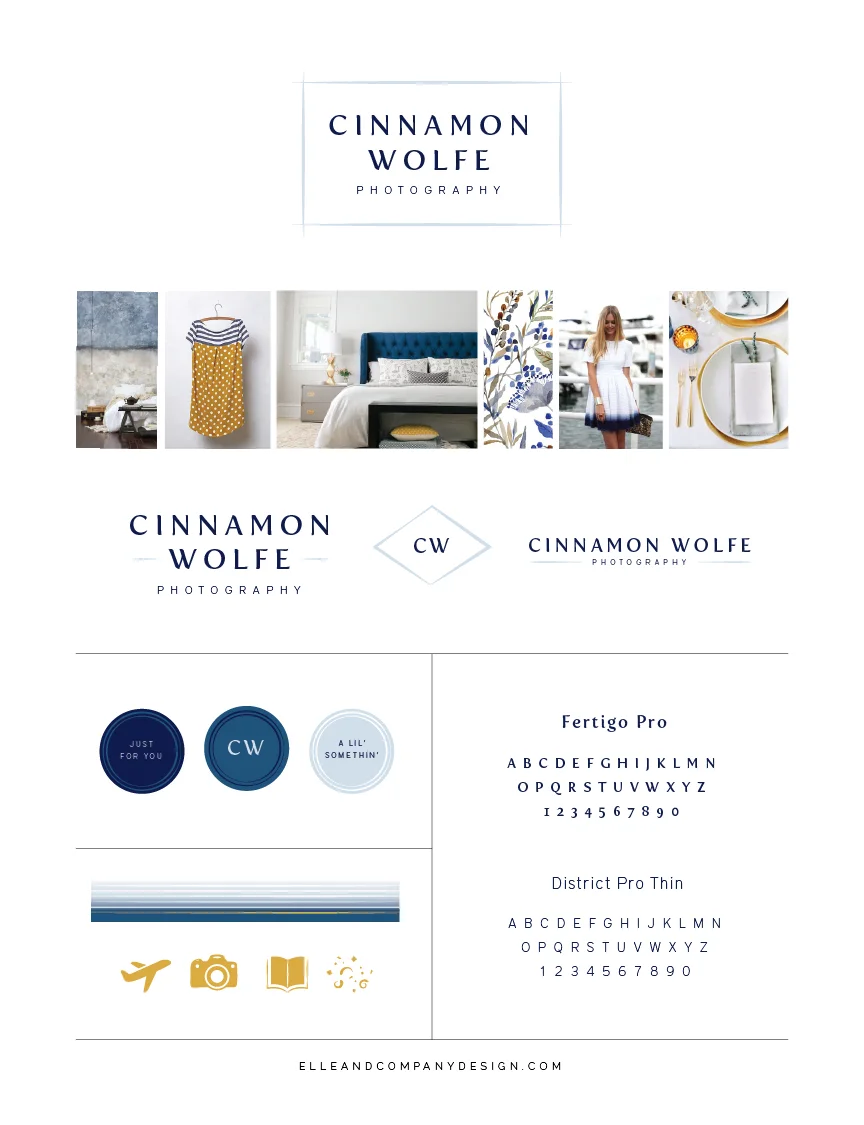
A brand is like a person; it has a distinct style and character that's all it's own. It has a unique tone of voice, it uses certain words more often than others, and it has its own unique way of "dressing itself" to make a great first impression.
My job is to help with that last part - "clothing" a business through its visual identity.
If you've been following along with the Elle & Company newsletter, you've probably noticed the large role that website statistics have played in our business.
Although numbers aren't everything, analytics help us set and track goals for this blog by seeing which sites our traffic comes from, which posts receive the greatest amount of interaction, and how long visitors are staying on our site.
While Squarespace provides a great overview of site statistics through their metrics, Google Analytics provides a more in-depth look. Thankfully, Squarespace easily syncs up with Google Analytics, and today Jake's walking you through the set up.
We’re all visual people to some extent, so it’s no wonder that Instagram is all the hype these days. The social media platform is addictive, free, and fun to use, which has great implications for creative businesses; it allows you to showcase your work/products in an unobtrusive, attractive, and personable way.
As a designer, Instagram has been especially helpful for my business. Several of my past, present, and upcoming design clients have found me through Instagram, and the larger my following becomes on the platform, the greater chance I have of drawing in clientele and blog readers.
This time last year I was close to reaching 1,000 followers, and today I’m somewhere around 11k. I’ve received several inquiries from readers lately who’ve asked me how I’ve grown my Instagram following, and although I’ve shared a couple posts in the past about Instagram landing pages and how to create the quintessential Instagram feed, I’m going in a little more detail today to share 6 things that I attribute to my organic increase in followers.
If you’ve been following Elle & Company for any length of time, this won’t be the first time you’ve heard me talk about high quality content. I use that term often around here for one primary reason: it has the potential to revolutionize your blog and business.
I’m living proof of this. A year ago I was struggling to find my niche and my voice on the Elle & Company blog. It wasn’t until I had a few revolutionary breakthroughs and started to focus on high quality content that things began to pick up.
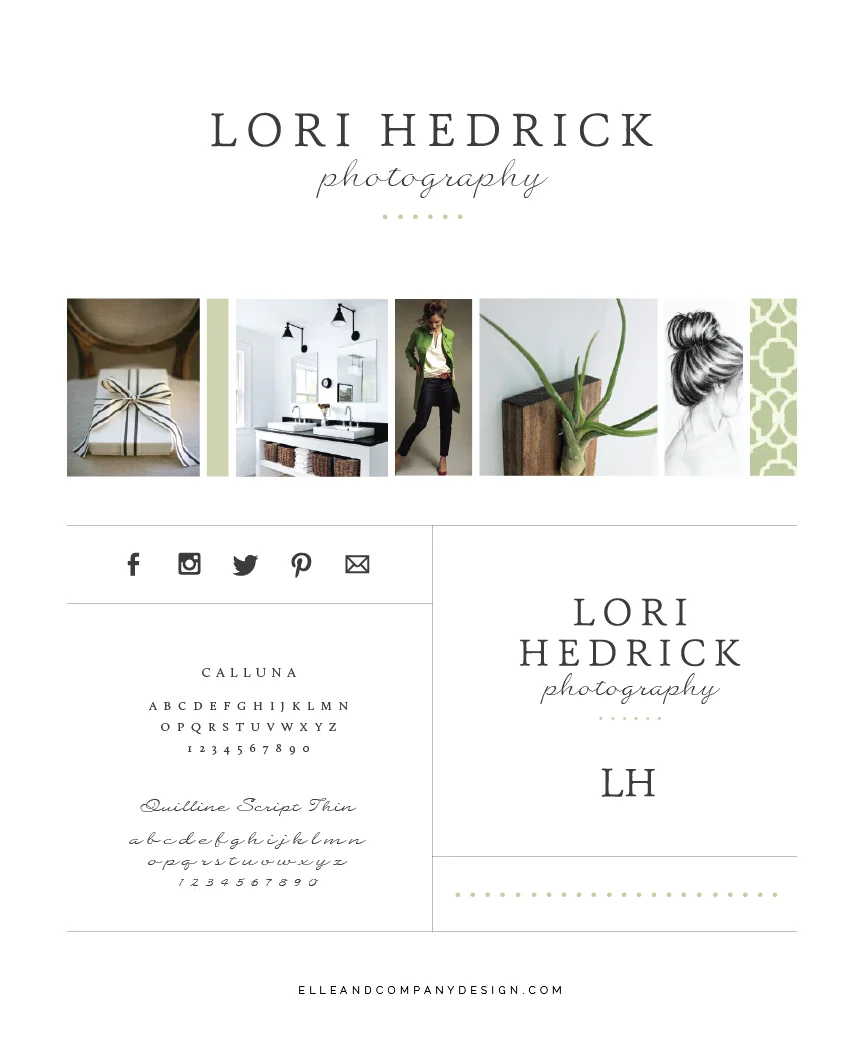
Before my 2-week design process begins, I have each of my design clients fill out a series of questionnaires about their brand, process, and website. One of my favorite, most telling questions seems so simple, but I refer to their thoughtful responses throughout the entire design process. What are 10 adjectives that best describe your brand?
Lori Hedrick described hers as real, close, caring, happy, familiar, easy, rich, and true. I'm excited to show you how those seemingly simple words have played out into Lori's beautiful new brand and website!
A few months months ago, Jake started encouraging me to up my game on LinkedIn because of it's power for marketing and networking. Truthfully, I didn't understand much about the social network and underestimated it's usefulness... until I received these 2 messages from LinkedIn within hours of each other:
"I actually came across your LinkedIn profile as I'm looking for a Web Designer to fill a permanent position with one of my clients. Wasn't sure if you might be interested? Look forward to hearing from you! Thanks, L"
"Hi Lauren! I hope this finds you well. I would like to speak with you about a Visual Design position with Lowe's Home Improvement. Would you be interested? Please let me know! Thanks! Alexandra"
A week or two ago I wrote a post on 5 of my greatest design challenges, and I was sweetly surprised by the response I received from readers. It’s nice to know that my struggles are relatable, and I loved reading through the feedback from all of you.
This week I thought it would be fun to share a similar post on a different topic: business. If you’re an entrepreneur and creative business person, I have a feeling that you can probably relate to a handful (if not all) of these, too.
If there's one thing I've learned these past few months about business, it's that strategy is fundamental to growth.
When I first started Elle & Company, I was a 23-year old graphic designer who aspired to work full-time for myself. Even though I grew up in an entrepreneurial household, my dad's business venture and mine are very different. I didn't know the first thing about pricing, taxes, and marketing, and I was convinced that the passion I had for design would be enough. I saw many other women starting creative businesses with some success, and I found myself looking to them for how I should be running my business.
I had no business plan, no goals, no strategy. So inevitably, I failed miserably.
May 2015
In the past couple weeks, several people have reached out to me with the same question I received from Leslie a couple days ago:
Hi Lauren, You may have addressed this in a post already, but is it your priority to increase the traffic on your site versus building your email list? If you've talked about this before... please point me to it. Love your work and wisdom! - Leslie
First, thank you Leslie! This is a great question, especially since many successful business owners and bloggers are stressing both the importance of increasing web traffic and building an email list. And while both of them are extremely important, you're correct in noticing that for Elle & Company, we put more time and effort into growing our blog audience. Here's 3 reasons why.
Last month I introduced a new Elle & Company blog series called the Business Book Club. My hope with this series is to start a discussion, challenge one another to dive into great business resources, and learn more from the pros on what it takes to grow a successful business.
The first book selection for May was Purple Cow by Seth Godin. Although this book is small (I finished it within a few quick flights between Charlotte and Grand Rapids), it's dense. It would take several posts to cover all of Godin's great insights and examples of modern marketing, so today I'm highlighting my biggest takeaways from the book.
If you ask 100 people about SEO, you might get 100 different answers. And frankly, it all depends on what you're trying to accomplish through your blog or website. We can relate to the uphill battle of trying to get your content in front of countless people through search engines, so today Jake and I are partnering together to share how you can create content that will rank higher in search engine results.
While branding has many benefits for a business, some of the greatest are differentiation, recognizability, and memorability. So whenever I approach a new project, I challenge myself to push the limits and design a brand unlike any other I've designed in the past and unlike any other I've seen from other designers.
My 2-week design process has made this challenge easier by allowing me to focus solely on one client at a time and pour into all the fun details. Today's new brand and website for Magnolia Media PR is no different, and I'm excited to show you the final designs!
We were blown away by the number of readers who participated in last week's annual blog survey. Thank you again to those of you who gave up a couple minutes of your day to weigh in with some feedback. It was extremely helpful to read about what you enjoy most about Elle & Company and learn what we could be doing better, but it was even more fun to get to know you and read about your interests. We really appreciate your honest answers and we're very thankful that you've been following along.
It wouldn't be fair to keep the results to ourselves, so we're sharing them on the blog today (along with the help of the new Squarespace chart block). Here are the facts about you!
Although I've been blogging for over 3 years now, I've learned the most about blogging over the past 6 months. I've never poured this amount of time and energy into a project, and I spend at least 3 hours each day preparing content for this space. It's been trying, rewarding, and exciting seeing this blog grow over the past several months, and I love sharing what we've learned with other creatives and entrepreneurs. Blogging has become fundamental to our business, and Jake and I can't stress the importance of it enough.
Today I'm sharing 25 of the biggest things we've learned since we took a more serious approach to blogging last November. I hope that these insights might help you with your own blog and save you all of the trial and error that we've had to go through!
Have you ever wondered how to get related posts to show up below each of your blog articles on Squarespace? Maybe you’re looking for a fast way to add featured posts to your sidebar or you’d like to create an easy archive page for your site.
The answer to all of the above lies in my favorite Squarespace tool: the summary block. Today I’m taking you behind the screen to show you how to use the tool and get creative with it to meet many of your website building needs.

One of our favorite insights from last week’s reader survey was reading about the areas that we could improve on in our blog and business. Many of you had some great constructive criticism and an even greater number of you requested posts on specific topics, like the challenges I’ve faced as a designer, blogger, and creative entrepreneur.
So today I’m jumping in and getting a little more personal by sharing some of the greatest design obstacles I’ve experienced both in design school and in business. You may not be a designer yourself, but I hope that you’ll be able to relate to these challenges in some shape or form.
Passion gets you started, but strategy keeps your business running. Successful entrepreneurs know that in order to pursue what they love, they have to be smart about how they operate their business. And a business cannot operate without money.
Money can be an uncomfortable topic, but it’s a necessary part of entrepreneurship. While I love my job and consider myself blessed to design for clients all day long, Elle & Company is a business, not a hobby. In order to keep things running and bring in a steady income, I’ve had to be strategic and intentional about how I generate a profit from this business.
In typical Elle & Company fashion, I’m laying it all out for you in today’s post. Here are some insights on how I’ve created a consistent income from my freelance business.
While I typically aim to share helpful posts on the blog each weekday, today I’m flipping things around and inviting you to take part in our annual Elle & Company reader survey!
This is your opportunity to jump in and tell us more about yourself, let us know why you read this blog, and weigh in on what you hope to see from us in the upcoming months.
Jake and I have some big goals and large changes in store for Elle & Company in the near future, all of which work toward becoming an even greater design, blogging, and business resource for you. That’s why your feedback is even more valuable; we want to know how you found us, where we can improve, and why you keep returning.
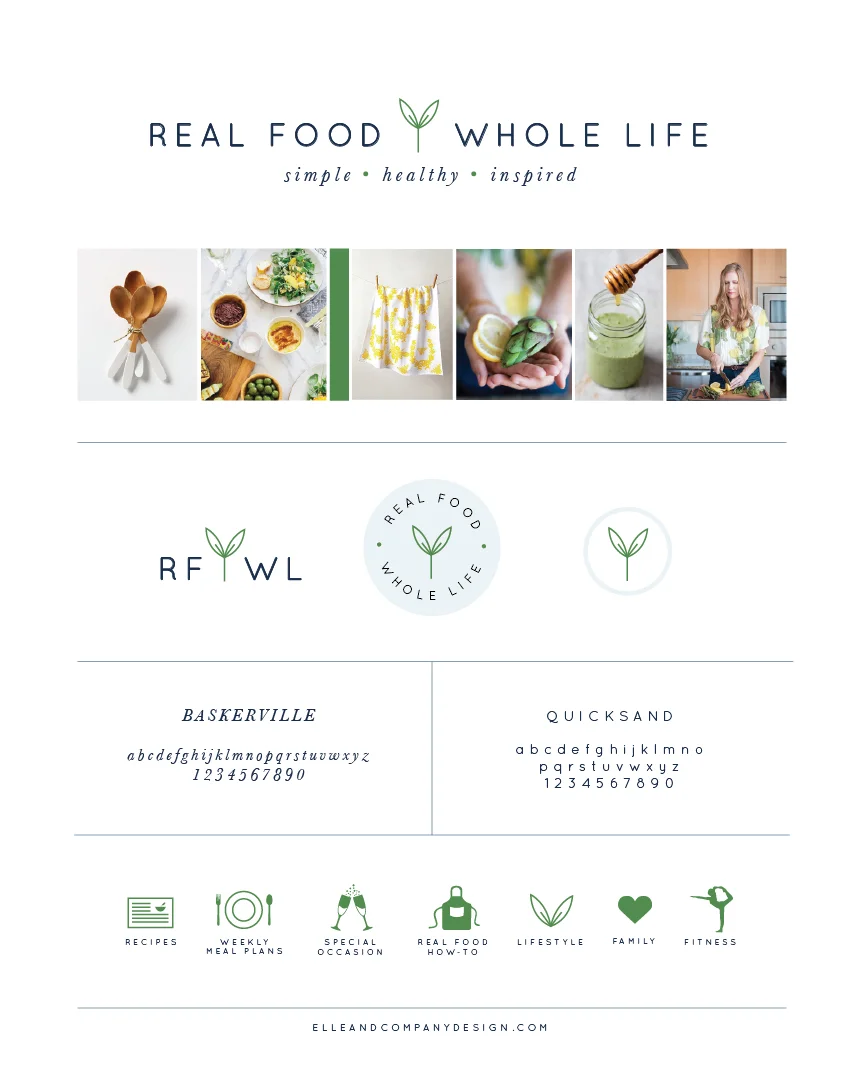
Around the first of the year I received a design inquiry from the blogger behind Real Food Whole Life, Robyn Downs. After our initial consultation, it was clear that Robyn and I would work well together. Not only is she extremely organized and intentional, but Robyn has a great amount of drive behind what she shares on her blog; her passion for nutrition and leading a healthy lifestyle is contagious (so much so that I've been following along with her helpful meal plans). Our 2-weeks together resulted in a new brand and website that reflects her passion for healthy living and attention to detail, and I'm excited to share the process and final design in today's post!
I’ve recently shared a handful of posts on my client experience, from my 2-week design process to my custom project pages and the program I use to keep track of contracts and invoices. While I know that what works for me might not work for everyone reading this, my hope is that there might be a few insights within these articles that benefit you and make your process easier, more streamlined, and less stressful.
Up until this point I’ve shared all of the preparation, planning and organization that I perform on my end. But I’ve learned that in order to do my job well and provide my clients with my best work, it’s just as important for my clients to prepare, plan, and organize on their end, too. In order to help them gather all of their information and walk them through everything that I need for their designs, I’ve implemented a little thing that I like to call “client homework.”
For those of you who are new around here, there’s something you should know about me: I’m a huge fan of Squarespace. I switched over to the platform a couple years ago after using both Blogger and Wordpress, and I’ve never looked back. I started the Elle & Company site on the Squarespace platform and I’ve been so pleased by the simple interface and gorgeous template designs that I highly recommend it to every design client and blog reader. I also wrote a blog series on it a couple months ago that included 2 free webinars, all of which are recorded and shared here.
Somehow, in all of the many features I shared with you within that series, I left out one of Squarespace’s most functional capabilities: e-commerce. Today I’m giving you a look at how easy it is to set up shop using Squarespace.

Instagram is currently the fastest growing social media platform. It started as a simple photo-sharing app among friends, and it has since grown into a community of over 300 million brands and consumers. For business owners and bloggers, it's silly not to be engaging with followers on Instagram through likes, follows and comments; an active audience is right at your fingertips.
Since Instagram is all about visuals, it's important to have a professional, branded feed. We all appreciate those accounts with the seamless, gorgeous images, but we may not know exactly how to get our own feed looking cohesive and one-of-a-kind. Today I'm sharing a few fundamental tips to get you started in the right direction.
Successful entrepreneurs understand that in order to do well, they can’t go it alone. Networking is a key part of not only reaching new audiences and gaining referrals, but it’s also beneficial for building relationships and combining forces/talents. I’ve learned that one of the most fundamental ways to truly connect with other industry professionals is to demonstrate authenticity.
Here are 12 ways that you can genuinely network with others in business.
A couple weeks ago I shared my simple, unexpected method for streamlining my client process. And while client pages on my website are a great way to keep revisions, drafts, and final files all in one place, there are some functions of my client process that my clever client pages just can’t perform: electronically signable contracts, invoicing, time tracking, and automated workflow.
Thankfully I’ve found another simple solution that takes care of everything that my client page doesn’t: a project management website called 17Hats.
In creative entrepreneurship, we’re used to seeing the same method of launching a product or service. It usually starts one of two ways: either you have a passion and you decide to build a business around it, or you have a genius, one-of-a-kind idea and you decide to build a business around it. You spend countless hours pouring into concepts and making plans, you try to build hype and excitement by spreading the word to friends and family and networking with others in your industry, and then you present it to the world. And once you’ve done all of the legwork and your business is up and running, then you focus on drawing in an audience that would be interested in buying your products or booking your services.
But what if you reversed that order? What if you’ve been doing things backwards and making product launches more difficult on yourself all along?
Curating images is a crucial part of branding that’s always noticed but not often considered (and by curating, I’m referring to exercising intention in the way images are laid out and organized within a group, like a Pinterest board, Instagram account, or even a blog archive). All of your images are a reflection of your brand as a whole, and putting thoughtful consideration into how these images are grouped and displayed can go a long way in making your blog or business appear professional and legitimate, especially across your social media accounts.
We’re all very visual, and we appreciate well-curated groups of images. But the trouble isn’t recognizing streamlined accounts and brands; it’s figuring out how to take our accounts to the next level and curate our images to reflect well on our blog or business.
And that’s where today’s post comes in.
In early April we let you in on one of our biggest goals for Elle & Company in 2015: reaching 100,000 unique blog visitors in one month. We’re focusing on numbers and stats because we have some big long-term goals in store for our business, and we need to grow our audience in preparation for them.
We know that many of you are working on expanding your reach for your blog and business, too, so we invited you along on our journey through our weekly newsletter. We’ve spent the past few weeks giving subscribers weekly updates on the strategies we’re implementing to grow our audience as well as a look inside our analytics. In addition to the newsletter, we’re doing one big monthly recap on the blog.
So how did April go for Elle & Company? Are we any closer to our 100k goal?
There’s nothing worse than feeling behind in your work, especially when you’re juggling multiple client projects. Trying to keep up with 5 client timelines and deadlines at once can be stressful for a type-A designer, and being in a creative field where inspiration and ideas don’t always flow freely makes it even more difficult.
Last fall, after listening to me vent about stress, Jake threw out an idea. “What if you only took on one client at a time and cranked out their project in 2 weeks?” I responded by giving him an incredulous look and a laugh; he clearly had no idea how the design industry works. No one works with one client at a time, and if they do, they definitely don’t finish an entire brand, 4 collateral items, and a website in 10 workdays. That’s crazy!
April 2015
Last week I introduced a new series on the blog geared toward learning Lightroom. There are many bloggers out there sharing insights on how to take professional photos, but editing photos can be just as important as capturing photos. While I’m no expert at either of the above, I do know Adobe Creative Suite well, so I’m teaching you the ins and outs of Lightroom over the next several Thursdays! In case you missed it, you can view the last Lightroom post here.
This week I’m giving you a look into the Lightroom workspace. While this may not be as exciting as learning how to develop and edit your images, knowing the workspace well allows you to optimize your workflow and work efficiently in the software; it lays a foundation that we’ll build upon in the coming weeks.
As a blogger and business owner, I strive to be strategic and purposeful with my social media accounts. I have a slightly different audience on each account, which means that my approach to each one is slightly different. On Instagram, my audience is a wide mix of blog followers, design admirers, and friends and family, and as a result, it’s my most personal account. I share a variety of behind-the-scenes looks at my day to day, new projects, and occasionally a photo or two of my fur-child, Heidi. My audience on Facebook is slightly less varied and consists mainly of bloggers and business owners. I primarily share blog posts and announcements with the occasional quote, feature, or #ellechat reminder.
But until a few months ago, I didn’t have a strategy - and as a result, an audience - for Twitter other than pressing that “Share on Twitter” option within Instagram. I didn’t understand Twitter, and I definitely didn’t comprehend what an excellent opportunity I was missing out on to reach other creative entrepreneurs and bloggers. So I came up with a plan, and I shared it on the blog for accountability (and a hope that I might encourage others to get on board with Twitter, too).
It’s been 3 months, and I’m checking back in with a look at how this new strategy has panned out and paid off.
When I was 6 years old, my dad bought a gym in our small hometown. He spent the next 15 years pouring his time and energy into that business and as a result, the gym was my second home. I remember playing with Barbies in my dad’s office, working at the front desk in high school, and teaching aerobics classes in college. Many gym members watched me grow up there, and they would occasionally ask me if I would take over the business someday. My reply was always an emphatic no thank you; I swore up and down that I would never, ever own my own business.
And now here I am several years later, eating my words. I’ve grown to have even more respect for my dad as I navigate entrepreneurship, and much of what I’ve learned about business I learned through watching my dad pour his heart into helping others. Even though our businesses are very different, there are some overarching business lessons that I’ve found practical and beneficial across all industries and generations. I’m excited to switch things up and share a few of those with you today.
When it comes to a new business launch, my motto has always been go big or go home. Whether it’s a client’s new brand and website or the launch of a new Elle & Company e-course, the time and effort behind big projects is worth celebrating. Not only are new launches a great opportunity to get your audience excited about your business, but they can also expand your reach and help you draw in a larger audience. And even more importantly, big launches can result in big profits.
It’s always a good idea to create excitement around your business, so today I’m sharing 11 practical ways to generate hype around a new launch.
It’s easy to equate someone’s success with their number of Instagram followers. We all do it, even if we’re unaware, when we click on a profile and see that someone has 30,000 followers. They must be pretty important and successful, right? But the longer I’m in business, the more I understand that thousands of Instagram followers amount to nothing if they aren’t engaged, rarely visit my website, and never book my services. It’s much better to have 100 loyal followers who show interest in what you’re doing than it is to have 10,000 followers who could care less.
And while it’s not a bad thing to grow your audience and expand your reach, I think more of an emphasis needs to be placed on content and strategically sharing posts that drive traffic to your blog and website. There’s a way to do this authentically - I don’t believe you have to put a sleazy sales pitch in every photo and description - but if your Instagram account is connected to your business, it would be silly not to use it point people back to your home base: your blog and website.
The design of your website and the quality of your photography can make all the difference in a first impression of your blog or business. Think about your favorite blogs and brands for a moment; what is it about their websites and social media accounts that make them stand out and appear professional? Usually it’s in their design and photography, which is becoming increasingly important in today’s visual society. If you want to be taken seriously and be seen as a professional, design and photography can go a long way.
I’ve made an effort to help creative entrepreneurs and bloggers with design through offering the Adobe Illustrator e-course, but photography is another key aspect to the visual appearance of a brand.
Pricing is time and time again one of the most difficult things to nail down as a business owner. You price too low and you aren’t able to make ends meet, but you price too high and you run the risk of scaring potential clients away. You’re faced with other tough questions as well, like will you charge per hour or per project? Will you require a down payment? Will you offer payment plans? Will you post your prices on your website or will you require visitors to inquire in order to receive a pricing guide?
Unlike many of my posts, this article isn’t a how-to; each business is different and should approach pricing carefully based on its goals, experience and clientele. Instead, I’m sharing my simple, straight-forward approach to pricing that’s allowed me to increase my prices, attract my ideal clients, and feel confident and content with what I’m charging. Although we might differ on a couple things, I hope these insights will help you be a little less intimidated by pricing your services.
Between my sophomore and junior year of college, I interned at a marketing company in their design department. On the first day of my internship, I was shown to my temporary working space where the company’s brand style guide was waiting for me on my desk. It was a quick way for me to learn the design standards for the company’s brand, and it made it much easier for the designers and interns to stay on the same page and create a cohesive visual identity across all platforms and mediums.
When I started at my first full-time graphic design position right out of college, I opened my inbox on my first day to find an online PDF of the company’s brand style guide. And again, it was a quick design reference that I returned to time and time again.
I came across an article on Inc.com last week that caught my attention: What College Degree Will Make You Rich? I was shocked to read that 32 percent of billionaires - among whom are Oprah, Steve Jobs, and Mark Zuckerberg - don’t have a college degree. And if that isn’t surprising, maybe this next fact will be: Twice as many billionaires have degrees in the arts than those who have degrees in math and science.
The article brought up some legitimate questions that I’ve been wrestling with. How relevant are college degrees today, especially among creative entrepreneurs?
I can get carried away at Barnes and Noble, especially when it comes to books in the business section. A few weeks ago Jake and I walked in just to take a peek around after dinner out and left with 3 new items to add to our reading list. I believe that it’s important to be a student of your field, no matter how many years you’ve been in business or how much experience you have. So today I'm sharing a list of 7 business books that I've either read recently or hope to read in the future. Be sure to keep scrolling all the way down this post to learn about a new related Elle & Company feature!
Finding Your Blogging Niche has been one of my most highly viewed posts to date. Readers keep sharing and coming back to this post that I wrote months ago, not because I shared ground-breaking information or did a fantastic job writing it, but because I believe finding a niche is one of the greatest struggles for entrepreneurs and bloggers. Especially when you’re first starting out, it’s hard to find that groove and zero in on a focused group of people to write for and market to.
While I agree with the information I shared in that post, I’m admitting today that I took the wrong approach to the subject. Because the longer I’m in business and the longer I contribute to this blog, the more I realize that it isn’t about finding a niche; it’s about creating one.
When I first launched my branding services at the end of last summer, I struggled to find a way to streamline my client process. Many colleagues and bloggers suggested a couple different options and programs for keeping up with client communication and deadlines, but their systems never clicked for me. And like most creative entrepreneurs who are just getting started in their industry, my funds were tight and I couldn’t spend a large amount of money on project management software.
So instead of going along with what everyone else was doing, I used some creativity to develop my own system. I’m sharing it with you today knowing that my system might not work for all of you, but hoping that it encourages you to think outside of the box and come up with a clever way to make things work for your business.

Last week I shared my secret for rapidly growing my business. Many people are often surprised to hear that blogging has been fundamental to growing an audience, developing a loyal following, making the leap to full-time, and gaining credibility in my industry. The benefits of blogging are numerous, but the hardest part of blogging isn’t in understanding why it’s important; it’s learning how to approach it and come up with a way to diversify content from the millions of other blogs out there. So today I’m sharing some tips for how to successfully blog for business.

For those of you who have been following along with Elle & Company for any length of time, you’ve probably picked up on my love of Adobe Creative Suite. Not only do I use many of its programs for my design services, but it's been extremely useful for blogging as well. I’ve received several questions about the entire creative suite since I launched my Adobe Illustrator e-course last month, so today I’m breaking it down for you by highlighting its benefits, overviewing my favorite apps, and explaining the plans for Adobe Creative Cloud.

As a blogger, there are several tools I use on a regular basis that help me streamline my process and publish new posts each weekday. I always find it interesting when my favorite professionals and creative entrepreneurs provide an inside look at how they get their jobs done, so today I'm giving you a look at 10 things I can't blog without.

Studies show that 90% of all of the information transmitted to the brain is visual. Many of us are visual learners, so it's no wonder that infographics have become increasingly popular among blogs and businesses. They create interest and engagement among an audience. they're more visually attractive than pages of text for sharing information, they're more likely to be shared, and they're also a great way to break up and vary the content on your blog.
Infographics can be used in numerous ways to display information for your blog or business, from showcasing reader survey results to displaying your creative process and everything in between. But the problem for most creative entrepreneurs and bloggers isn't why infographics can be beneficial; it's how. So today I created an infographic about infographics as a little guide for how to go about designing these helpful images on your own.
When I first started Elle & Company over a year ago, I faced many of the common struggles that most creative entrepreneurs face at the outset of their business: growing an audience, developing a loyal following, making the leap to full-time, and gaining credibility in my industry. And now, over a year later, I receive inquiries each week from new business owners and freelancers asking me how I jumped those hurdles. My answer isn't complicated, but it seems that it's never quite the answer that the inquirer expects (and hopes) to hear. I'm usually asked for other answers, because surely blogging can't be my only answer to all of the above.
But it is. This blog has had the quickest and greatest impact on Elle & Company. It's allowed me to appeal to my target audience, spread the word about my business, build trust with my followers, book clients, and make sales. I attribute the majority of any success I've had with this business to this space that updates once every weekday.
There's a common train of thought that's catching on across the creative industry and advises business owners to pick and choose who they should work with. And while I agree with branding a business to attract an ideal customer within its niche, I disagree with turning down paying clients who desire to work with you. Today I'm offering an alternative point of view on this controversial topic, not to create a heated debate, but to encourage you to be purposeful and well-informed on the decisions you make for your business.
I'm letting you in on a big goal of ours in today's post. Last week I shared the story of Elle & Company and how I got this business off the ground. I filled you in on our journey up until this point, but today I'm letting you in on our biggest goal for Elle & Company this year...
There's also an announcement at the bottom of this post for the next Adobe Illustrator e-course. Don't miss it!
Many creative entrepreneurs overlook how valuable Pinterest can be for their business and blog. These past 5 months I've seen Pinterest climb to the top of my site referrals in my analytics, and I've started to realize its potential for generating traffic and reaching a larger audience. Not only that, but I've had 3 design clients find my work through Pinterest, follow it to my site, and book my services. The power of this free social media platform is huge.
In an effort to help you grow your audience, drive traffic to your site, book clients, and generate sales, I'm focusing on the benefits of Pinterest today as well as sharing 7 ways that you can utilize Pinterest for blogging and business.
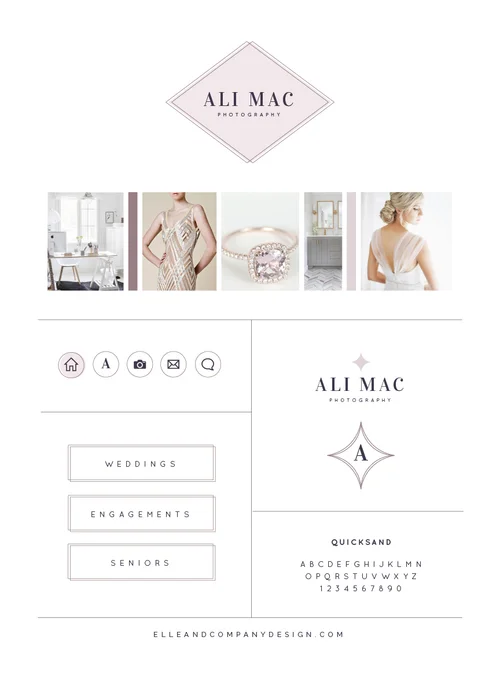
Taking on one design client at a time for 2015 has had numerous benefits, but I've been surprised at how much this new process has helped my creativity. Being able to pour into one client for 2 weeks helps me give them my undivided attention, dive into the new brand's aesthetic, and provide them with a cohesive visual identity through logos, collateral items, and a website. Each 2-week project is different, and the variety and challenge to make each brand one-of-a-kind has been fun for me.
I've had several photographers in my project lineup for the first few months of this year, so I challenged myself to go above and beyond to ensure that each of these brands would be individually unique. The newest Elle & Company brand and website design project is unlike any other I've worked on, and I'm excited to show you some peeks and walk you through the design process today!
"Can I just say, I'm not sure how I found your blog but I have been binging on posts every evening for a week solid! I think I'm in love. Following you on all social media and signed up for your newsletter! Just love every single post I've read and I've read like 20+ so far, ha!"
"I am so so glad I found your website, I have been stalking you for the past few hours."
"Great post and lovely blog. Just found out about you (through an Instagram suggestion). Already love your blog, congratulations!"
We all strive for blog comments like these; there's nothing better for business than to make a great first impression on a first-time visitor and potential client. And while we all know why it's important to hook a visitor from the start, the struggle comes with the "how." Today I'm sharing a few things that can turn a first-time blog visitor into a loyal follower.
March 2015
The longer I’m in business, the more frequently I’m asked how I started and grew Elle & Company. My answer is never extremely straightforward; there was no quick fix or simple trick that helped me find my footing in this industry, but there have been several monumental steps along the way that have helped me maintain a steady income and create a job I truly love. I always love hearing the story of how other people got started; it gives me a greater perspective and a connection with their business that I wouldn’t have had otherwise.
And to be honest, I’ve been hesitant to share this kind of post because I don’t want it to seem like I esteem myself highly or that I’ve “arrived.” In the past year of business, I’ve realized that you never arrive; you’re constantly coming up with new ideas, refining your process, and uncovering ways to run your business better. My goal in sharing this today is to tell you the story of Elle & Company, both the good and the bad, in order to give you insight on where this started and hopefully encourage you along in the story of your own blog or business.
Designing cohesive brands and websites for creative entrepreneurs is one of my main focuses within Elle & Company. But as much as I stress the importance of a distinct, streamlined visual brand, I also understand the enormous benefits that can be reaped through building your own personal brand. You've probably heard the term "personal branding" before, and it's one of those terms that's used frequently but isn't often defined.
Personal branding is the process of establishing your expertise within your field.
Archive pages are a great way to categorize and round up your past blog posts. They make it easier for new visitors to take a look through your previous content, and they allow regular readers to quickly find and refer back to posts that they've read in the past. The more that stay on your site and look through your previous posts, the more likely that they will get to know you, like you, and follow along with you.
On Tuesday I blogged about 9 Ways to Make the Most Out of Old Blog Content, and I put an emphasis on the importance of a well-designed blog archive. Since then, I've been surprised by the number of readers who have asked me how to set up an archive page in Squarespace. Today I thought it would be beneficial to walk you through 3 different ways to showcase your archives using Squarespace blocks.
One of my favorite things about designing brands and websites is that no two projects are ever the same. While the design process may look similar, I enjoy designing elements of each brand that make it distinctly one-of-a-kind. Today's brand and website reveal for Minky & Prickett is no exception, and I'm excited to give you an inside look into the design process as well as reveal the final brand and website!
8 out of 10 business fail within the first 18 months (source). That’s a shocking number, isn’t it? And after being in business for over a year now, I can see why that statistic is true; there is a lot more to entrepreneurship than creating your own work hours, being your own boss, and following your dream. I learned the hardest, most costly decisions within my first year, so today I’m sharing some of the most common business mistakes that I’ve run into. While many of life’s best-learned lessoned are often learned from personal experience, my hope is that many of these mistakes will help you stay proactive and avoid errors that could be detrimental to your business in the long-run.
It can be pretty depressing to spend countless hours on a blog post, only to have it buried underneath new content a couple weeks later. It’s a shame to see all of that thought, effort, and value go unnoticed, so today I have 9 solutions for you to help you make the most out of your older, high-quality blog posts (and increase page views and site traffic while you’re at it!).
Instagram is the fastest growing social media platform at the moment. In fact, Instagram has now surpassed Twitter in its number of users and accounts (source). If you're a business owner or blogger who hasn't joined in on the Instagram trend, you're missing out on a fantastic opportunity to increase your brand's awareness and reach your ideal audience.
Well, sort of. Instagram is helpful for growing your following and reaching more potential readers and customers, but there are some serious issues with tracking Instagram's referral traffic. So today Jake is explaining how this problem might affect you as well as sharing some creative ways to track conversions from Instagram.
Content marketing is a term that's thrown around often in business circles, but I've realized that there are many misconceptions on the topic. "Is content marketing the same thing as blogging?" "Content marketing sounds really complicated." "Content marketing might work for your business, but it doesn't make sense for mine." Today I'm clearing up some common misunderstandings on this one subject that's had the greatest positive impact on my business.
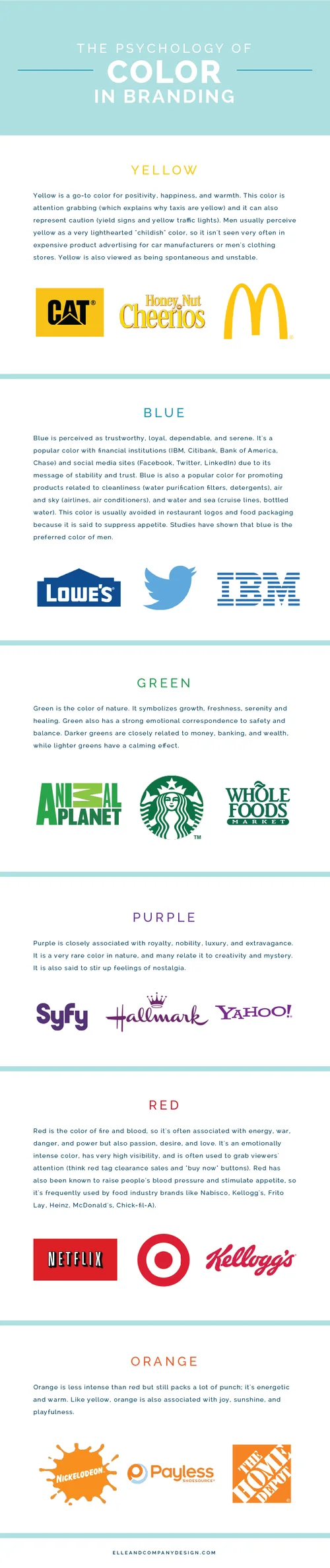
Design is all about first impressions, and one of the most important factors of any design is color. Color choices, pairings, and usage can affect how someone perceives a billboard, a website, or a box of cereal. Whether you realize it or not, colors evoke emotions, feelings, and memories, and designers tap into those emotions as they're choosing colors to appeal to a brand's ideal audience. There is more psychology behind color than you may have imagined, so today I'm sharing some color associations and data that you're already subconsciously aware of but may not have picked up on before.
If you've ever wanted to know how to easily set up a mailing list, create a newsletter, or send an automated email to your readers or clients, today's post is for you. Say hello to my helpful friend, MailChimp, a one-stop shop for anything mass-email related. Today I'm explaining the ins, outs, and advantages of this fantastic tool so that you can effectively market to your audience directly from their inbox.
Are you trying to grow your blog audience? This seems to be a topic on most bloggers' minds, especially those who are blogging for profit or for business. I've learned that the quickest way to grow your blog audience is by sharing strong content, but I've also learned that coming up with strong content is easier said than done. I'm here to help make things easier on you today with 10 ways that are guaranteed to make your content stronger and in turn, expand your blog's reach.
Stock images are becoming increasingly popular, especially among business owners and bloggers who are just getting started in their industry. And while I'm not a large fan of general stock images that anyone and everyone can purchase (they hurt brand recognizability and distinction), I understand the need to have professional product and website images. If you don't trust your own photography abilities, I usually recommend working with a photographer for custom stock images that match your brand and can't be found anywhere else. But even then, those pretty aerial desk shots need to be edited and added to every now and then. So how can you make the most out of your stock images? I'm excited to show you in today's post.
While I discussed the great benefits of Squarespace metrics a few weeks ago, their analytics only cover the basics. If you want to go beyond the simple data and have a better understanding of exactly what your visitors are doing on your site, Google Analytics is an extremely useful tool. Today I'm taking you behind the screen to show you how to install Google Analytics and help you understand its data.
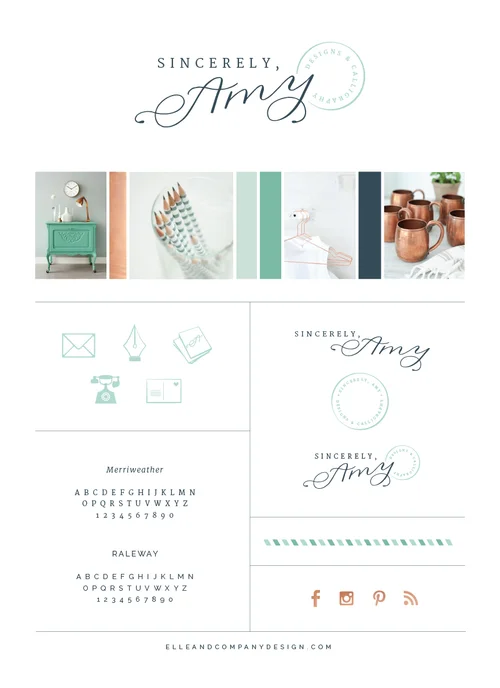
One of the biggest compliments you can receive as a designer isn't from a client; it's from their friends and family. So when my recent client and talented calligrapher, Amy Webber, told me that those who know her best looked at her new brand and thought it fit her to a T, I was honored. Not only am I thrilled to reveal this new brand and website design with you today, but I'm excited to walk you through how we arrived at a finished product that both suits the amazingly talented lady behind Sincerely Amy Designs and appeals to her ideal clients.
Are you feeling uninspired about your blog content? Maybe you've been blogging for years and feel a little burned out, or maybe you're new to blogging and struggle to come up with posts that will attract your ideal readers.
One of my most frequently asked questions regarding the Elle & Company blog is how I come up with relevant content for readers on a consistent basis. And my answer is simple: brainstorm sessions with Jake. After months of partnering together to come up with solid blog post ideas, we've gotten our method down to a science. Jake asks me a list of questions, I scribble down answers in my sketchbook as fast as I can, and within 30 minutes I've come up with at least a couple months' worth of high quality content.
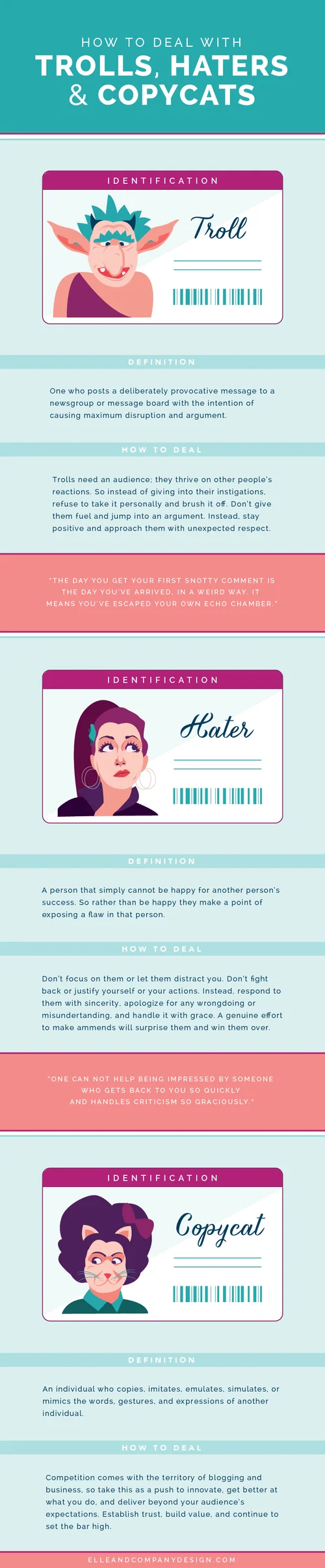
If you're a successful blogger or business owner, you're bound to come across negative Nancies. Their hateful feedback and hurtful comments probably stem from jealousy and insecurity, but often times it's hard not to their words personally. So how do you respond to these trolls, haters, and copycats? Today's infographic should help.

Today seems a little surreal. After months of collaboration, preparation, and anticipation, our Suite is being featured on Glitter Guide today! For those of you who have been following along with Elle & Company since the fall, you know the story of our cozy mother-in-law suite and how I partnered with Michaela Noelle Designs to transform our current living space. And while I'm excited to share the final reveal with you, I'm even more excited to share how I landed this one-of-a-kind opportunity for my business.
Many times in blogging and in business I come across design needs, whether it's a tweak to my website, a graphic for a giveaway, or a simple blog post image. As a full-time graphic designer I have the ability to do all of the above quickly and easily in Adobe Illustrator, but I realize that my situation isn't the norm for most bloggers and creative entrepreneurs. Many of my colleagues and clients have voiced their struggle with learning design software and designing for themselves, so I came up with a solution to help them meet their design needs...

Recently it came to light that Google is reconsidering how they rank websites. According to an article by New Scientist, Google is researching the possibility of changing what they will look for when ranking websites. Rather than basing a website's ranking off of the number of quality inbound links, Google will possibly base search rankings off of facts. Read the article here and the proposal here.
This article has gotten a lot of attention primarily because of its political implications. Many seem to think that this is one step towards censorship because Google would be the determining party for what is factual and favor that information in search rankings. Regardless of your political leanings, this also has implications for blogging. How could this impact you? Keep reading.
As a business owner, you’re always wearing several hats while keeping a million different plates spinning. But chances are, you’re not only a business owner; you probably have numerous commitments and priorities going on outside of your business, too. I understand the need to make the most out of the hours that you do have to pour into your business, so today I’m sharing a few practices that have helped me be the most productive with my time. The perfectionist in me never feels like I’ve arrived in this area - there will always be room for improvement - but I do my best to be organized and intentional with every minute I dedicate to Elle & Company. Here’s how.
February 2015
Blogging with Squarespace is simple and intuitive. From adding a blog page to creating and publishing a post, the blogging process in this platform is very straightforward (especially for those of you who don't have any previous experience with coding).
Blogging platforms are always a topic of great debate and can be a touchy subject for some, so I think it's important to preface this post by stating that different platforms work better for different people depending on their needs. I made the switch to Squarespace from Wordpress and Blogger because I needed a backend that was user-friendly, a template that was easy to customize, and great customer support. I've never looked back or regretted my decision, and I highly suggest Squarespace to each of my clients. But because Squarespace is comparatively new to the scene, people aren't as familiar with its blogging capabilities.
I believe that we can all benefit from those who have gone before us and have more experience in our industry. I also believe that everyone loves a good quote. So today I'm rounding up some of my favorite quotes on business and blogging from the some of the best to help you stay motivated as you round out your busy workweek.
After 2 years of freelancing part-time, I cut the last tie this past summer and made the leap to designing full-time for Elle & Company. Since then, I’ve received several inquiries from other aspiring full-timers on how I made the transition. And while there’s no magic formula for making the leap and everyone’s journey looks a little different, there are some practical ways to make a smooth transition. Here's a look at the 7 practices that played the largest role in moving from part-time freelance to full-time design!
Logo design is more than merely coming up with something that looks pretty; there are many things that have to be considered and implemented in order for a logo to make sense, catch the attention of an ideal audience, and set it apart. Today's post is for designers and non-designers alike. It's for all of you who own a business, maintain a blog, or are working on a personal brand. And it's for anyone who's curious about why their favorite logos make sense.
Engagement is the key to a successful blog. It comes about in many ways - comments, shares, purchases, bookings - but it's something that every blogger strives for; we all want to initiate a response in our readers. While building engagement looks different for each blogger and largely depends on your ideal audience, I recently stumbled upon an unexpected way to foster community around Elle & Company: hosting a Twitter chat.
What is a Twitter chat, how does it work, and why should you host one? I'm giving you all the details in today's post.
One of the things I enjoy most about Squarespace is that it's all inclusive. My domain name, site hosting, e-commerce shop, blog, custom email address, newsletter sign-up - all are in one place without any plugins or coding, and Squarespace manages it all for me. Metrics are also included, and I've been very impressed with the simple layout and variety of information that Squarespace provides for displaying my visitor activity. Today I'm taking you into the backend of my website to give you a look inside the metrics that are available within each Squarespace site. By exploring the metrics, you can learn how visitors discover your site and what they do once they're there.
In business and blogging, emails are crucial for client communication, networking, scheduling, and reminders. I've always been a folder-loving, color-coding kind of person, but a few months ago my handy folder system wasn't cutting it for keeping up with the number of emails I was receiving on a daily basis. I found myself spending well over 2 hours a day tackling my inbox, and it cut into the time that I needed to be designing client projects and writing blog posts. I dreaded logging into Gmail and I always felt behind and stressed. I knew that in order to stay on top of things (and maintain my sanity), I needed to find some feasible, time-saving solutions to help me keep my inbox under control. Since then, I've implemented 4 things that have transformed my email system and allow me to clear my inbox each day.
I have a feeling many of you are overwhelmed by your inbox too, whether you're a full-time creative entrepreneur or a part-time blogger. So today I'm sharing the 4 ways that I've found helpful for email in hopes that they might help you get your inbox under control, too.
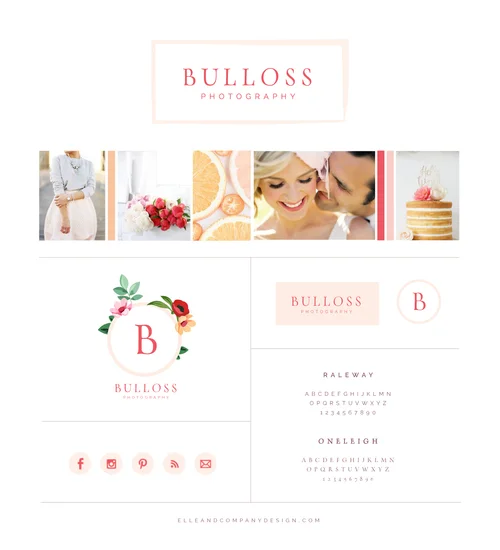
Joy. It's the one word that I was asked to reflect in the new brand and website for Bulloss Photography and it perfectly captures my experience working with Jess and Will. From our initial design meeting to the photos that were used in the inspiration board and the excited emails that I received yesterday about today's launch, joy has been the common theme throughout this design project. This new brand and website is one that I'm thrilled to add to my portfolio, and I'm excited to walk you through my process and reveal all of the lovely details today.
A couple months ago I partnered with some business ladies in similar industries for an Instagram loop giveaway. The goal of the partnership was to pool our followers and have them follow along with all of our accounts in order to enter for a chance to win $500 to J.Crew. An increase in followers on any social media platform give you a greater opportunity to increase sales and attract new clients, so the $170 investment was well worth it on my end; I knew that if I was able to gain one new client because of the giveaway, I would gain a great return on my investment.
I think it's always good to step back and evaluate decisions you make in blogging and business so that you can learn from them and become even more intentional in the future, so today I'm giving you an inside look at the experience. I'm sharing my honest thoughts about it all so that you might be encouraged to step outside the box when it comes to expanding your reach. I also hope that you walk away with a more intentional mindset on why you're doing what you're doing instead of just following along with the trends.
"It's always a great idea to create excitement over your blog and business." I find myself telling this to my clients and peers on a weekly basis, and it's a practice that has played a large role in the increased following of Elle & Company. It's always smart to find ways to stay in the forefront of your readers' minds and keep them coming back for more. Generating buzz about your blog and business gets your followers involved and allows you to connect with them, which in turn builds trust, increases sales, and encourages reader and customer loyalty.
So today I'm sharing 30 simple, effective ways that you can create excitement and generate a buzz about your blog or business. Many of these ideas can be combined, added onto, or built upon, and I encourage you to get creative and make them your own; these ideas will be most helpful for you if they're relevant and appealing to your ideal audience.
Out of all of the comments and emails I receive about Squarespace, SEO is by far the topic that is most frequently asked about. So today Jake is taking over this Friday series to cover search engine optimization on the Squarespace platform and clear up some misconceptions.
There seems to be a lot of misinformation out there about Squarespace and its SEO capabilities. Most agree that it has an easy-to-use content management system and the templates look clean and professional, but for some reason Squarespace can't shake the idea that many people have about its poor SEO capabilities. In fact, several people have contacted Elle & Company telling us that they would make the switch to Squarespace if they hadn't heard that another blogging platform is better for SEO. But is this really accurate?
Most bloggers and entrepreneurs don't have trouble recognizing why branding is important; they have trouble knowing where to start. Last week I covered the why of branding, but today I'm getting practical with the how. Here are 10 steps for creating, refining, and implementing a streamlined brand.
I thought it would be helpful to provide a case study/example as we go along. Since you'll be putting these steps into practice on your own, I'm sharing how I streamlined the Elle & Company brand.
It's natural to want to hoard the tips and strategies that have helped you become successful. I've had several business and blogger friends who are reluctant to share their secrets for fear that others in their industry will learn their ways and rob them of business or page views. But withholding your secrets could be holding you back from a major opportunity to grow your blog and business. And here's why.
Inspiration boards are the foundation for each Elle & Company client design project. Before I begin creating logo concepts or illustrating patterns, I always start by pulling inspiration from photos and compiling them into a clean and cohesive inspiration board. This step is fundamental to my creative process, and it has proven to be effective time and time again for helping me come up with original concepts that my client is happy with.
Email marketing. The sound or thought of that topic may not sound as appealing or exciting as sharing photos on Instagram or posting 140 characters to Twitter, but email marketing is an effective tool for reaching prospective customers and clients. Email campaigns are often an afterthought for many business owners, not a primary marketing strategy. So today I'm discussing the benefits of email campaigns and sharing 4 tips for simplifying your email marketing strategy.
As with any website builder/platform, there's a little bit of an experimental phase as you're getting started. These past couple weeks, my goal has been to walk you through Squarespace and make that experimental phase shorter and easier for you as you set up and customize your own site. I started the series with an overview of why I choose and recommend the platform, I shared how to get started by choosing a plan and template, and last week I covered setting up pages and navigation.
Today I'm reviewing Squarespace Blocks, which allow you to add content to pages and blog posts. I've gathered the information and help links from the Squarespace site and I've compiled them all onto one page for your convenience. My hope is that this post acts as a helpful resource for those of you who are new to this platform. And for those of you who have been using Squarespace already, you might come across some new blocks that you weren't aware of before.

Have you ever wondered why some social media posts get more engagement than others? Studies show that certain days and times of the week affect the number of people who like, share, favorite, and retweet your posts. Most of you are fully aware that 3:00am on a Wednesday morning isn't the most optimal time to post an image on Instagram and expect engagement, but it's helpful to know specific days and times that your audience is most active. Today we've rounded up the data to help you gain more engagement with your followers over social media.
Bounce rate: the percentage of visitors who enter a site and "bounce" rather than continue viewing other pages within the same site. The bounce rate measures the effectiveness of a website to entice readers to continue with their visit. If you have a goal in mind for your audience, whether it's to have them buy a product, contact you for a service, or increase your number of page views for sponsorships, having a low bounce rate is of great importance.
So how can you keep visitors clicking around on your site and entice them to stick around longer? Here are 7 ways.
Branding is a subject that's frequently referred to and rarely defined. It's an area that many business owners and bloggers are familiar with and understand the need for, but they may not be able to clearly define it or explain it's importance. So today I'm breaking down this familiar topic to answer some key questions: What is branding and why is it important?
SEO is one of those topics that has the potential to make your eyes glaze over.
If you have a blog or a website, you're probably aware that SEO is important for gaining traffic and ranking high in Google searches, but chances are, you might be a little intimidated by it all and unsure of where to start. Jake is my lifesaver when it comes to helping me with Elle & Company's search engine optimization, and today he's sharing the basics to help you get started and improve your SEO, too.
January 2015

Now that you've chosen a Squarespace plan and template, it's time to start customizing the site to your needs. But before you jump into any customizations on your new site's design, it's important to build a foundation through adding pages and setting up your navigation. Today I'm walking you through those steps and giving you a glimpse at just how simple it is to build a foundation for your website using Squarespace.
As business owners, we're always consumed with and saturated in the things of our industry. We know the ins and outs of our business, the proper terminology to use, and the reasons behind each of our processes; they've become second nature to us. But when we're working with new clients, it's often easy to forget that our industry is most likely foreign and unfamiliar to them. This can lead to frustration on both ends and prove to be detrimental for building solid client relationships.
"Amateurs get frustrated with clients. Professionals educate them." - Paul Jarvis
You can guard against this dilemma by educating your clients before and during your working relationship. Today I'm sharing why client education is important as well as 5 ways you can put it into practice in your own business.
How can I quickly grow my blog?
It's the question on every blogger's mind, whether you're blogging for your business or you're hoping to monetize your blog in the future. While stats and numbers aren't everything, higher blog traffic helps you attract new customers, gain sponsors, and book clients; it expands your reach and your market.
Among all of the classes that I was required to take for a Visual Communication degree, there was one crucial communication class missing from our list of courses: public speaking. And boy, would it have come in handy this fall as I was preparing for my first speaking engagement about branding in front of 80+ business owners at the Creative at Heart Conference.
After hours of outlining and pinpointing what I wanted to say, rehearsing in front of Jake, and trying to calm the ever-increasing nerves as the conference approached, the presentation went better than I had hoped and it was a great learning experience.
Today I'm sharing some firsthand insights with the hope that it might benefit all of you who have or wish to have a speaking engagement in your future.
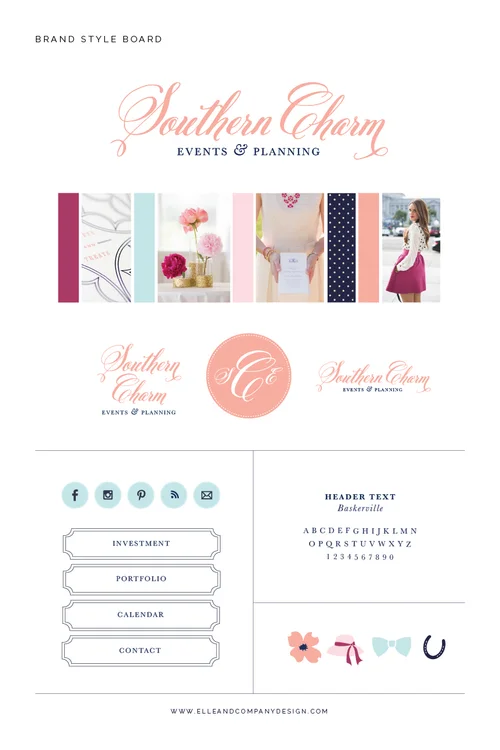
Last fall, after juggling multiple design projects and struggling to spend adequate time on each one, I decided to switch up my branding process and focus on one client at a time. I began booking all of my 2015 design clients in two-week timeframes, and Amanda was the first on my list. We began working on her brand and website two weeks ago, and the following 10 days were a fun whirlwind of concepts, drafts, and revisions. I'll share more about my thoughts on this new process in a later post, but today I'm excited to show off this gorgeous new brand for Southern Charm Events & Planning!
So you're interested in starting a Squarespace site. You're either considering switching over your current blog and website from a platform like Wordpress or Blogger, or you're new to the scene altogether and you're starting from scratch. You probably have a lot of questions like: Where do I begin? Which package is best suited for me? Can I transfer all of my old blog content over? Can I keep my current domain? Today I'm sharing some pointers on getting started with Squarespace as well as insight on which plan would be the best fit for you.
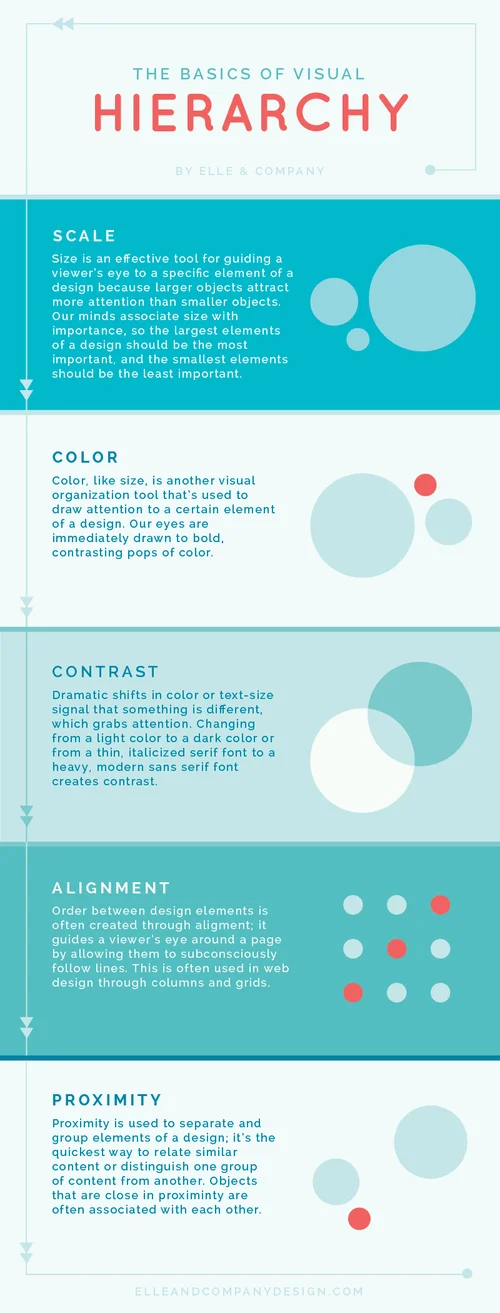
Design is all about communication. While every graphic designer strives to make their work visually pleasing, creating pretty things shouldn't be the only goal. Even more important is effectively communicating the right message to a viewer, and as designers we have several tricks up our sleeve to do just that.
One of those 'tricks' is hierarchy. This tool helps us call attention to the things we want you to look at first and bring less attention to the things we want you to look at last. You may not realize it, but each time you look at a website or a menu, your brain ranks the elements of the page in order of importance based on visual cues. Those rankings guide your eye around a page.
There are a 5 basic design principles that we use to help us achieve proper hierarchy: scale, color, contrast, alignment, and proximity.
Blogging is one of those things that seems simple in theory and winds up being difficult in practice; what starts out as a simple concept can easily turn into hours of outlining, writing, revising, linking, editing, and sharing. This past year I've learned that it's helpful to have a system in place to cover all my bases, and I've almost gotten my process down to a T. Today I'm giving you a peek at my process so that you might take away a couple helpful insights that make creating and publishing blog posts less frustrating and more efficient for you.
Twitter used to be my least favorite social media outlet. Recently I realized the benefits of the platform and began to rethink my strategy for using it. This change in perspective has made quite the difference in how I market Elle & Company and connect with my followers, and while Twitter still doesn't come as naturally to me as it does for others, this new approach has me excited. Do you need some motivation and excitement in your Twitter life? This post might spark a change in your perspective.
What imagery comes to mind when you think of branding for your business or blog? Images of logos, typefaces, or colors might be coming to mind, but have you ever considered branding your photos? The photos that you use in blog posts, promotional items, cover images, even Instagram posts are a large part of how your blog or business is perceived. Today's post is all about the why and how of streamlining your blog/business's photos to attract your audience and create a professional, recognizable brand.

Just like photographers have a preference in cameras and golfers have a preference in clubs, business owners and bloggers have a preference in website platforms. And for me, that preference is Squarespace. I'm such a fan of this platform that I not only use it myself, but I highly recommend it to each and every design client I work with. So what's so great about Squarespace and why should you get on board with this platform? Here are 8 reasons.
Diversity is one of the things I love most about the blogging industry. No two blogs are quite the same; each one has a different mission, audience, aesthetic, and voice. Different things work for different blogs, and monetization one of them. It's common to think of sponsorships when you hear about making money from blogging, but blog sponsors are one of many ways to monetize your blog. So today I'm riding on the coattails of yesterday's post by sharing 7 ways that you can make money from blogging apart from sponsorships. My hope is that you're able to find something in this list that works for you and helps you differentiate your blog from the rest.
Blog sponsorships are a popular topic within the blogging community, and for good reason. When you spend hours each day writing posts, answering emails, and replying to comments, it only seems natural that you would try to find ways to monetize your efforts. For many bloggers, compensation comes through offering sidebar ad space and for others it comes through entire blog posts that highlight a paid sponsor. The internet, especially Pinterest, is full of blog posts on why you should accept sponsors, when you should accept sponsors, how much you should charge, how may sponsors you should accept, and so on.
Elle & Company's readership has been growing quickly since October, and the opportunity to accept sponsors has come up on many occasions. I've put a lot of time and thought into this subject, and I keep coming back to the same conclusion: sponsorships aren't a good fit for this blog. Today I'm sharing the main 4 reasons why.

As a designer, I'm frequently asked which fonts I use and prefer. So today I'm rounding up some of my favorite serif, sans-serif, and fun fonts along with links so that you can download and make use of them, too!
I'm frequently asked how I create graphics for my blog posts, design printables and planners for the Library, and come up with colorful buttons to my sidebar. I'll let you in on a little secret: I design them all through software programs included in my Adobe Creative Cloud subscription. Although I've been taught how to use these programs and I've had years of practice, I believe that learning and working with programs like Photoshop and Illustrator puts business owners and bloggers at a huge advantage. So what exactly is Adobe Creative Cloud and why is it important? I'm giving you all the details in today's post.

Confession: Up until a few months ago, I was very self-conscious about my writing style. I would open each new post document with hesitation; I dreaded getting my words on paper/screen in an organized, easy-to-read fashion. I have a feeling many of you who are bloggers feel the same way. You recognize the importance of blogging for your business or for income and you have great content to share, but you struggle getting your words out clearly. So today I'm sharing my secrets for blogging when you hate to write (and if you make it all the way to the end, you'll find out why I became more confident in my own writing style).
It's hard to believe it's been a little shy of a year since I started this venture. So much of these past 12 months has been spent finding my niche, streamlining my creative process, building client relationships, brainstorming original content, and partnering with other creative entrepreneurs. It's been the most rewarding whirlwind! Today I'm sharing the 12 largest lessons I've learned from this crazy ride that's been my first year in business.
It isn't every day that I'm asked to create a brand and website for an author and speaker, so when Melissa Kruger asked me to design her blog months ago, I jumped at the opportunity! While Melissa had been writing for The Gospel Coalition and Christianity.com for years, she was seeking to have a 'home base' for her blog posts, books, and speaking engagements. She named this new venture Wit's End.
"Slowly I'm learning that being at my wit's end isn't really the end of a thing, but the beginning. The end of thinking I can rescue myself is the beginning of crying out to the Lord for deliverance. The most secure place might just be at the end of my rope, clinging to Jesus, watching Him calm what I cannot control."
If you want to gauge the 'health' and success of your blog, take a look at your analytics. Your analytics help you dig deeper and figure out exactly what's happening on your blog - how many people are visiting, how long they're staying on the page, which pages they click on, etc. There is a lot of information that can be gained from studying your analytics. Jake has been very interested in not only checking the analytics, but trying to read into them to determine what they mean for this site.
So today, Jake is offering some suggestions about where to start looking when your analytics are indicating less-than-ideal results. While these analytics issues may not be a direct result from the problems he's suggested, we hope that this will give you a starting point as you look to improve your blog and earn more traffic.
"What exactly do you do?" It's a question that I'm asked frequently, and as an online business owner I have trouble explaining exactly what I do without getting some confused looks. I've had people question whether I can create a real, sustainable income off of my online design business, which always leaves me frustrated and a little defensive. Explaining the world of blogging and online business to those who aren't familiar with this industry isn't easy, and I'd be willing to bet that I'm not the only one who has faced this challenge. So after numerous awkward conversations about my business, I've come up with a plan. Here are 3 simple tips and a few helpful facts for next time (because there will be a next time).
While a logo is only one aspect of a brand, it has a large impact on the way a business is perceived; it's the face of a business, in a sense. And in an ever-growing design industry where everyone seems to be designing logos, it's easy to lose track of what makes a good logo in the first place. In the words of logo expert and author David Airey, "Anyone can design a logo, but not everyone can design the right logo." So today I'm taking it back to the basics. Here are 5 characteristics of an iconic logo.
December 2014
Wow, what a year! 2014 marked my first year of business and blogging for Elle & Company, and it's crazy to see how much this space has changed and grown since it launched last January. Before we jump into the new year and countdown the last few minutes of 2014, here's a countdown of my 10 favorite blog posts from this past year.
My husband, Jake, has always been stumped as to how Jimmy Buffet has such a loyal following. Even Jimmy will admit that he doesn't have the greatest voice in the world, and yet his fans have their own special name - 'Parrotheads' (and 'parakeets' for those younger Buffet fans). How in the world does this happen and what does this have to do with blogging? Jimmy Buffet and the best bloggers both realize that gaining a loyal audience is all about creating an experience.
So how can you create an experience for your readers? What are some tips that you can implement that will create excitement and keep your audience coming back time and time again? Here are 4 tips that will help you gain your own faithful blog 'parrotheads.'
Do you ever find yourself stuck in a rut, at a loss for how to create original ideas for your blog and business? You're not alone. For the first 6 months of Elle & Company, I had the hardest time staying inspired and coming up with concepts that were original and one-of-a-kind. But last summer I started a practice that pulled me out of that rut: setting aside time to consistently brainstorm.
If you've been following along with Elle & Company for the past few months, you've probably noticed that I'm a big fan of brainstorming. It's a practice that's had the largest impact on the growth and success of my blog and business, it's where I draw inspiration, and it helps me come up with original ideas and content. I'm a firm believer that brainstorming has enormous benefits for every blogger and entrepreneur, but sometimes it's hard to know how to get the ball rolling. Here are 4 tips for making the most out of your brainstorming sessions.
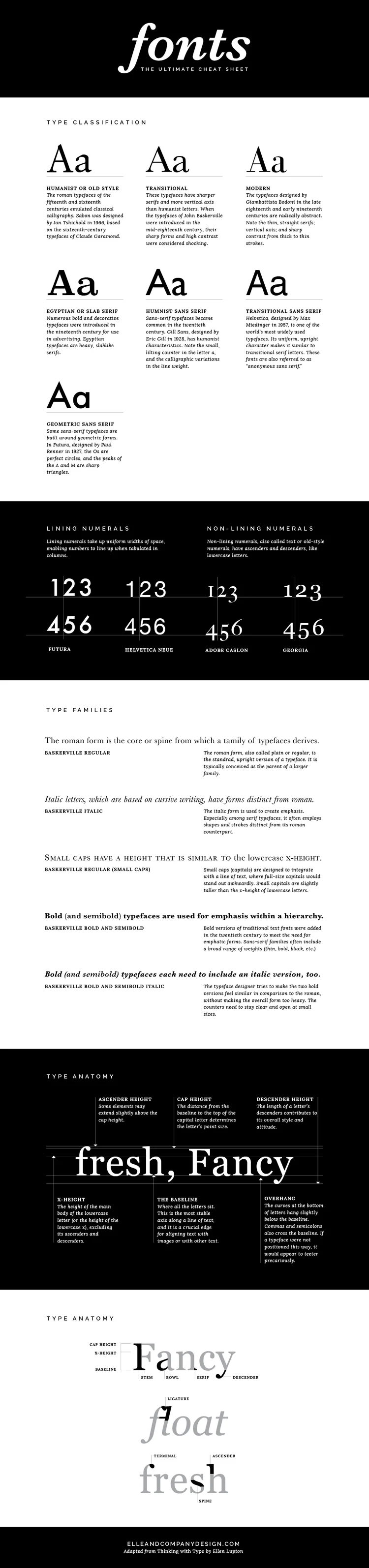
Fonts are everywhere. You see them hundreds of times each day, whether they're on the label of your shampoo bottle, the date on your lock screen, or the road signs you pass on your drive to work. And whether you realize it or not, fonts are just as important to design as colors and composition. There are reasons why some fonts pair well together and others don't; why some fonts seem trustworthy and classic and others feel sleek and modern; why certain fonts are easier to read or why some catch your attention before others.
Say hello to my little friend, Bloglovin'. This blogging tool has been a key factor in the growth of Elle & Company readership, especially this past month when one of my posts gained popularity on the platform and almost doubled my page views... overnight. If you're a blogger and you haven't taken the time to understand and utilize Bloglovin', you're missing out on a great free marketing tool and a crazy number of new readers. So what's so great about this site and how can you take advantage of this social tool? Keep reading.
Photoshop or Illustrator?
It's a common question for business owners and bloggers in regard to creating images and designing promotional materials. Some of the most frequent questions I receive about Elle & Company deal with these programs in some shape or form, so today I'm sharing the similarities and differences between the two.
Social media. It's the cheapest, easiest form of marketing out there. If you're a business owner, a blogger, or both, you've probably been taking full advantage of several platforms like Facebook, Twitter, Pinterest, Instagram, and Google+, to name a few. And why would't you? It's an easy way to reach your followers without paying a dime.
But you may have noticed a slight shift in these platforms lately, especially Facebook. I'm no conspiracy theorist, but I do have some thoughts and opinions on the future of social media.
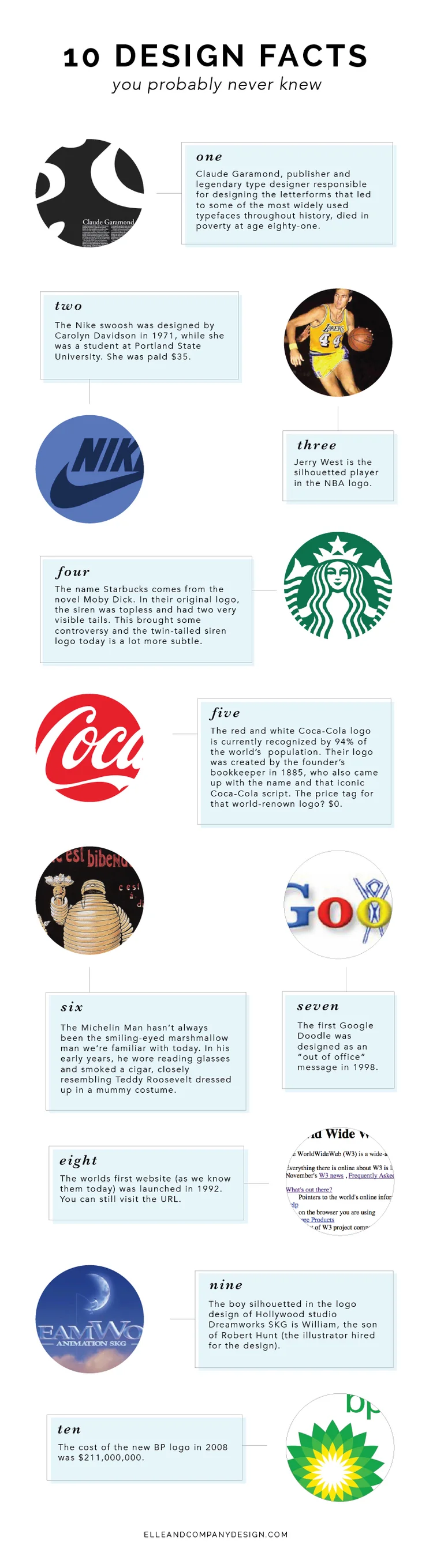
Last week I really enjoyed sharing 10 popular logos with hidden meanings on the blog, so I decided to give it a go with more design facts this week, too! Here are 10 design facts that might have you seeing logos and fonts a little differently.
After sharing 10 design mistakes to avoid last month, I received a request from a reader for 10 blogging mistakes to avoid. So here are two handfuls of mistakes that can hinder your blog's success.
This is both a humbling and interesting post to write. The story I'm about to share with you doesn't highlight one of my proudest moments, but the lessons I've learned and the benefits that have come from it outweigh any of the negatives.
This summer, my husband and I were driving to the beach late at night, in the middle of nowhere, when the gas light came on. Desperate for a gas station, we cried out to Siri for help.
She led us to the only gas station within a 15-minute radius, and it was like something off of a horror film: the convenience store windows were pitch black, a stray cat was eating something in the parking lot and there were no cars in sight. I'm pretty sure I saw Hannibal Lecter at one point. After expressing my concern to Jake, he reassured me that it was going to be okay, but I didn't catch my breath again until we left five minutes later.
First impressions are crucial.
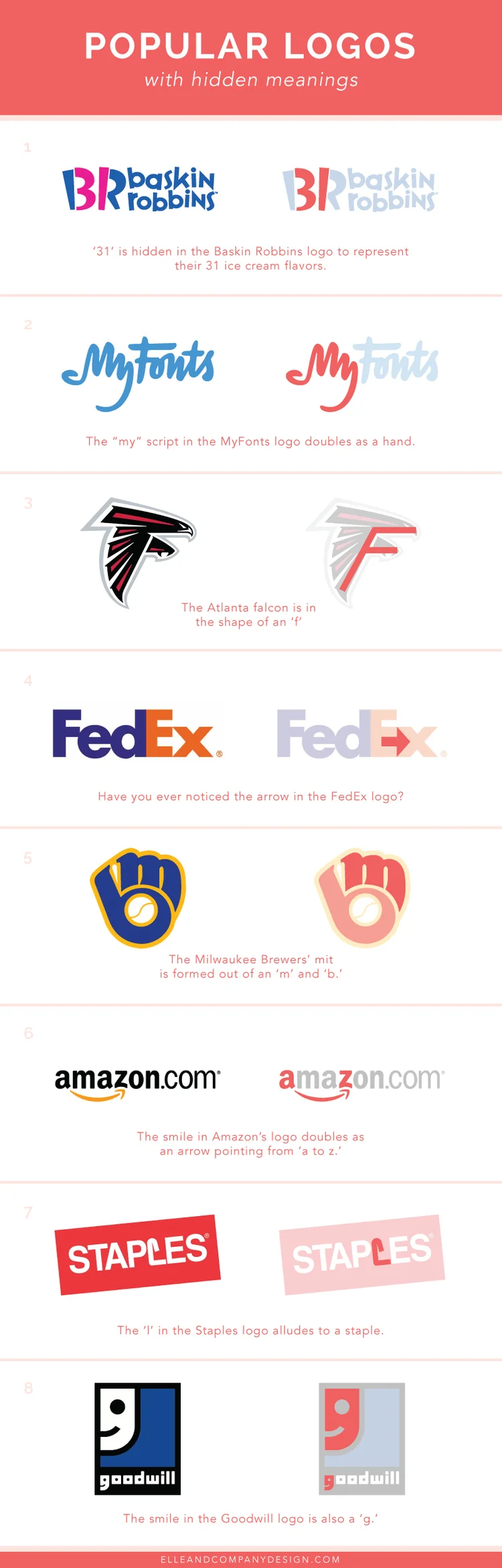
There's a lot more intention behind a brand than what meets the eye. While some logos seem simple and straightforward, there's often a hidden meaning behind the color choices, fonts, and composition of the overall design. Sometimes these clever touches go unnoticed, so today I thought it would be fun to call attention to them! Here are 8 popular logos whose hidden meaning you may have never noticed before:
Creating one-of-a-kind blog images. It's a topic that I'm most frequently asked about and it's an area that many bloggers struggle with. So today I'm approaching the subject with a few reasons why well-designed blog images are important. And I'm not stopping there - I'm also sharing a few of my own secrets for creating attractive blog images, too.
Last summer I wrote one of my most popular blog series, How to Start a Blog. I shared tips for those who are new to the blogging scene about common topics that every new blogger deals with: creating a loyal audience, finding your niche, choosing a name, growing readership, and creating quality content. It was a fun series to write and it continues to be a favorite among Elle & Company readers. But since writing those posts 3 months ago, my readership has more than tripled (and I would like to think that it's due to implementing all of that advice that I shared!). The way I blog has evolved and I've learned new tips and strategies for creating content, marketing my blog, and growing Elle & Company readership.
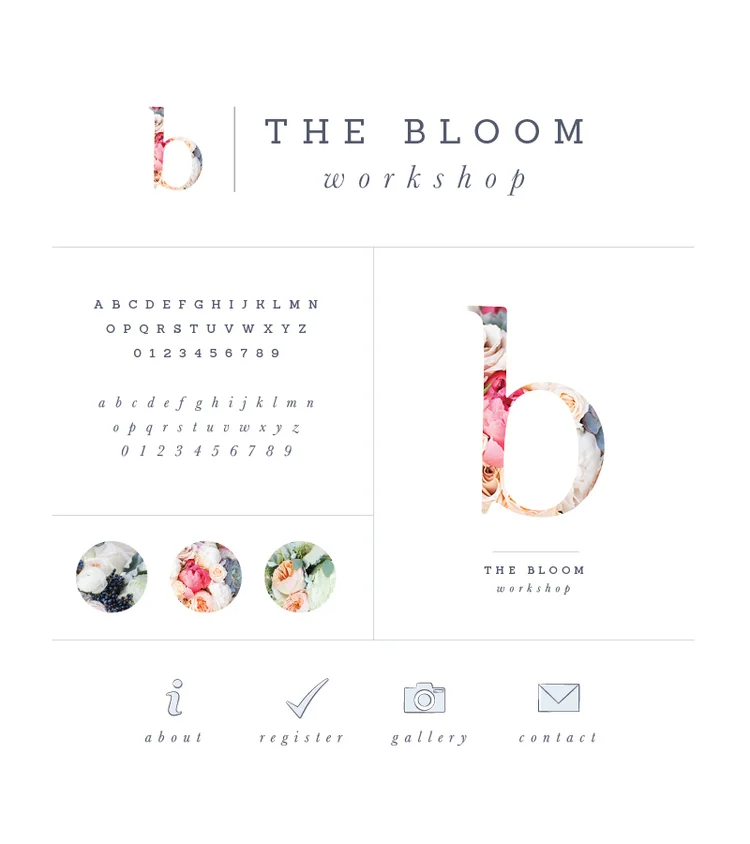
If you're a fan of pretty pinks and soft blues, gorgeous florals, classic typefaces, and illustrative details, you're going to love this new brand for The Bloom Workshop! Bloom is a one-day workshop for creative entrepreneurs that focuses on blogging, design, photography, and styling. Michaela and Ashley do a gorgeous job with every detail of the day, from the teaching to the styled shoot and swag bags. After 3 successful events in 2014, they are offering 3 kinds of Bloom workshops and 9 events throughout the U.S. this upcoming year.
With all of these exciting additions, some changes needed to be made to the Bloom brand.
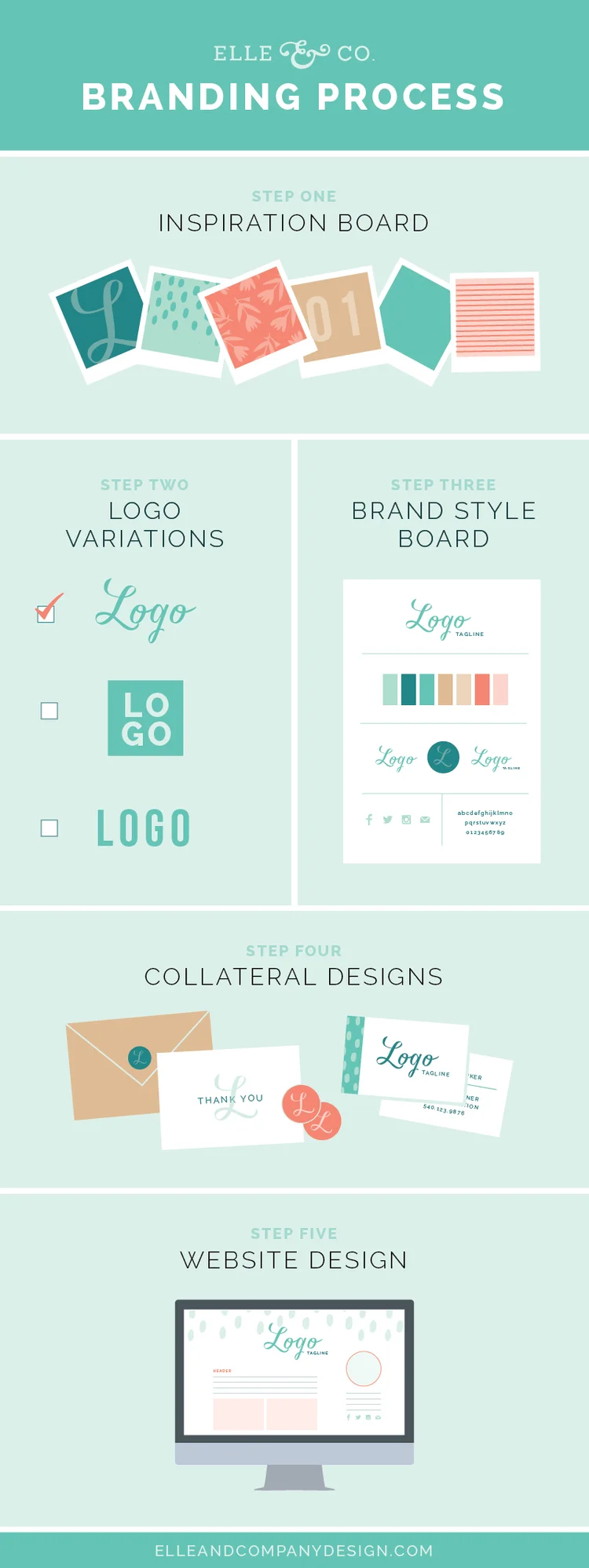
Since the official launch of my branding services this past summer, I've had the opportunity to work with 8 creative entrepreneurs, streamlining their business's visual identity through professional, cohesive brands and websites. And while many of my design practices have been successful, I'm making a couple changes to my branding packages for 2015 to simplify my process and better suit my clients. While the design process itself hasn't changed significantly, there are a couple changes that have me stepping outside of the box...

Pinterest is one of my top website referrals.
With nearly 1 million monthly viewers, 30,000+ followers, and 100,000+ website visits from Pinterest each year, you might be surprised that I don’t put any effort into the platform.
You might also be surprised to learn that my Pinterest strategy doesn’t even involve Pinterest.
So how do I reap the benefits of Pinterest without putting in the work? Better yet, how can you reap the benefits of Pinterest without putting in the work?
Here’s my secret.